


WINNING PROGRAM
How Manitoba’s master angler awards help boost conservation
Advertisement
Now in its 66th year, Manitoba’s popular Master Angler Awards program sets the standard for angler recognition programs across North America. Along with celebrating individual fishing achievements, the program adds just the right amount of fun and friendly competition to the sport, while also promoting ethical angling practices. It’s a successful formula that other provinces could benefit from emulating.
The Neepawa Game and Fish Association kick-started the program in 1958 as a way to recognize trophy fish caught across the province. The association became overwhelmed with applications after just two years, however, and handed it over to what is now Travel Manitoba. Over the years, almost 500,000 catches have been submitted.
Advertisement
The premise is simple—anglers earn recognition by legally catching a fish that meets or exceeds the minimum qualifying length for that particular species. All they need to do is fill out an online form with details of the catch and include a photo showing the entire length of the fish against a ruler, measuring tape or bump board (see “Honour roll” below for more details).
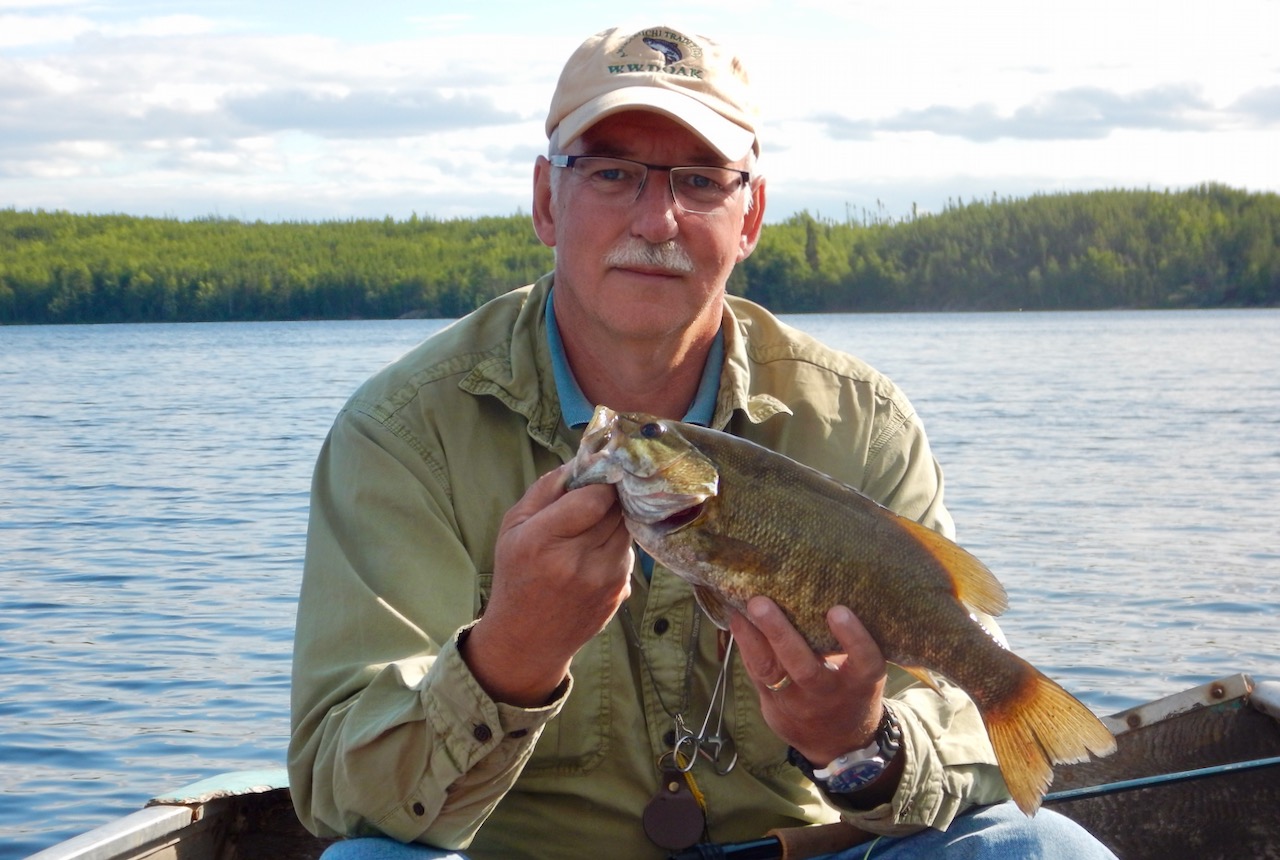 An award-qualifying smallmouth bass
CONSERVATION MESSAGE
The Master Angler program is more than a means to recognize anglers, however. As Elise Wood, Manager of Manitoba’s Tourism Growth Initiatives, points out, it’s also an important conservation education tool. “While the trophy is the draw, the spirit of the program is rooted in the health of the fishery,” she says. “We’ve found that by setting strict standards for the photos anglers submit, we can influence how people handle their fish.”
That visual standard means that photos must reflect appropriate handling techniques—entries with images showing vertical gill, eye, weigh scale or fish stringer holds are not accepted. “Essentially, we’re using the prestige of the Master Angler title to normalize better conservation habits while protecting the integrity of the program,” Wood says. “If people want the badge, they have to show they respect the fish.”
Advertisement
By all accounts, it appears that conservation message is being well received. According to Wood, 97 per cent of the fish submitted for recognition are released.
FUN CHALLENGE
I’ve fished off and on in Manitoba since the mid-1980s, submitting my catches to the program as a fun way to challenge myself. To date, I’ve caught 12 qualifying fish, earning me a feeble ranking of 5,882 among all participants. My first qualifying fish was a channel cat, which garnered me a Bronze badge and a Released patch in 1988—one more qualifying cat and I’ll receive my Specialist badge. I’ve also qualified as a white bass Specialist, and I’ve landed two qualifying bullhead. In 2014, I earned my most recent Master Angler award for a smallmouth bass I caught on a fly.
Advertisement
Over the last several seasons, my buddy Brian and I have been on a quest to also land qualifying northern pike with our fly rods. To earn recognition, a pike must be at least 41 inches long. We’ve come close, landing a 40-inch fish along with several in the 38- and 39-inch class. I’m convinced this is the year I’ll finally catch a 41-incher—and in the process earn the coveted silver “Expert” badge for catching five different species.
Visit the Master Angler program at anglers.travelmanitoba.com.
HONOUR ROLL
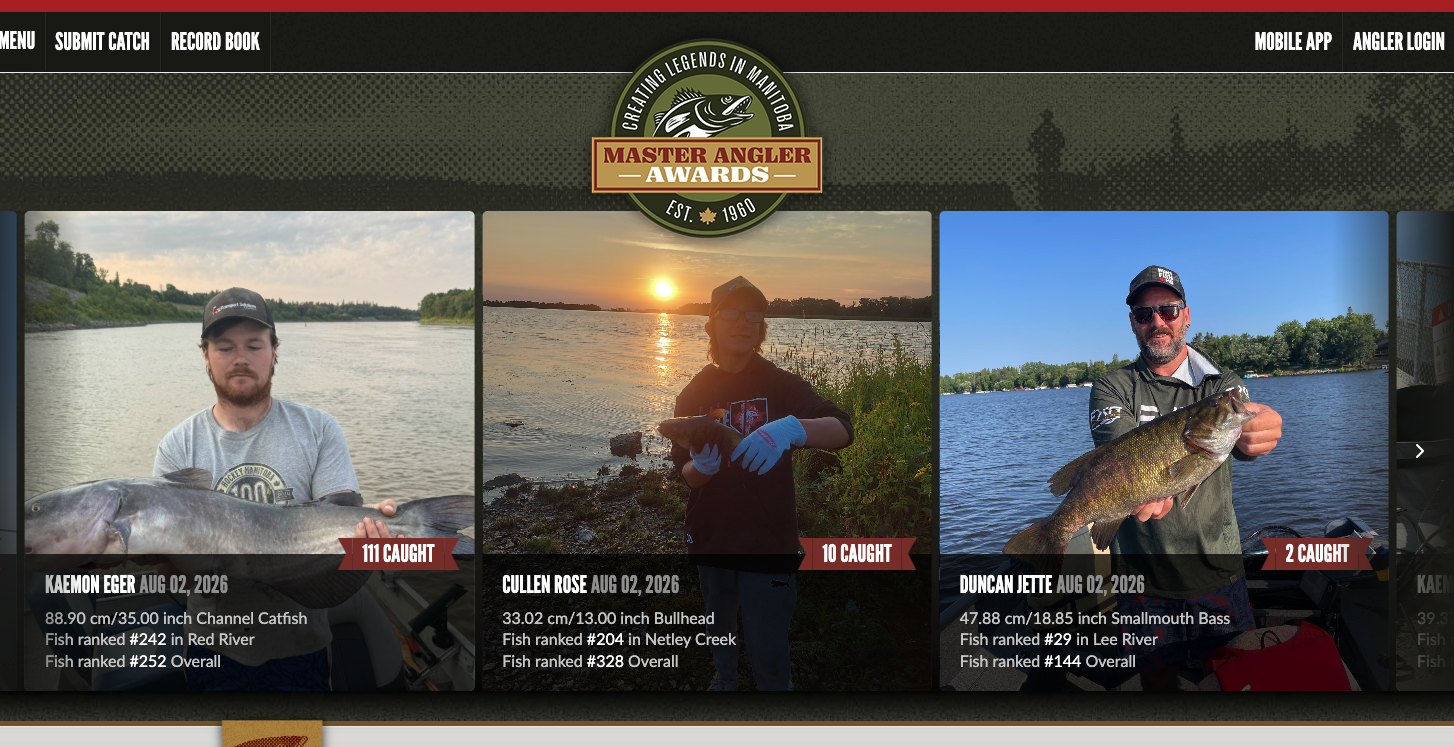
Once a submitted fish qualifies for a Master Angler Award, the angler receives a certificate honouring the catch (along with an additional special certificate if the fish is live-released). First-time participants also receive a bronze lapel badge. If anglers qualify for five different species, they receive a silver “Expert” badge, following by a gold “Grand Master” award for 10 different species, and a platinum “Elite Angler” badge for 15 species. Finally, the diamond “Ultimate Angler” badge goes to those who catch 20 different species. To date, 247 anglers have reached diamond status, and of those, nine have successfully caught all 30 of the eligible species.
Anglers who catch five qualifying fish of any individual species also receive a “Specialist” pin showing the species for which they’ve qualified. And as further recognition, the first time an angler releases a qualifying fish of any species, he or she is presented with a distinctively embroidered “Released” badge.
Among the 30 eligible species, channel catfish lead in the number of submissions, with more than 3,000 a year. Walleye are next, with more than 2,000 entries annually. Arctic char see the fewest submissions every year, which is not surprising given their limited distribution in the province.