

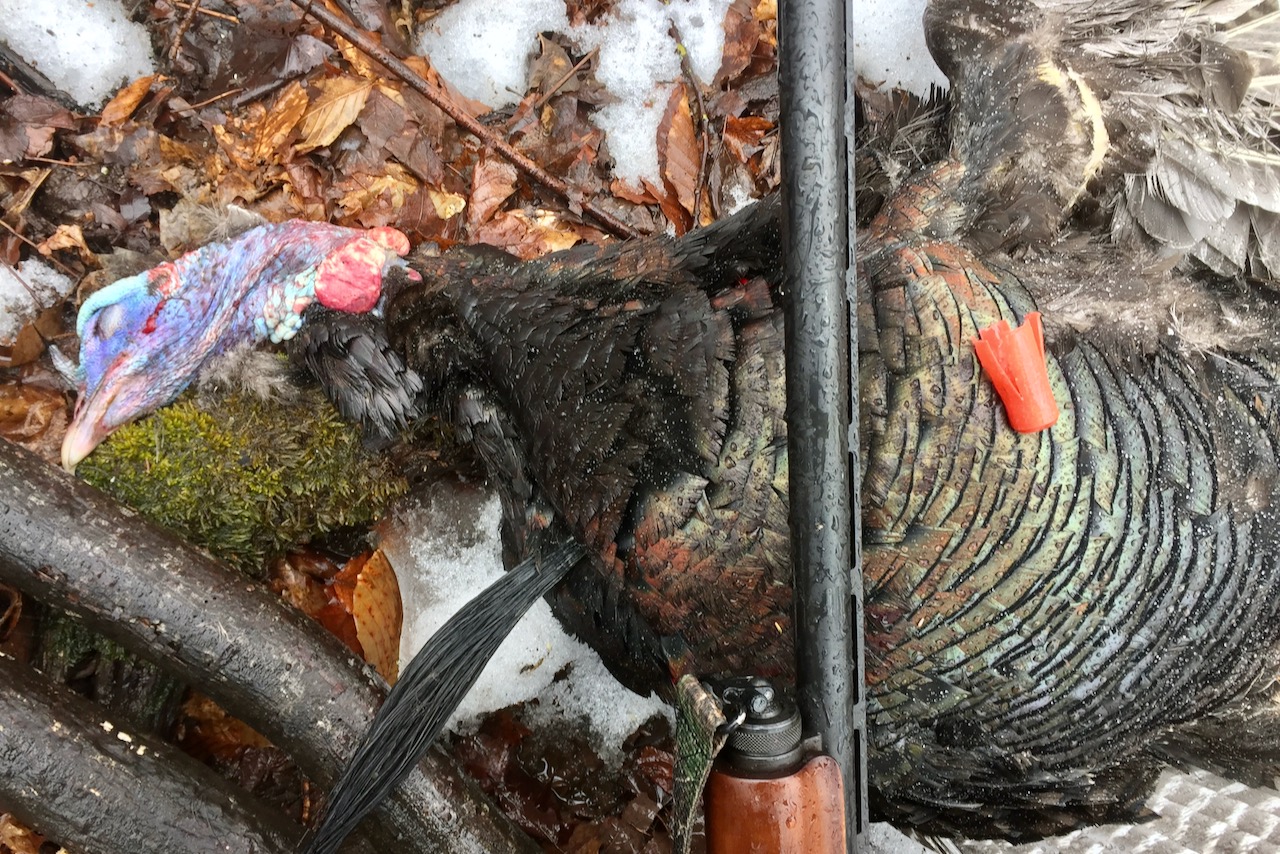

DEEP-WOODS TOMS
For an exciting change-up this turkey season, try these run-and-gun tactics for tree-hugging spring gobblers
Advertisement
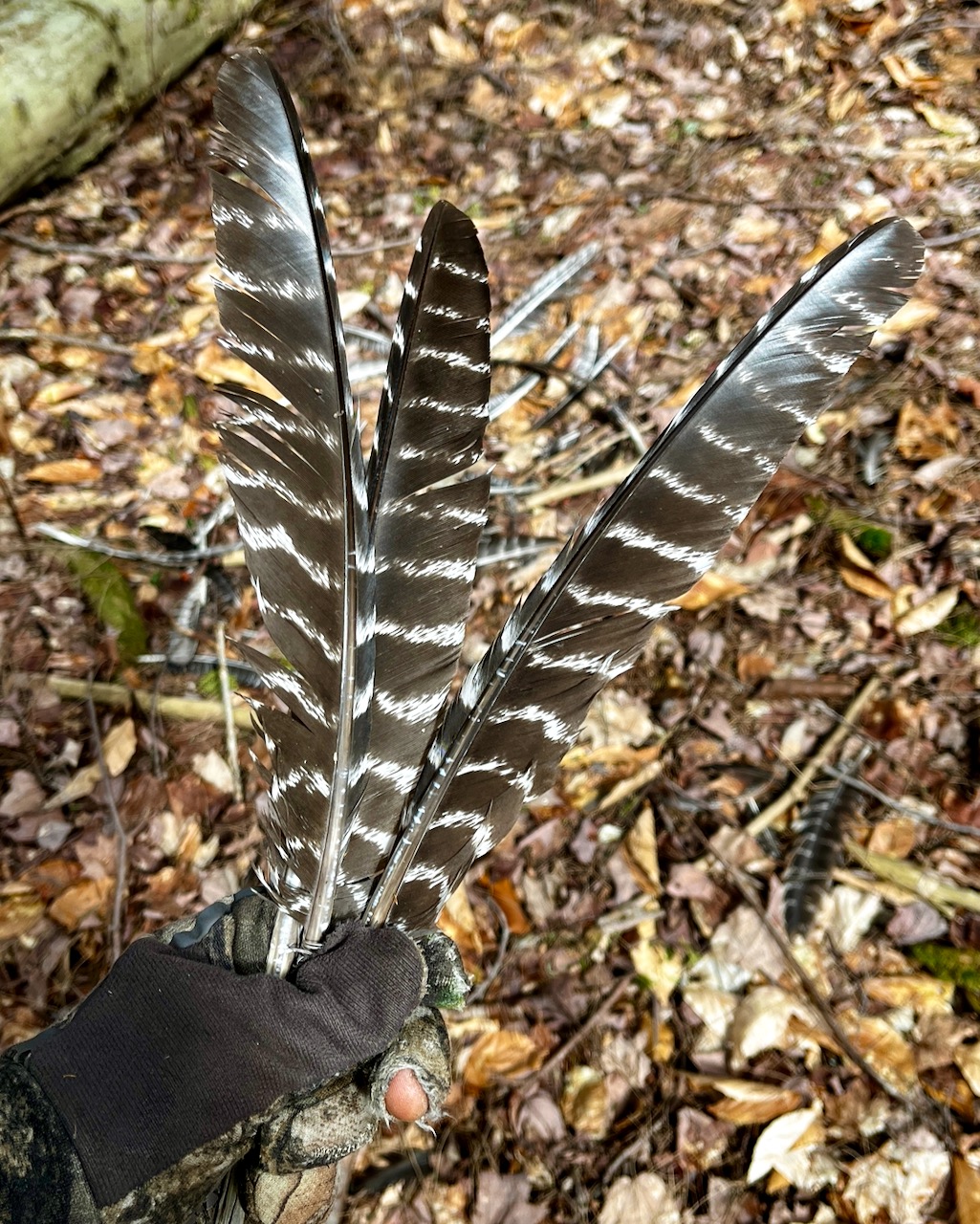 Ahead of the season, scout for sign such as dropped feathers
#1 SCOUT EARLY
Understanding how turkeys use the habitat in your area can put you well ahead of the game long before the season even opens. The objectives here are to pinpoint the prime areas for roosting, feeding and strutting, and to identify the travel corridors connecting them. Take advantage of the quieter off-season to scout the areas where you have permission to hunt, when you’re less likely to disturb the birds before the mating routine begins.
Looking for sign such as broken twigs, tracks, droppings and feathers can help you find these prime locations. It’s easy to confirm which trees the birds are roosting in, as the top portion of the branches will often be partially or completely stripped of bark. You’ll also usually find ample sign around the trunks of roosting trees.
Advertisement
By noting roosts and nearby feeding areas—where mast, seeds, catkins, insects, water and sprouting buds are available—you’ll start to get an idea of an area’s potential. Other examples of quality spring turkey food include beech nuts, tender young ferns, maple keys, squirrel corn corms, and the buried tubers of Virginia spring beauty; look for signs of recent scratching, where the birds have been digging up the tubers. Also watch for nipped lower leaves or missing buds on shrubs and plants, as well as general turkey sign in mast-producing stands of hardwoods, such as maple and oak.
Also look for strutting areas where toms go on display in the spring for potential mates. They are usually natural clearings in the forest, often on high ground near dense cover that provides a quick escape route from predators. Pinpointing these locations and understanding how the birds use them will transform unknown terrain into a predictable map for a successful hunt.