


FRONTIER FISHING
For this angler, you can’t beat Great Slave Lake’s far-flung East Arm for incredible laker action on the fly
Advertisement
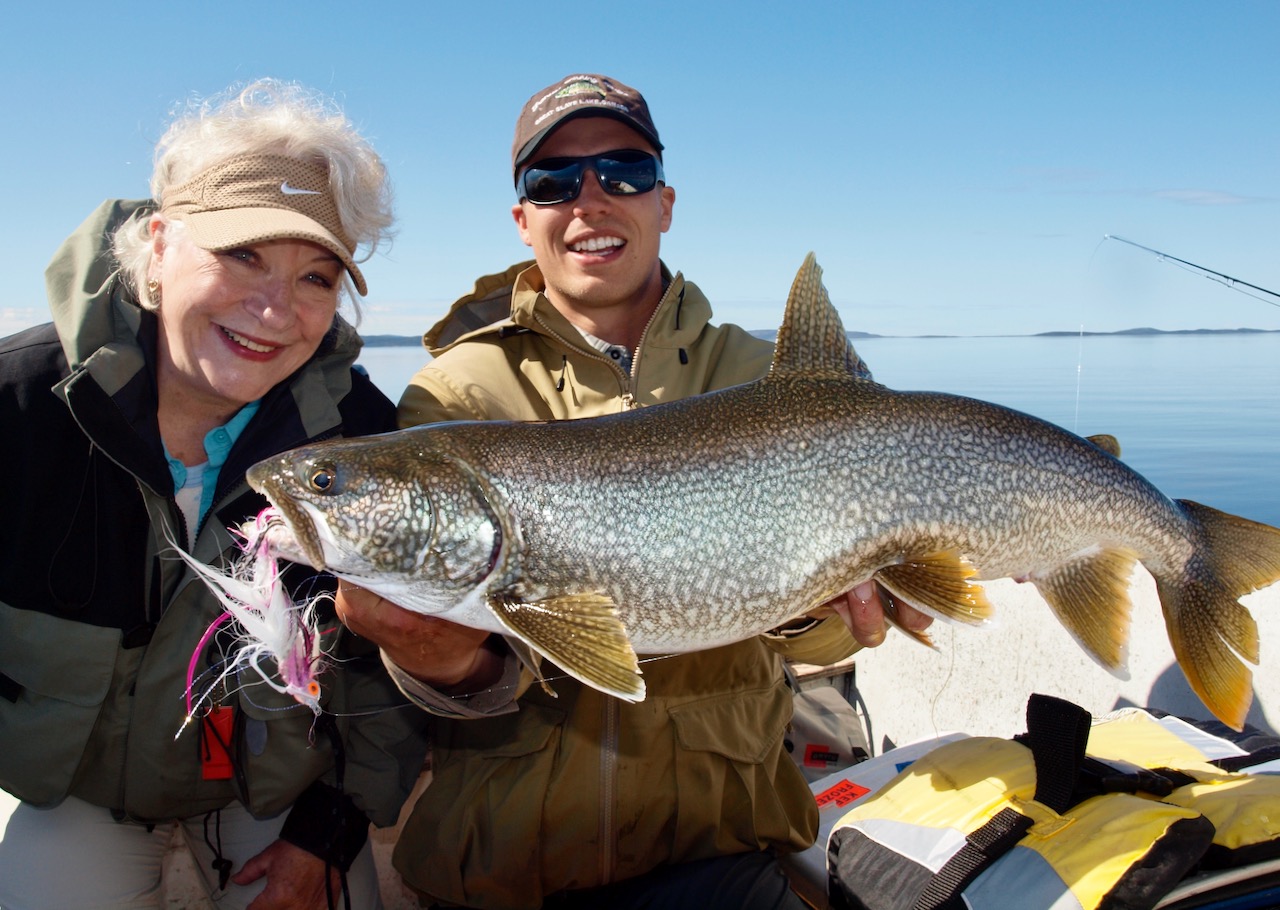 The late Adrienne Radford with one of her fly-caught trophies
THE FISHING
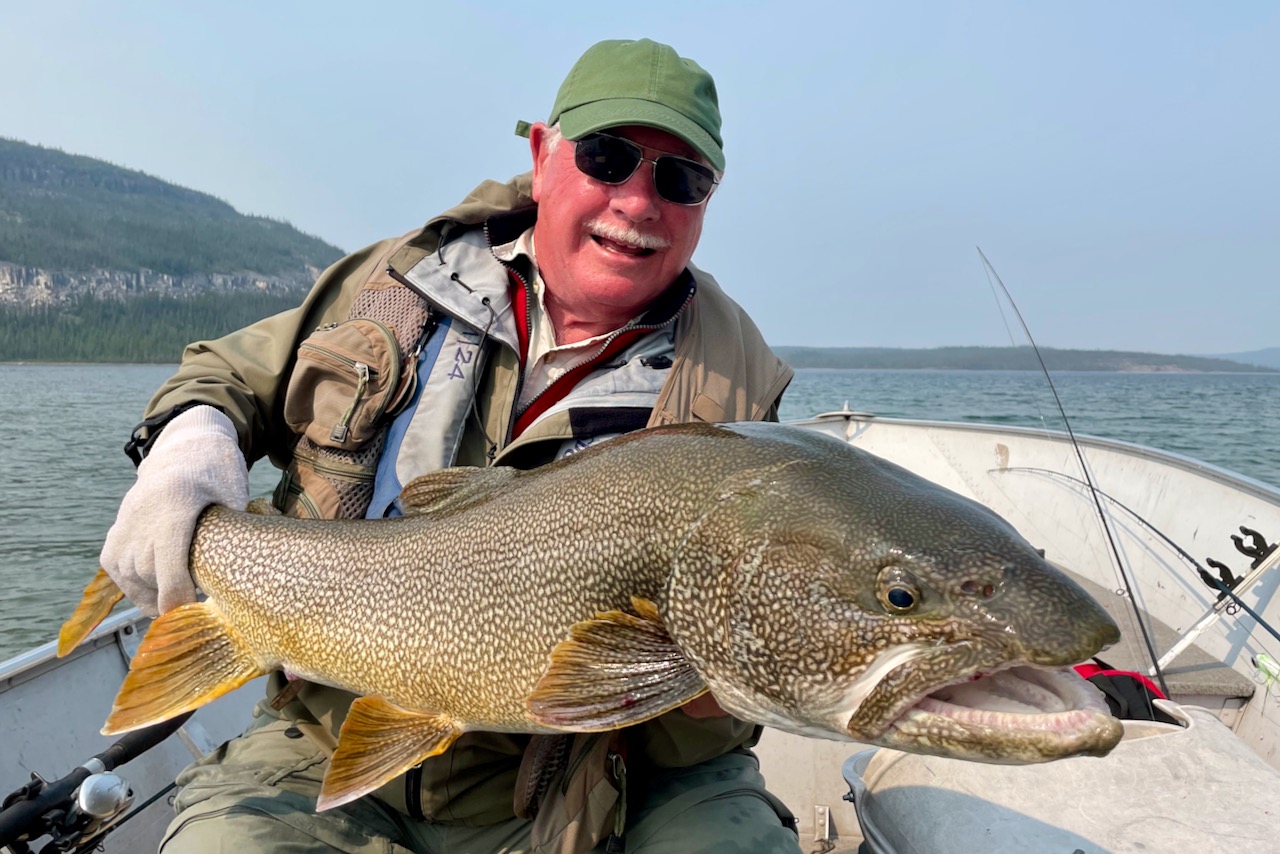
I’ve been to Frontier Lodge at the opening and closing of the season, as well as during mid-season. I honestly can’t say the fishing for lake trout was a whole lot different, regardless of the timing. It was all good. On each day of every trip, I caught at least a couple dozen fish weighing 10 pounds and up, either fly fishing alone with a guide or together with my late wife, Adrienne. She was no slouch, by the way, often landing the largest fish of the day.
Advertisement
Not that you have to be a fly angler to catch numbers and sizes of lake trout on Great Slave—far from it. Baitcasting, jigging and spinfishing are also good options, particularly for the larger trout. However, this is one of the few places in the world where fly anglers can catch large lake trout during the summer using only full sinking fly lines. That’s because Great Slave’s lakers frequent the cold, oxygenated surface waters, from break-up through to freeze-up. By the same token, conventional anglers don’t need downriggers, weighted leadcore line or weighted trolling braid to target trout down deep, which is their usual summer haunt in lakes further south.
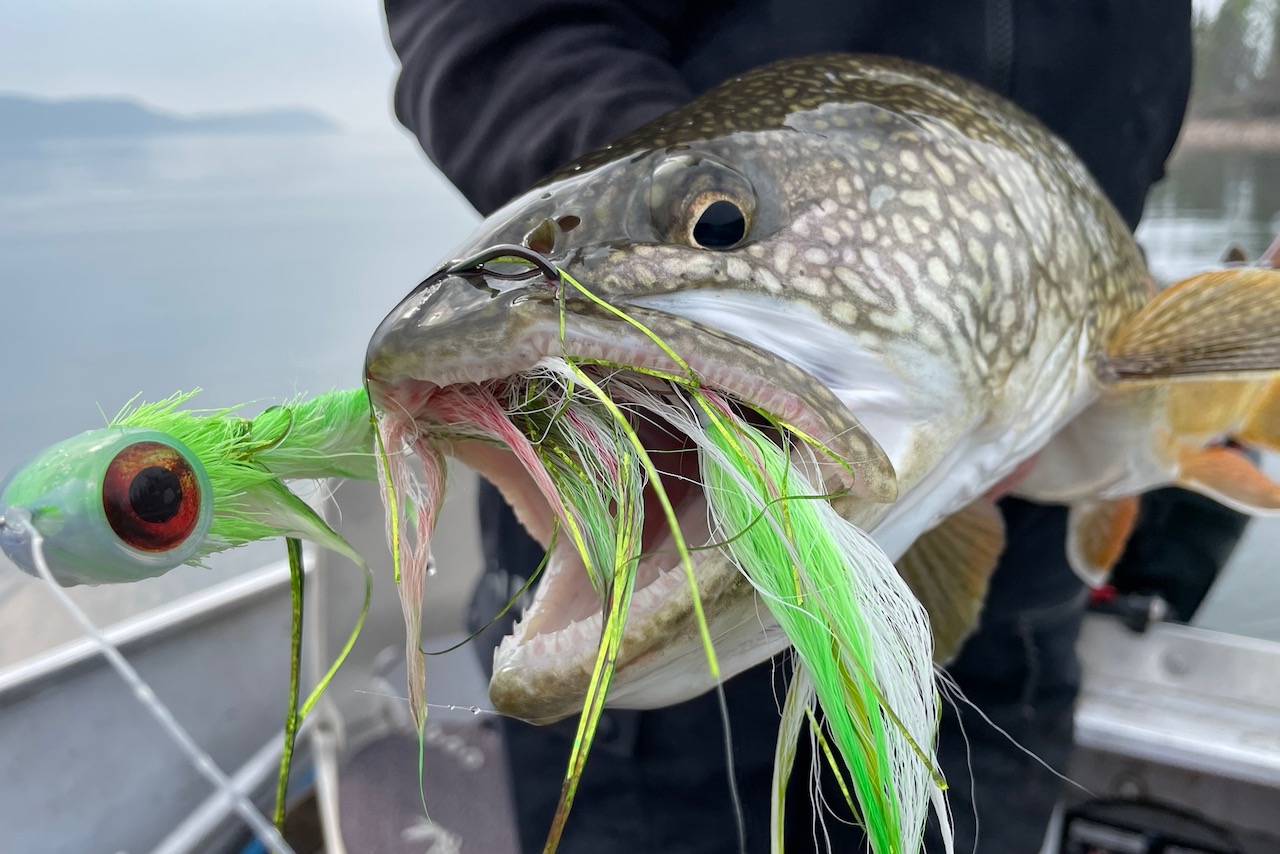 Chartreuse patterns have proven effective on Great Slave’s lakers
THE FLY FISHING
To me, the best way to catch lake trout on Great Slave Lake is to slowly troll with a fly rod. Since lake trout are predatory, they’ll chase all sizes and varieties of fly patterns, with some being too large to cast (which is just about impossible with a full sinking line, anyway). The trick is to simply put a fly in front of the fish and wait for the rodeo to start.
Advertisement
To do that, let out all of your sinking fly line down to the backing, reel in a couple of feet, then set the drag tight. Advance the handle on the fly reel to the forward position, and use your index finger to press the line against the rod handle so you can actually feel takes while waiting for a strike. When a trout swallows the fly, raise the tip of your rod and set the hook in its tough jaws like you mean it, or it will throw the fly (always keep your hooks sharp, or you’re doomed). Once the hook is set, use your reel to handle the fish. And keep your rod bent—barbless hooks are mandatory in the N.W.T.
On my most recent trip, for the first time ever I saw schools of hundreds of ciscoes in the clear shallows of the East Arm’s Wildbread Bay. Since ciscoes are a favoured prey of lake trout, Ryan told me he and the other guides keep their eyes peeled for “gull parties.” That phenonena happens when lakers chase ciscoes to the surface, attracting hungry gulls. We saw several such gull parties, and each time Ryan made a beeline for them to get in on the red-hot action—perfect for fly fishing with a full-sinking line.
Advertisement
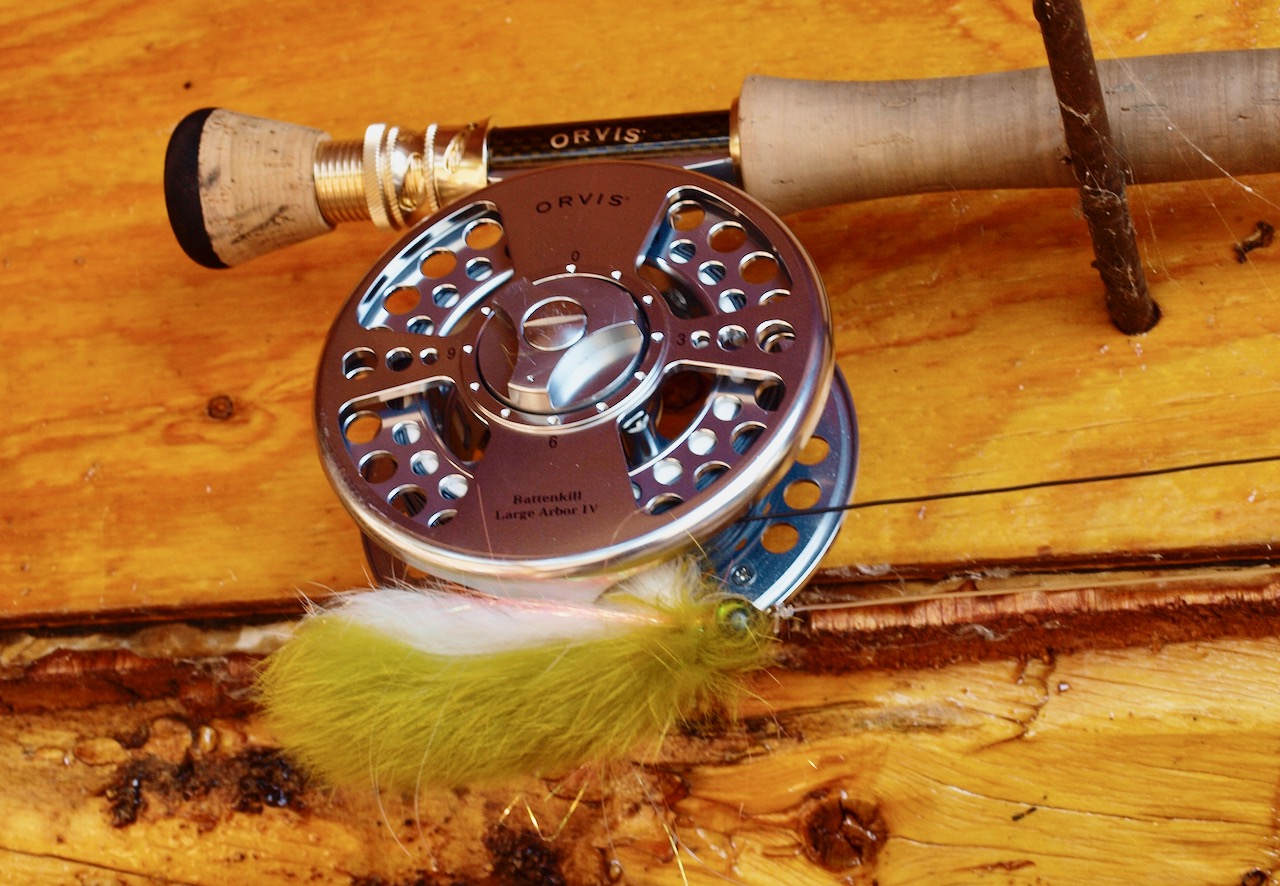
GEARED UP
Curious about the fly gear I use for Great Slave’s lake trout? On my most recent trip last year, I brought a four-piece Orvis Helios 8-weight fitted with a large-arbor Orvis Battenkill IV reel (above). The reel was spooled with 200 feet of Dacron backing, a full-sink line, and eight feet of Maxima 20-pound monofilament leader (tapered leaders are not necessary). For back-up, I also brought two extra 8-weight rods and an extra spooled reel; 8-weight rods are the minimum for Great Slave’s lakers. As for flies, I packed a selection of patterns hand-tied by my son, Myles, including Deceivers, Cone-Head Woolly Buggers and Zonkers of different colours. I’ve had good success fishing for lakers on Great Slave with chartreuse, orange and yellow patterns, as well as earth colours (black, brown and olive green).