


WHERE’S WALLEYE?
June can be a tricky time to find and catch walleye. The key is understanding what motivates their post-spawn behaviour
Advertisement
 June walleyes are looking to eat
FOOD SUPPLY
After spawning, walleye are hungry. They need calories, and they need them efficiently. Early summer is also when most Canadian lakes and rivers undergo a major forage transition. Spring bait species begin dispersing, young-of-the-year perch appear, and emerald shiners start to school up. In some waters, ciscoes and smelts move toward deeper basins—and the walleye follow.
Invertebrates and insect hatches also play a huge role in June, especially in fertile lakes and reservoirs. They attract small baitfish, which will concentrate the predators. As always, the walleye will go where the calories are.
Advertisement
Modern sonar makes it easier than ever to monitor evolving patterns of concentrated food sources. Clouds of bait, subtle flickers or even scattered marks near bottom are signs of life for you to key in on. When screens are empty, so are most fishing spots. A simple rule applies here: If you’re not seeing food that walleye can eat, don’t expect bites.
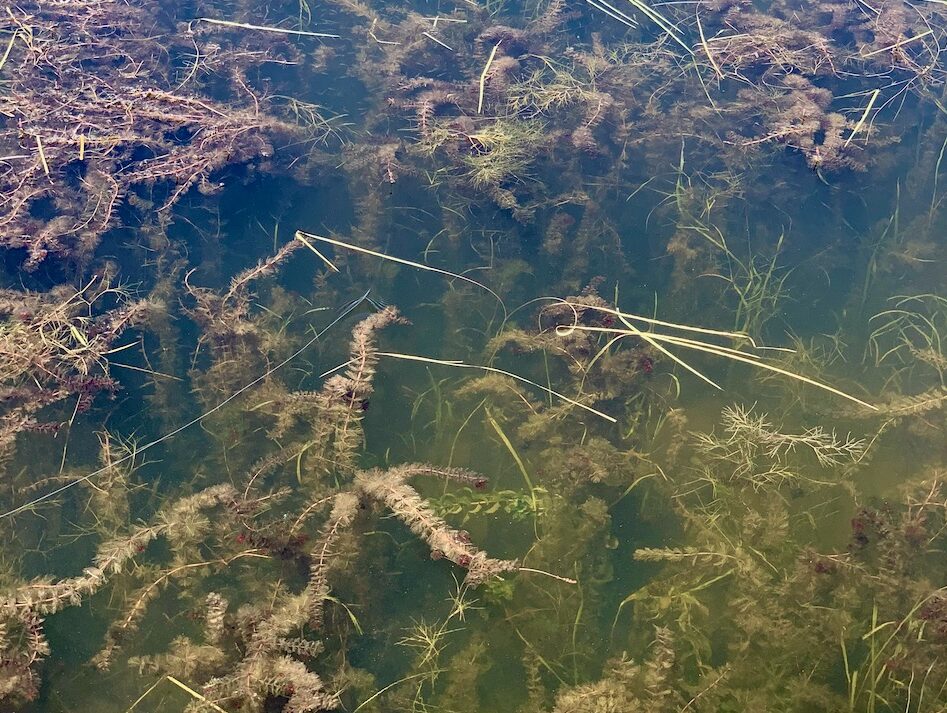 Probe weeds such as eelgrass and milfoil for lurking walleye (photo: Chris Hockley)
WEED GROWTH
June is when lakes really start to rebound and truly come alive after our harsh Canadian winters. Submerged vegetation begins its annual growth cycle, pumping oxygen into the water. This enables aquatic insect populations to explode. Baitfish flock to those insects, and walleye follow. That’s why the first healthy weed growth of the season usually equals dynamite walleye fishing.
Inside turns, outside weed edges and mixed rock-and-weed zones are especially productive. Those areas concentrate prey while offering ambush cover. Not all weeds are equal, however. Avoid decaying vegetation, and focus on new growth that’s green and vibrant in June. In particular, look for weeds that produce plenty of oxygen, such as broadleaf pondweed, or cabbage.
Advertisement
These prolific, oxygen producing plants support a whole web of life in a highly localized area, and walleye are often at the top of that food chain. You can pull a walleye out of any part of a cabbage patch, from open water around the edges to smack dab in the middle. Cabbage also happens to be the easiest weed species to fish, since the plants are relatively sparse compared with many other weeds. Test your casting skills by dropping all manner of sinking baits into the holes, or trolling spinner rigs along the edges.
Other weeds you should learn to identify are coontail, milfoil and eelgrass. Coontail is a great June producer of walleye because it greens up early—even in colder weather—and holds a lot of bait. It’s excellent post-spawn habitat, but it gets too thick to fish effectively as the season progresses. In June when there are still lots of holes in coontail patches, try throwing weedless jigs and soft-plastics or live-bait rigs into the gaps. Of course, the edges are also always good for drifting slow presentations or throwing diving crankbaits.
Advertisement
Milfoil can be tricky, but if you recognize its strengths and weaknesses, it can be a walleye angler’s best friend (in my neck of the woods, in fact, the old-timers refer to it as “walleye weed”). Milfoil’s dense, feather-like leaves create shade that walleye love, but post-spawn fish may or may not relate to it depending on conditions. If the water is cool, you’ll find them in the milfoil. In a warmer-than-average June, however, it’s less likely, because milfoil holds heat. I’ve found that milfoil rarely disappoints during the post-spawn on cool, clear lakes, likely due to the additional thermal advantage it provides.
Wild celery or eelgrass flats, especially near inflows and outflows, are often overlooked spots to catch early-summer walleye. Their slender, ribbon-like leaves can hold all kinds of baitfish, often in deeper water than you might think. Wild celery, for example, can happily grow as deep as 15 feet. These are great places to cast deep-diving cranks or jerkbaits, troll stickbaits or harnesses, or simply drop down a trusty old jig and minnow.