

OFF THE GRID
Wild fishing adventures await at northern Ontario outfitters like the legendary Leuenberger Air Service
Advertisement
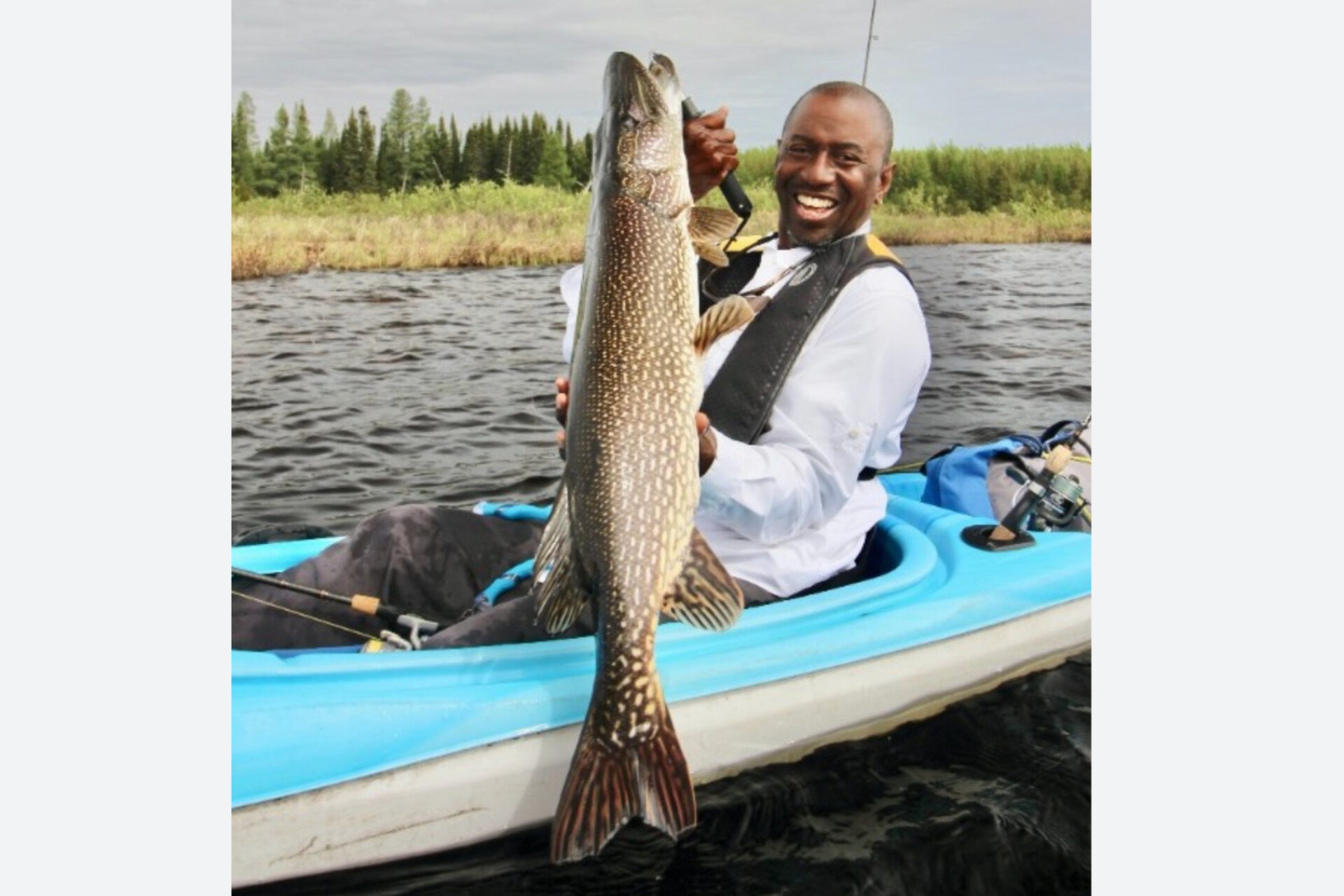
Anglers are blessed to experience some very special places—the kind of places only seen by people who seek relaxation and fulfillment in the outdoors. We get to visit locales that are wild and beautiful and, when we’re lucky, teeming with fish. I recently returned from one of those places: Whittle Lake, in northern Ontario, and it was unforgettable.Situated 100 km north of Nakina, Ontario, Whittle Lake is home to an outpost cabin operated by the long-running Leuenberger Air Service—a fixture in northern fishing and hunting circles for over half a century. Whittle Lake is small, just 4 km from end to end, and rarely more than half a click wide. The surrounding land is mostly low and flat, and the lake is ringed by scrubby forest, bogs and meadows. And in six days of fishing my group caught, well, we quickly lost count. But we easily had hundreds of walleye and pike, including some pretty memorable specimens (below).
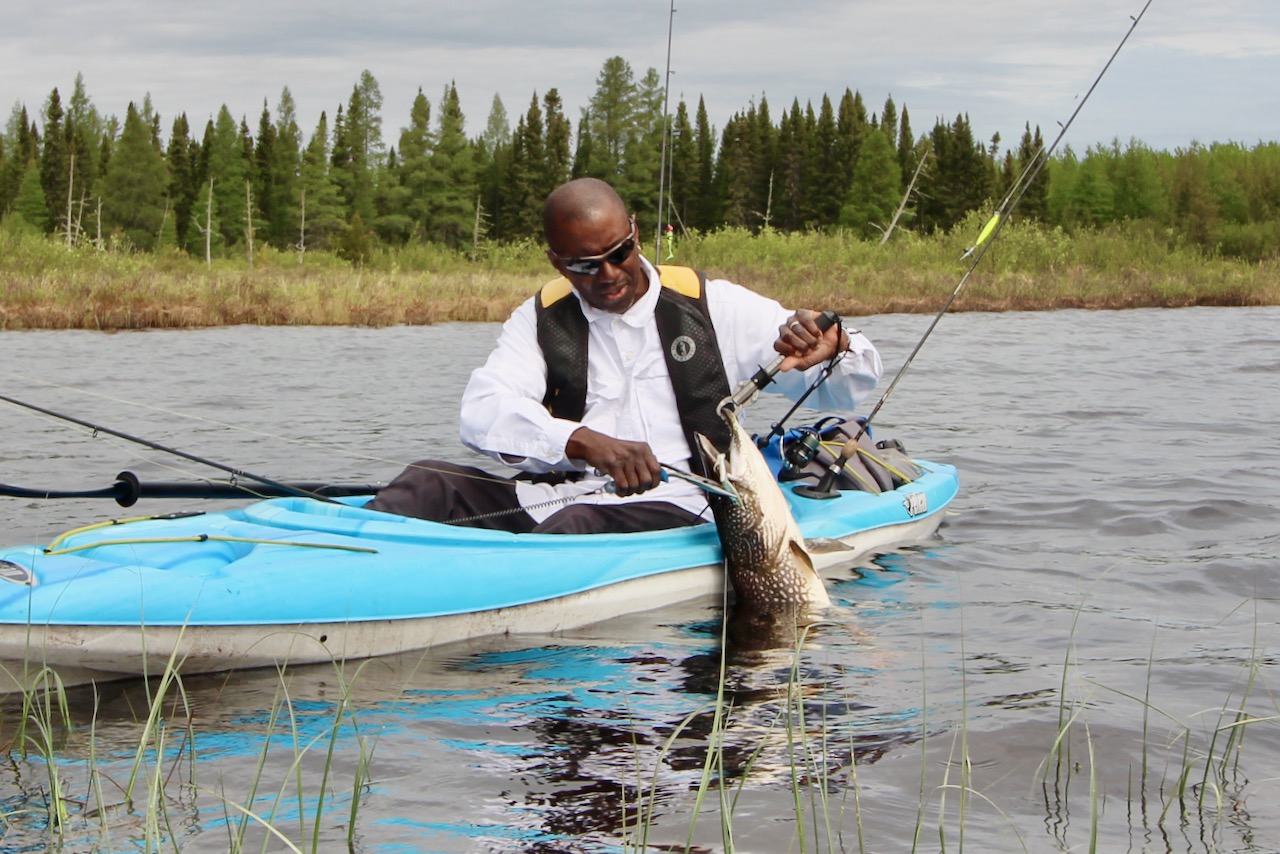 Wes Nelson lands a trophy pike from Whittle Lake—very carefully
Yet the truly amazing thing about Whittle is that it’s just one of several dozen outpost lakes in the region around Nakina. (Leuenberger alone has 14, plus the full-service Kagianagami Lake Lodge, aka “Kag” Lodge). And all of these lakes boast excellent fishing for walleye and pike, and many also have brook trout, lake trout, jumbo perch and whitefish.
Advertisement
Outposts hold a special place in the landscape of Canadian outdoor adventures. Although available across Canada, outpost trips are especially popular in northern Ontario, where they offer fly-in fishing on a Regular Joe budget. I’m now a veteran of many outpost trips, and the more I do, the more I love them. Beyond the excellent fishing and remote setting, you can fish hard or all day or take it a little easier. There are cabins suitable for both large and small groups. With so many options, you can craft a trip for hardcore anglers, families or every kind of party in between. In fact, I’ve come to believe that the northern outpost just might be the ultimate Canadian summer angling adventure. Here’s why…
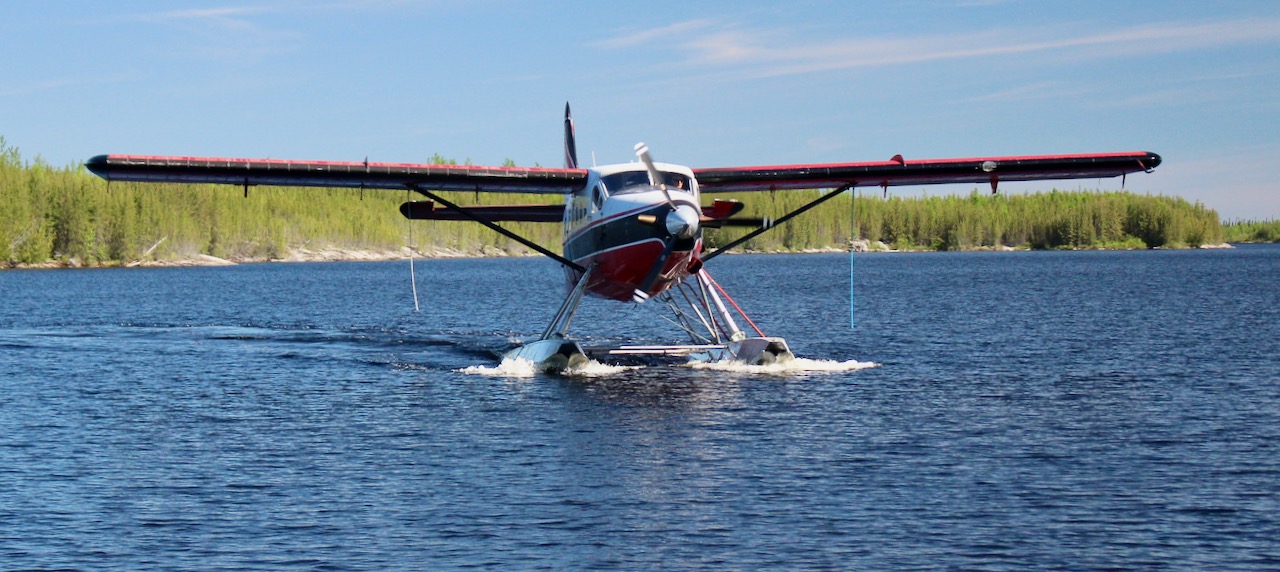
Outpost adventures give anglers (and hunters) incredible value for the money
The cost of a remote, backcountry fishing (or hunting) adventure is largely determined by two factors: how far you venture from civilization, and what level of service you expect when you get there.
At one end of the scale is the 100% DIY trip, where you get dropped off at (or paddle into) a remote location and camp rough. These take you to some rarely seen places, but you also have to bring all your camping gear, plus fishing tackle, boats and food. I once contemplated joining one of these trips, but the organizer lost me at “digging our own latrines.” At the other end is the full-service lodge, with meals and guiding provided. These trips are incredible, but they aren’t cheap.
Advertisement
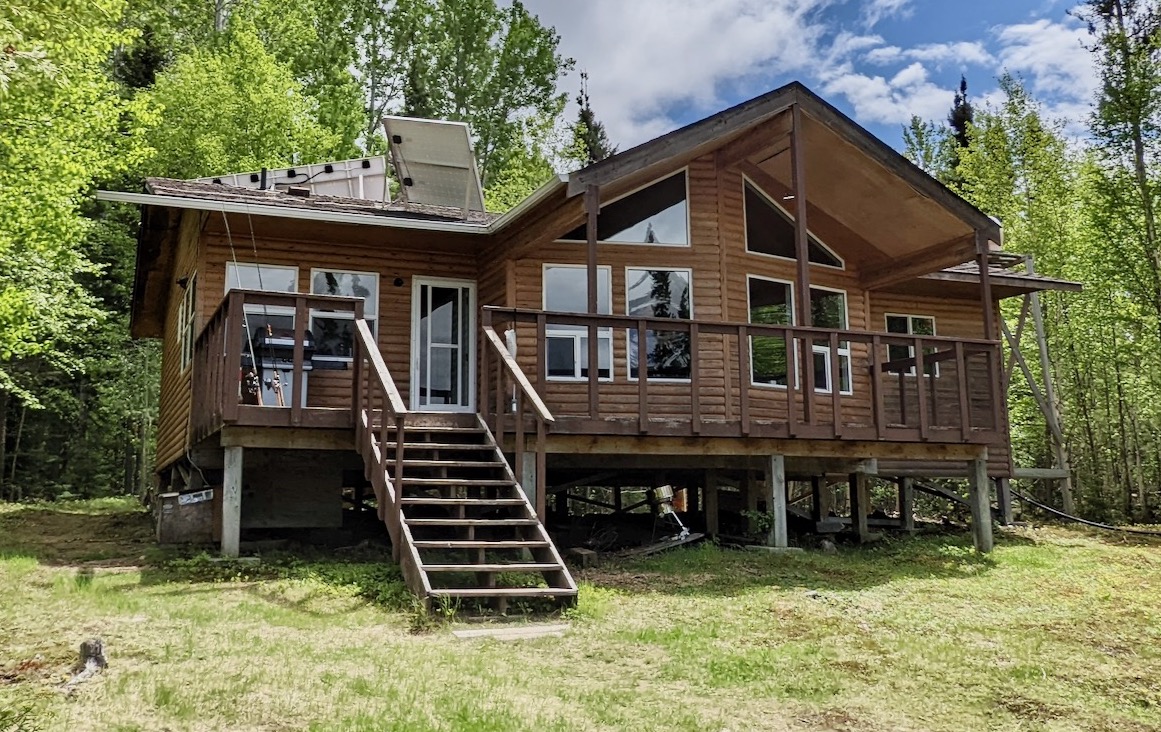 Whittle Lake has a well-appointed three-bedroom cabin, with hot water and solar-powered lights
The outpost sits somewhere in between. A floatplane service or outfitter supplies a cabin, boat, motor and flight to and from the lake. Amenities vary, but most cabins are furnished, with kitchen appliances, cooking implements, and often running water and some electricity. Our Whittle Lake cabin, by the way, was the nicest outpost lodging I’ve ever seen—modern and well maintained, with a heated shower, three bedrooms, a giant dining table, a sitting area with a couch and easy chairs (below) and a huge deck.
At an outpost, guests bring their own food, cook for themselves, and fish the lake at their own pace. Prices vary, but a week at an outpost is usually comparable to a week at a popular Canadian winter getaway spot, such as Cuba and Mexico. You can also usually drive to the jumping-off point, which keeps costs down. Nakina, for example, is about a 12-hour drive from Toronto, Ottawa and Winnipeg, and seven hours from the U.S. border crossings at International Falls, Minnesota, and Sault Ste. Marie, Michigan.
Advertisement
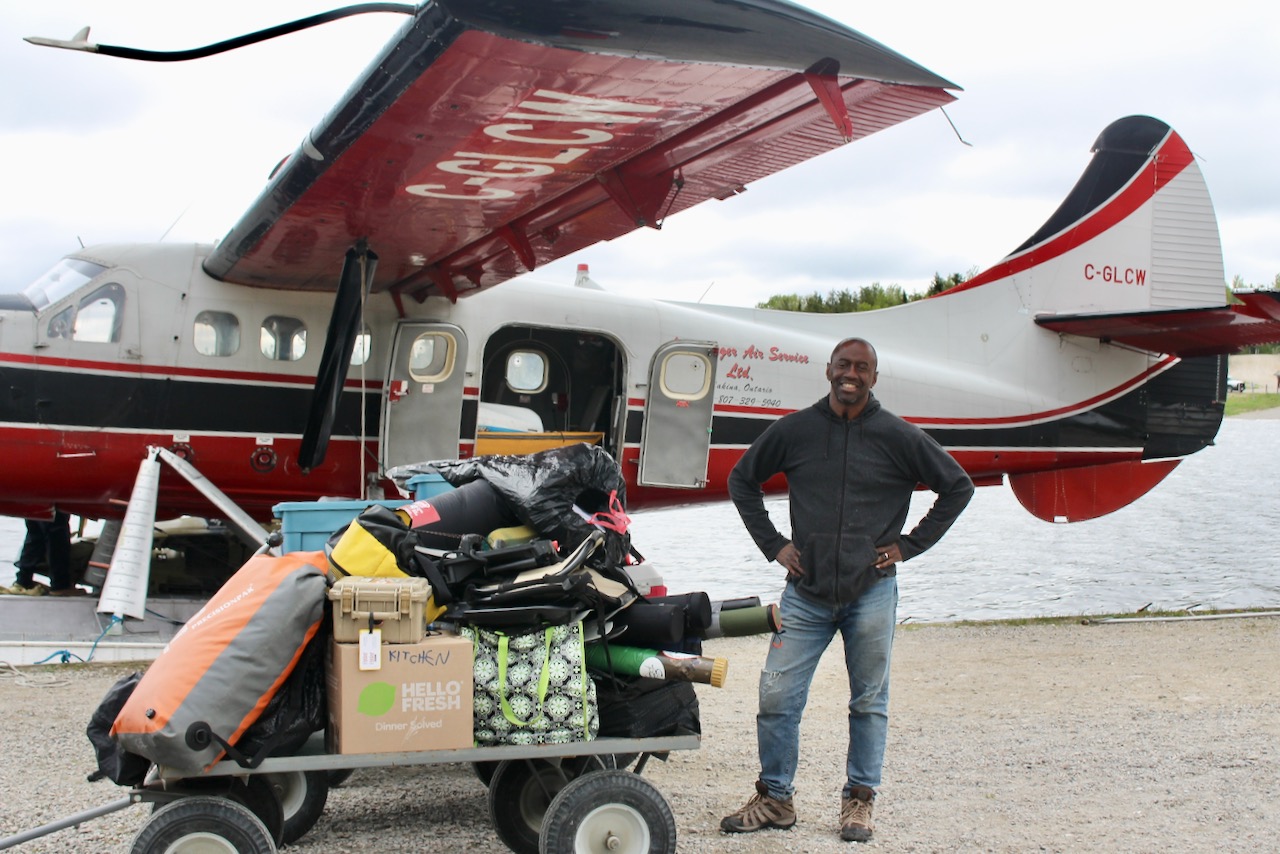 The author’s group flew kayaks into their outpost, along with all the usual gear
So, if you’re willing to undertake the planning and packing, do a few dishes and a little sweeping up at camp, and enjoy running your own boat, the outpost is a high-value, low-cost adventure. Outfitters also tend to be very accommodating of special needs and requests. For example, my friends and I prefer to fish out of our own custom kayaks. And the team at Leuenberger was happy to fly our three boats, and the extra gear they required.
You can be totally cut off from the outside world—or not
Until recently, outpost guests were completely cut off from the outside world during their entire trip (unless the air service does a mid-week drop in, which Leuenberger does). In today’s busy, connected world, being cut off from phones and e-mail holds a major appeal for many of us. Still, it can also be worrying, especially in the case of a medical emergency at camp.
So if you’d prefer to stay somewhat connected, there are now options. On this trip I took two communication devices supplied by Roadpost Canada, which provides mobile satellite solutions, both for sale and for rental. We had a classic satellite phone, which also offers simple texting.
We also had a Zoleo—a remarkable little device that essentially turns a smartphone into a satellite communicator. It handles texts and e-mail, along with numerous other features such as an SOS alert button, a Check-in button and the ability to get up-to-the-minute weather forecasts, which was super helpful. Both of these devices worked extremely well, and gave us peace of mind in case of an emergency.
And a pro tip: if you don’t want your family pestering you about minor issues at camp, consider telling them that “to save battery power” you will only turn on your device once a day. It worked for me.