


EASY DOES IT
When springtime walleye get lockjaw, it’s time to keep things simple to get the action started
Advertisement
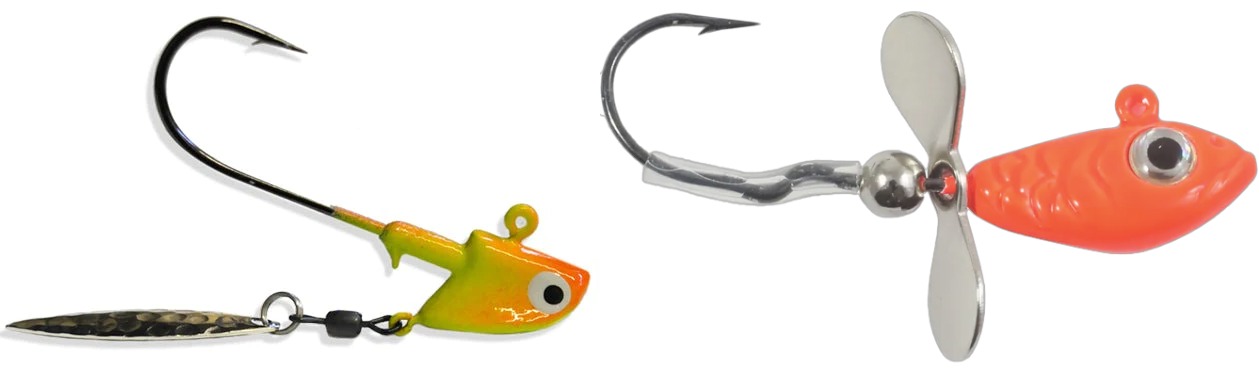 A ReelBait flasher jig (left) or prop jig can make a basic presentation downright irresistible
#2 ADD SOME SUBTLE FLASH
Of course, if you count yourself among those of us who feel the need to always doctor your baits, you can tinker with these easy-peasy presentations to enhance their effectiveness. One way is to use a prop jig or bladed jig such as a ReelBait Flasher Jig instead of a plain-Jane ball head. The subtle flash and vibration from the tiny, shiny willowleaf often seals the deal on the wariest of walleye, leaving you to wonder how such a small-time change can make such a big-time difference.
I consider prop jigs, on the other hand, to be one of most overlooked styles. They can also be among the toughest jigs to find, so I often make my own. Simply take your favourite ball head jig, slide a metal prop onto the shank and then use thread to secure it, collar-like, behind the ball head (it easiest to do this using a fly-tying vice). I typically use fluorescent red, orange or chartreuse thread to give the fish a subtle hot spot to zero in on. Using a toothpick to place it ahead of the prop, a drop of J-B Weld or similar steel-reinforced epoxy will work in a pinch if you don’t have a vice.
Advertisement
My favourite simple sting of all, though, is to use a prop or bladed jig as the weight at the end of my drop-shot rig, giving the walleye two choices for dinner. This is called a Wolf River rig, and it shines because the prop or bladed jig calls in and captures aggressive fish, while the drop-shot minnow entices the warier walleye, making it the best of both worlds.
BONUS TIP: GOOD VIBRATIONS: While prop jigs and willowleaf-bladed flasher jigs work everywhere, they excel in walleye lakes, rivers and reservoirs characterized by tea-coloured, tannic-stained drainages, algae blooms and clay banks that cloud the water. To make your prop jig spin faster or slower, you can custom-tune it by gently twisting the blades in opposite directions. And if the water is really dirty, you can make the blade one size larger on your Flasher jig, or switch to a noisier, throbbier Colorado blade.
Advertisement
#3 RETHINK YOUR BAIT CHOICES
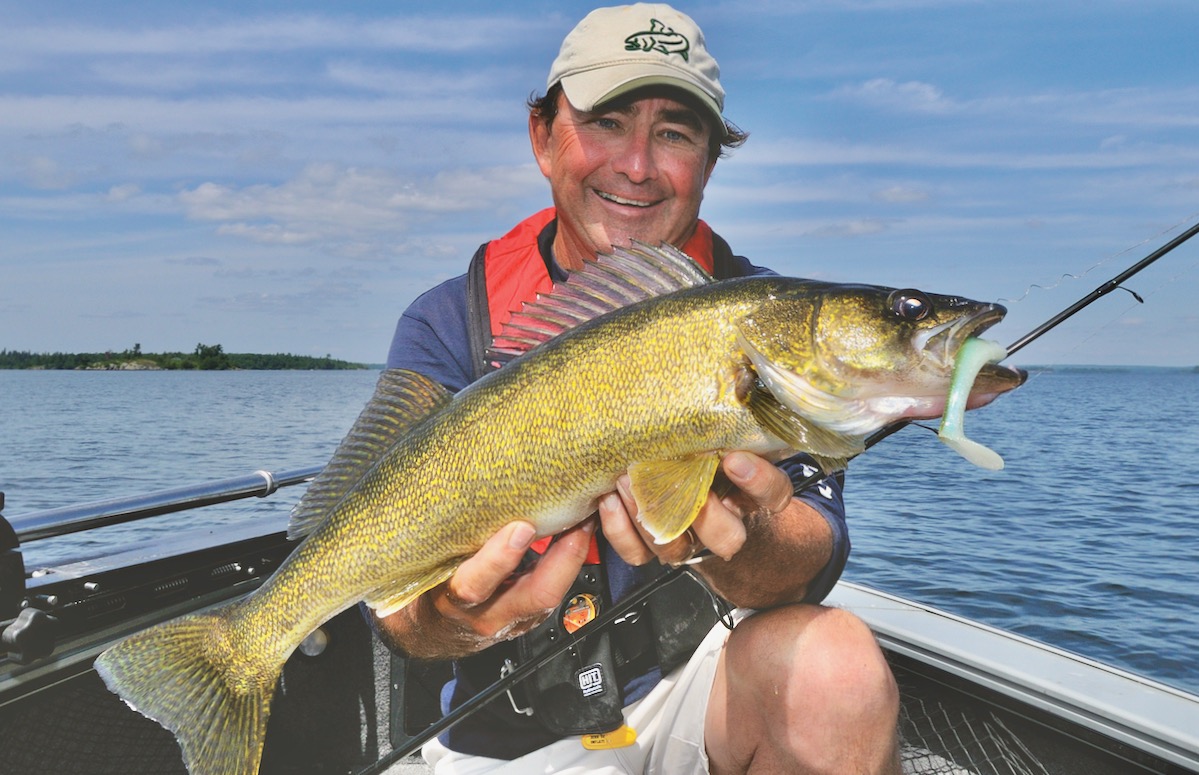
Most walleye anglers use minnows that are far too small. After all, the science folks have shown us conclusively from their diet studies that walleye prefer prey measuring up to 45 per cent of their body length. That means a modest 16-inch walleye has no hesitation—in fact, prefers—gobbling down four- and five-inch-long shiners, chubs, dace, perch and suckers.
Advertisement
Now, extrapolate that out to the walleye we hope to catch in the 30-inch-plus trophy range. It’s likely you’ve never offered these fish a minnow that’s pushing 45 per cent of their body length, but you should. There’s a reason anglers on the trail of trophy walleye favour six-, seven- and eight-inch-long swimbaits attached to big, heavy jig heads, as well as similar-sized crankbaits, minnowbaits and jerkbaits.
Not that you should only use minnows early in the season. For years, the walleye live-bait mantra was to fish minnows during the cold-water periods of spring and fall, leeches in the shoulder times and nightcrawlers when the water warms up in the middle of summer. Owing to the changing climate, however, I’ve started six of the last eight walleye openers with a leech slithering on my jig and drop-shot presentations, never touching the minnow pail.
Meanwhile, when you opt instead to tip your jig or drop-shot hook with a nightcrawler, here’s a simple but deadly trick. Instead of snipping a thick, juicy crawler in half, then threading the cut end onto the shank of your jig, as is the common practice, do the reverse. That way, the succulent scent from the trailing cut end will waft right into the noses of the fish.