

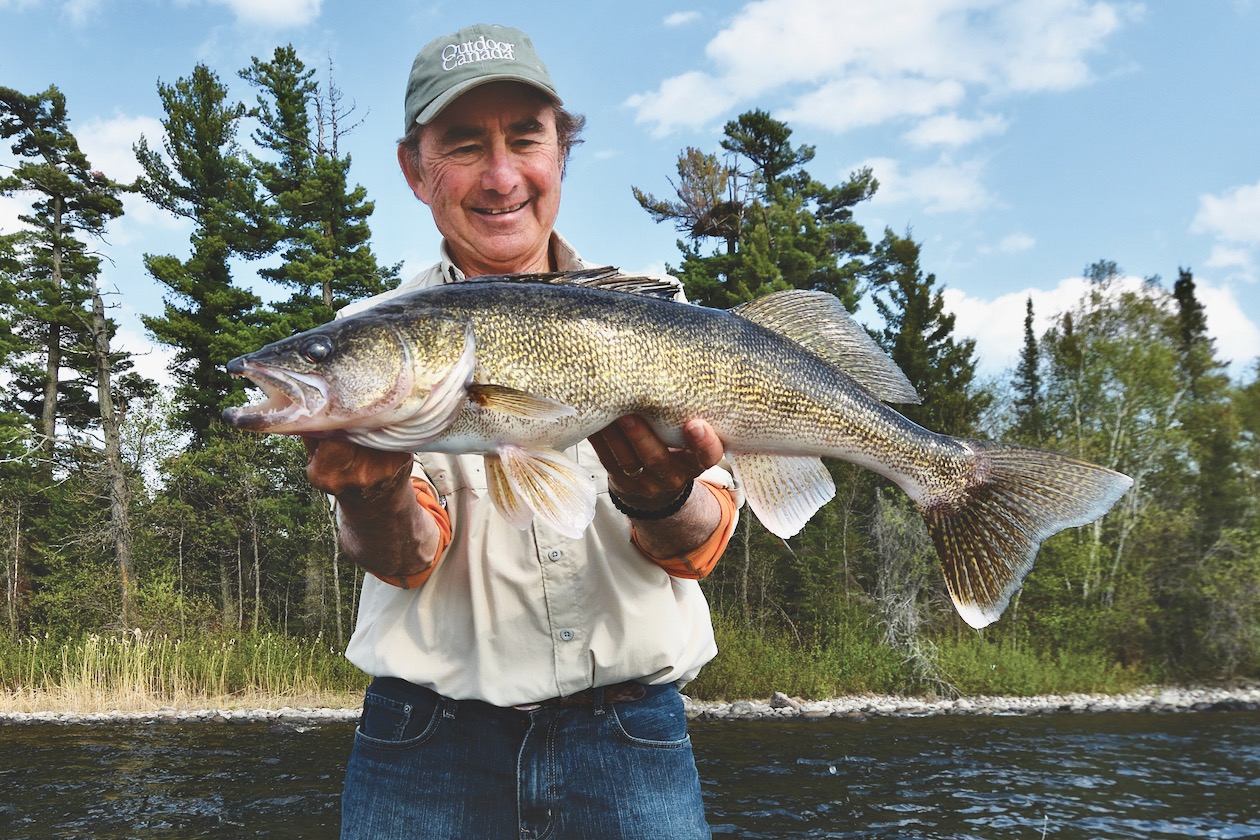

EASY DOES IT
When springtime walleye get lockjaw, it’s time to keep things simple to get the action started
Advertisement
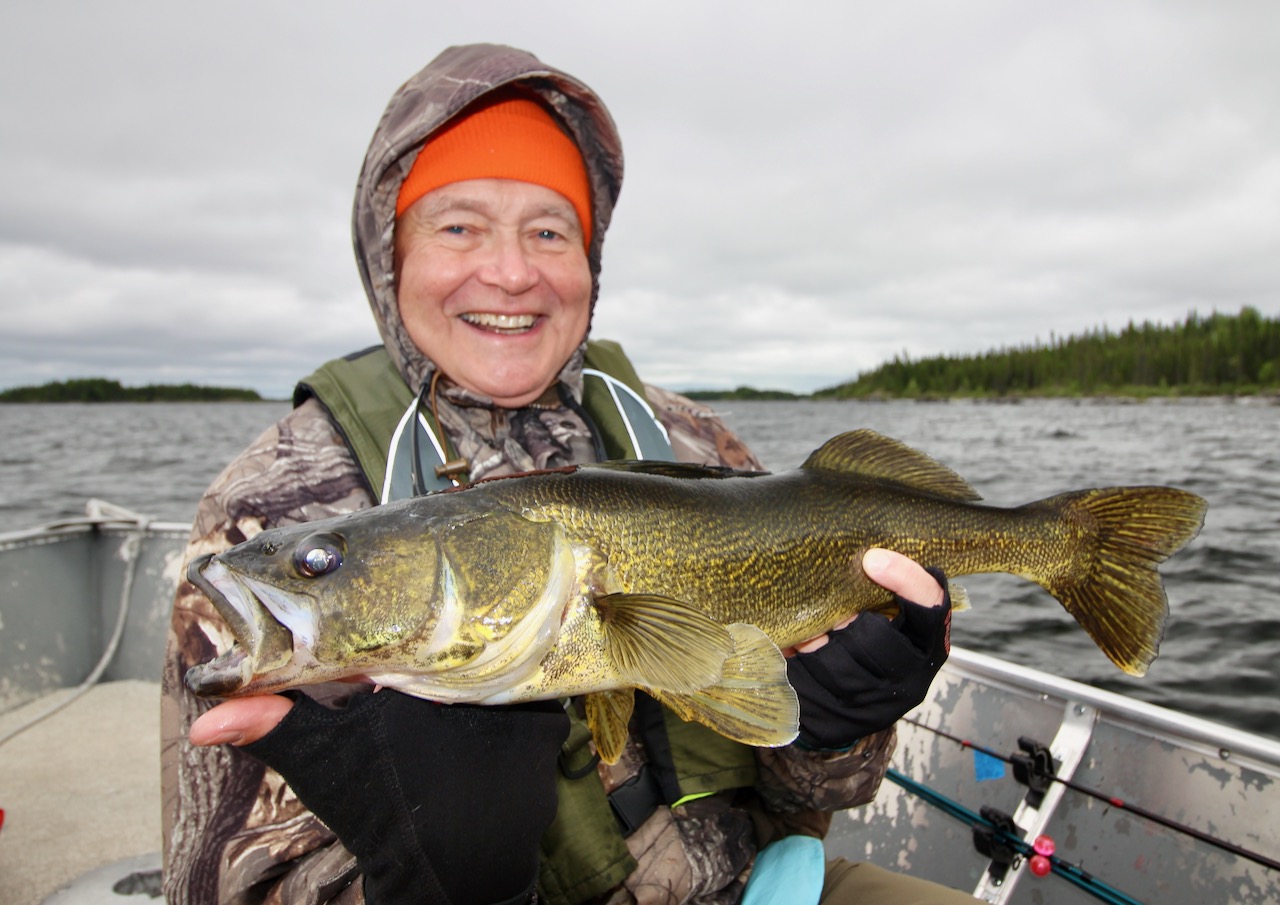 Trolling during the spring mayfly hatch can be lethal
#4 TROLL SLOW-DEATH RIGS
One of the prime times for keeping things simple occurs in June in most parts of the country when the giant mayfly hatch peaks, especially during even-numbered years such as this one. The Hexagenia limbata has a two-year life cycle, with most of that time spent burrowed in hollow warrens in soft lake bottoms. But come June, near the end of their life cycle, hundreds of millions—billions in big lakes and reservoirs—will emerge from the mud and silt and rest on bottom like chocolate-covered almonds, free for the eating. Then they’ll struggle to the water’s surface, where the exquisite flies emerge from their nymph-like exoskeletons.
You can wait until you see the transparent, skin-like wrappers floating on the surface to get in on the action, but I like to get a head start in the middle of the month, counting on the fact that the burrowing bugs are carpeting the bottom of the lake getting ready to ascend.
Advertisement
Another clue the bonanza is getting underway is that the walleye activity around hard-bottomed structures such as underwater points, saddles and rock reefs will slow down a bit. That’s a sure indication the walleye are sliding over to the soft, muddy flats and gobbling up those defenceless chocolate-covered almonds blanketing the bottom.
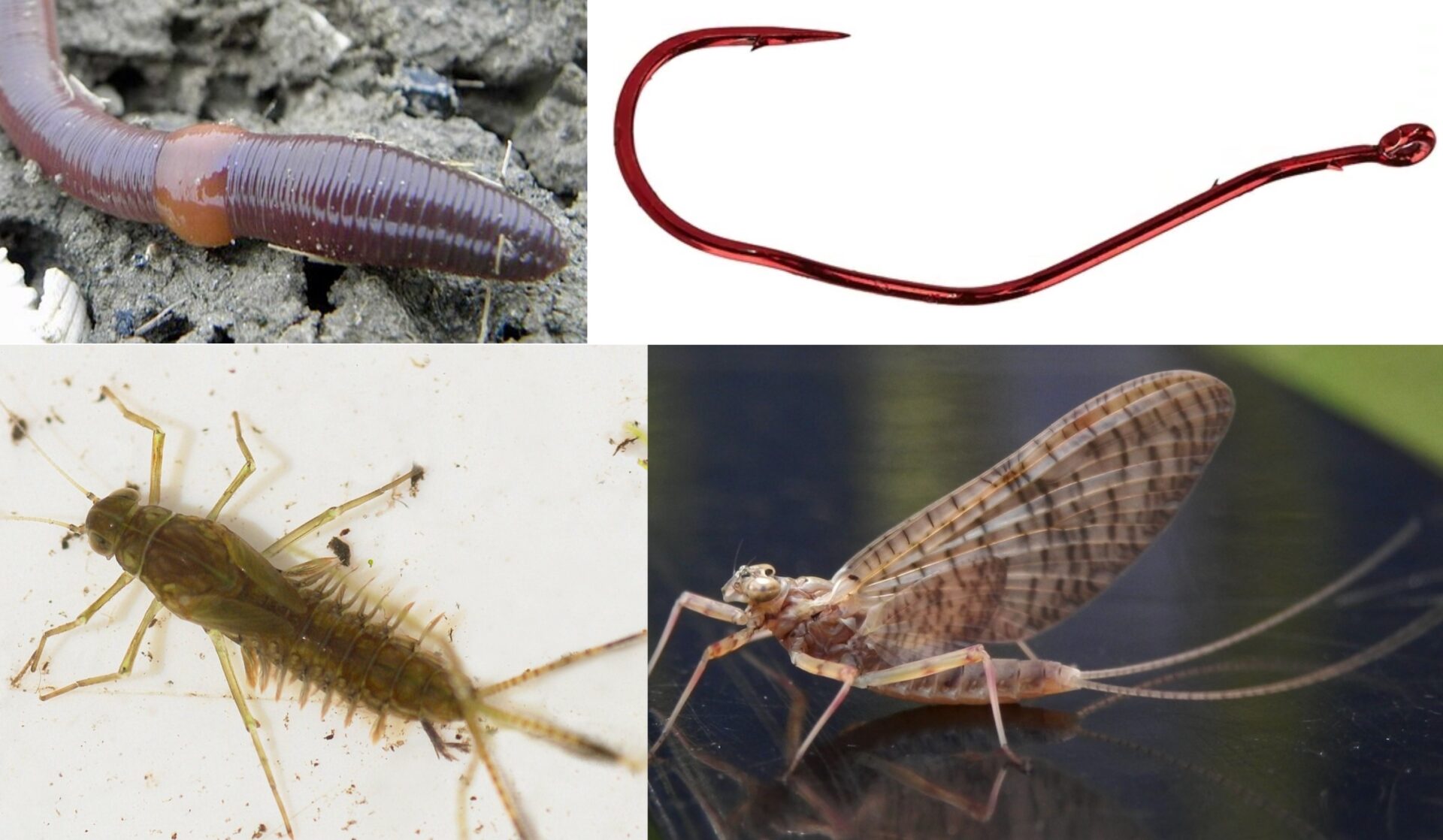 The nub of a nightcrawler (top left) on a slow-death hook (top right) can imitate a mayfly nymph (bottom left) as it emerges to become an adult (bottom right). Photos: Rob Hille, worm; Ian Alexander, nymph; Ryan Hodnett, adult, all Wikimedia Commons
Simply find a flat in the 15- to 25-foot depth and scope it out with your sonar unit set on side-imaging mode. You’ll typically see the fish strung out across the plain like barnyard chickens, rooting out the mouth-watering, protein-packed nymphs. The random location of the fish is perfect for the simplest, most effective two-timing tactic you can employ.
It starts by leisurely trolling at 0.8 to 1.25 mph, pulling a curved #2 or #4 slow-death hook tipped with nothing but the nub of a nightcrawler. Just tie the hook to the end of a four-foot, 10-pound-test leader trailing behind a bottom bouncer. Before lowering the rig to the bottom, place it in the water beside the boat so you can first see that it’s twirling properly in a tantalizingly manner.
Advertisement
The key is to thread the worm onto the hook right down the middle so that its head covers the eye of the hook. Then you need to cut the worm an inch behind the bend in the hook so that the entire presentation is only three or so inches long. Now as the worm spins a foot off the bottom, it looks for all the world like the first vulnerable mayfly of the season, driving the walleye crazy. No spinner blade, no beads—just a bent hook and chunk of crawler. Are you kidding me? What could be simpler, or more deadly?
BONUS TIP: MAYFLY MINEFIELDS Mayfly larvae have tiny tusks they use to dig out burrows in silty lake bottoms, where they live and avoid hungry walleye. They feed on detritus, converting the organic matter into soft, savoury, nutritious protein devoured by walleye. The best flats are typically doughy—not hard or rocky—and shallow enough to receive sunlight. My favourite flats are typically 15 to 25 feet deep.
Advertisement
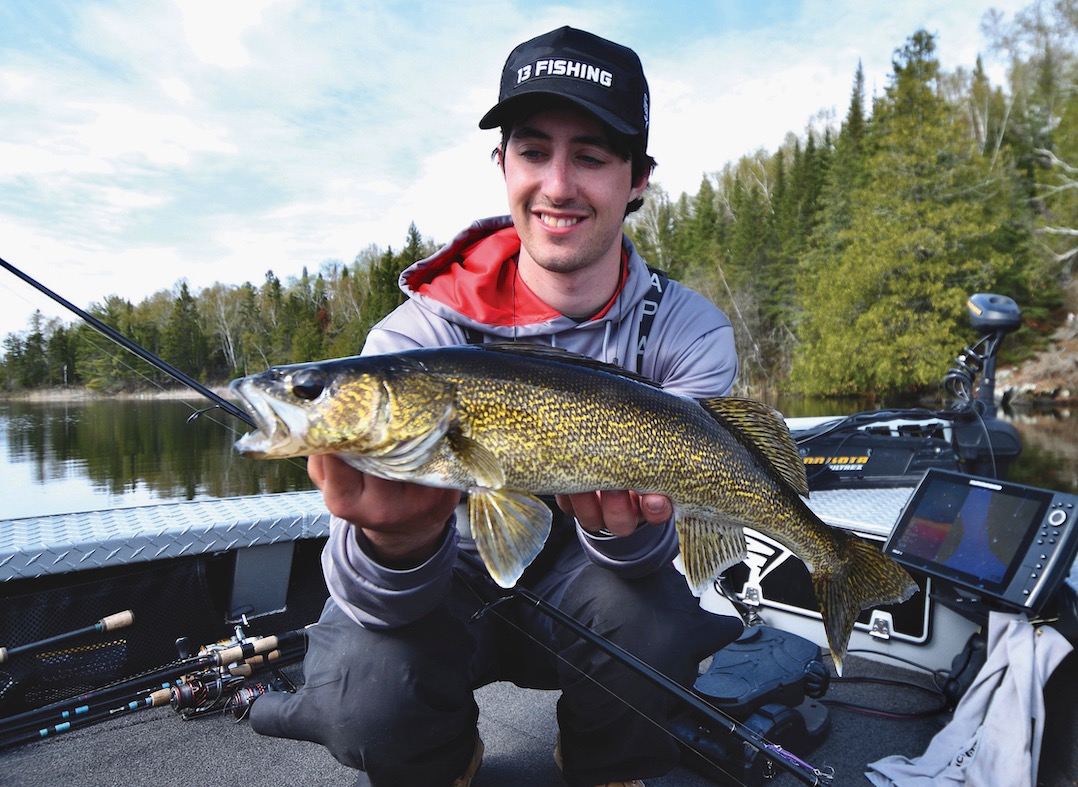 Drop waypoints on every group of fish you spot on your graph
#5 MOP UP WITH NED RIGS
And now for the coup de grâce of simplicity. As you slowly troll your slow-death presentation across the flat and catch the nymph-eating walleye with wild abandon, you’ll occasionally spot clusters of four to even eight or more fish.
Every time you do, hit the waypoint button on your chartplotter. Then after a half-hour or so of slow trolling, return to your waypoints, put the electric trolling motor on spot lock and cast the same Ned rig you would use for bass.
My favourite combination is the lightest VMC Swingin’ Ned Rig Jig I can get away with, based on the water depth and wind conditions, tipped with a three-inch green pumpkin or green pumpkin/watermelon CrushCity Ned BLT. As it descends slowly into the walleye cluster, it resembles a mayfly nymph that ran out of stream while struggling its way to the surface. The walleye typically go berserk when they see this appear.
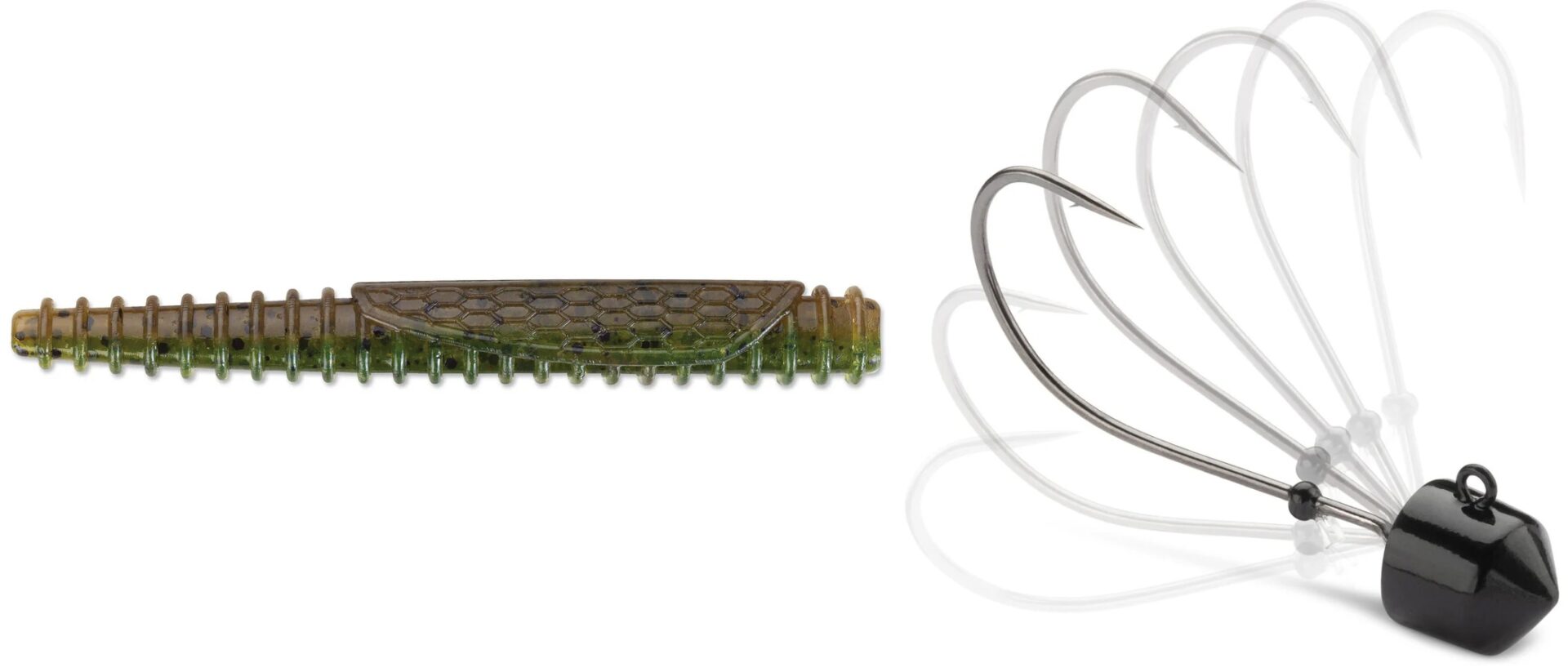
For an even more effective presentation, remove the soft-plastic dressing and grab the box of crawlers you were using to tip your slow-death hook. Cut the thickest, juiciest crawler in half and thread it, cut end first, onto your jig. I know, I said earlier not to do that, but this is an important exception to the rule. Now, using a syringe, insert a small drop of air into the trailing head of the worm. Then when you cast it out, let it settle to the bottom and dead stick it on top of the mud. It will slither, wriggle and twist—head up thanks to the dollop of air—looking like a giant mayfly nymph about to claw its way to the surface to escape. Guaranteed, it will go down the throat of a walleye instead. Like I said, never underestimate the power of keeping things simple.
BONUS TIP: MENU FAVOURITES: Ciscoes and mayflies are nature’s perfect fish foods. Ciscoes have smooth, silky skin, delicate fins and soft internal skeletons, so there’s nothing hard or sharp to catch in a walleye’s throat. Mayflies, on the other hand, are invertebrates, meaning they lack a backbone completely. They’re also almost 100 per cent pure nutrition. In fact, mayflies are so important to walleye recruitment, that the years with good hatches typically produce the strongest year classes.