

’Eye-catching
Tackle, flies and techniques for targeting walleye on the fly
Advertisement
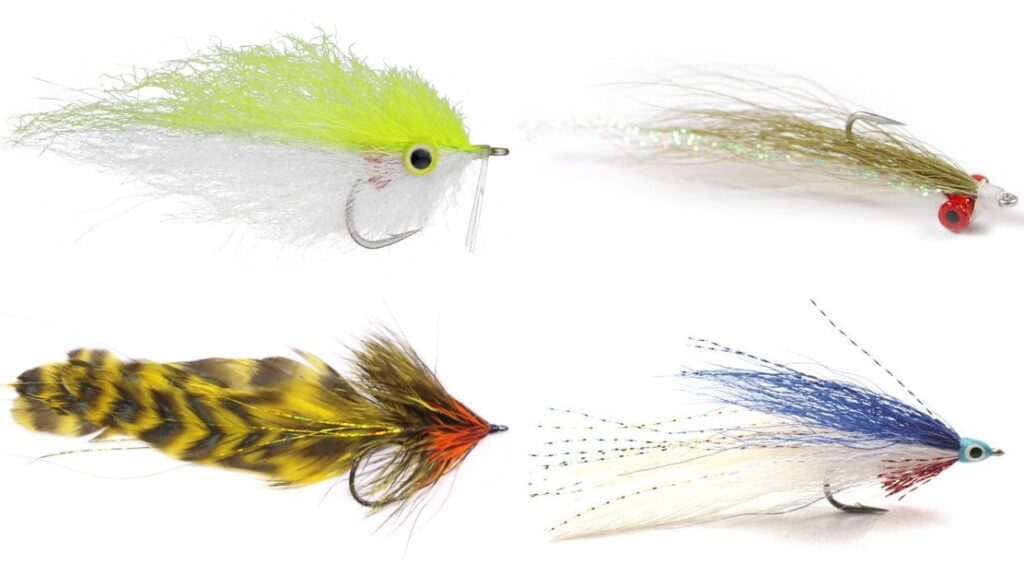 Good walleye flies include (clockwise from top left): Peanut Butter, Clouser Deep Minnow, Lefty’s Deceiver, Seaducer
FLIES
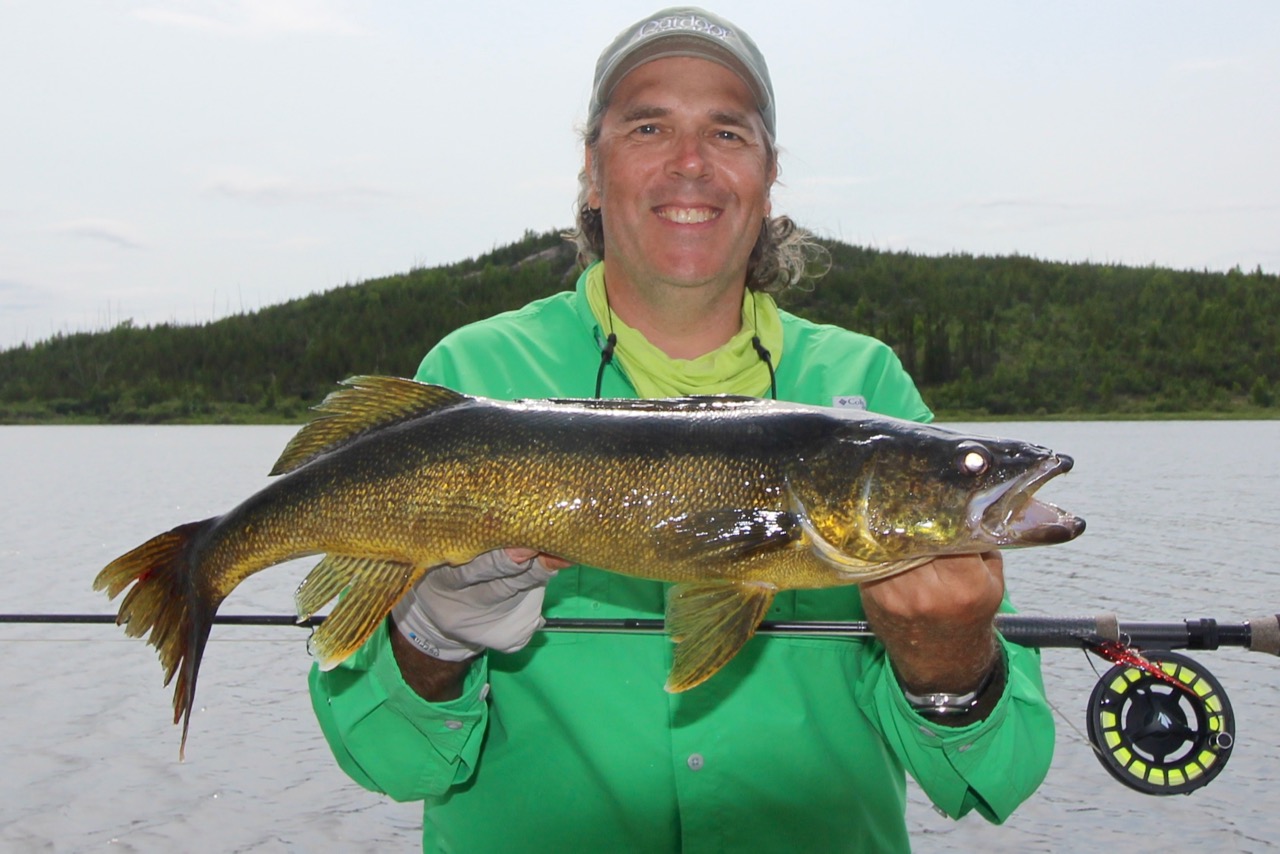
You probably already have plenty of minnow-imitating streamer flies that will catch walleye, but to excel, there’s a secret: Go big. Outdoor Canada’s fishing editor, Gord Pyzer, figured that out after writing about research showing walleye are surprisingly voracious eaters, especially during summer. Namely, he started cleaning up using oversized soft-plastic swimbaits. Similarly, the first time I caught a lunch-sized walleye on a hot-dog-sized largemouth fly, I was astonished. I’ve since learned this is totally routine, however.
Now when walleye fishing, I use the same three- to five-inch-long streamers I throw for bass, pike and lake trout. My faves happen to be the Clouser Deep Minnow, Lefty’s Deceiver, Peanut Butter, Northern Magic and articulated Seaducer. I mostly stick to white, black and chartreuse, with a few olive or brown Clousers to imitate crayfish. That said, the specific pattern is less important than using flies that have a lifelike action, cast easily and cover a variety of depths.
Advertisement
TECHNIQUES
Fly fishing in lakes is often a matter of covering as much water as possible, so it’s one of the few times when making long casts equals more fish. So, the better your casting fundamentals, the better you’ll do. You don’t have to be an Olympian, but if you can get the fly out 40 to 50 feet with one or two false casts, you’re in the walleye game.
The other challenge is line management, especially if you’re not used to fly fishing from a boat—fly lines have a near-magical ability to get caught on any imaginable obstacle. To stay organized, keep fly boxes, pliers and other accessories tucked away, and dump your retrieved line in a contained area at your feet. This reduces the chance of tangles and blown casts. The logistics of this can be frustrating at first, but once you establish a system, it becomes second nature. Given all this, I’ll admit that, more often than not, using fly tackle isn’t the most efficient way to catch walleye. But that’s part of the fun. After all, if efficiency was our prime goal, we wouldn’t be fly anglers to begin with.
For more on weighted flies and sinking lines, see www.outdoorcanada.ca/flyfishingdeep.
Advertisement