

THE KAYAK IS TH DRAG
On Panama’s rugged Wild Coast, that’s just one important lesson learned on the hunt for trophy fish
Advertisement
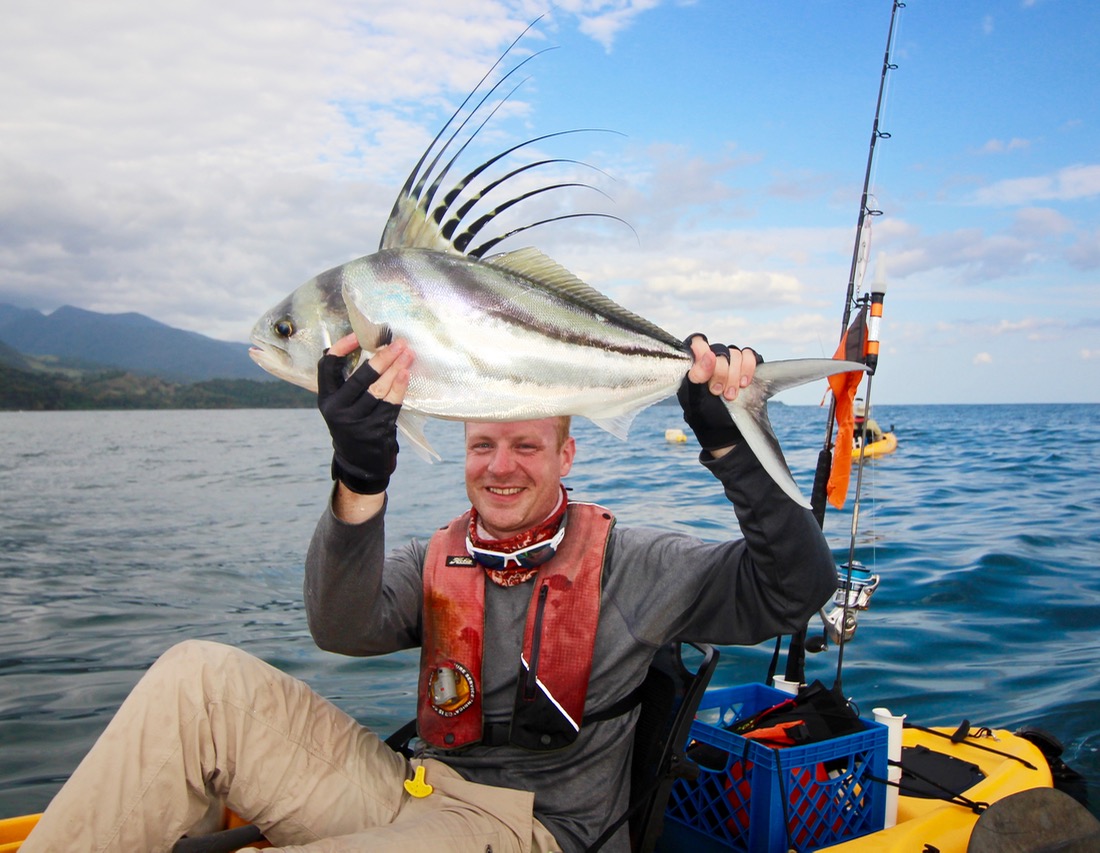
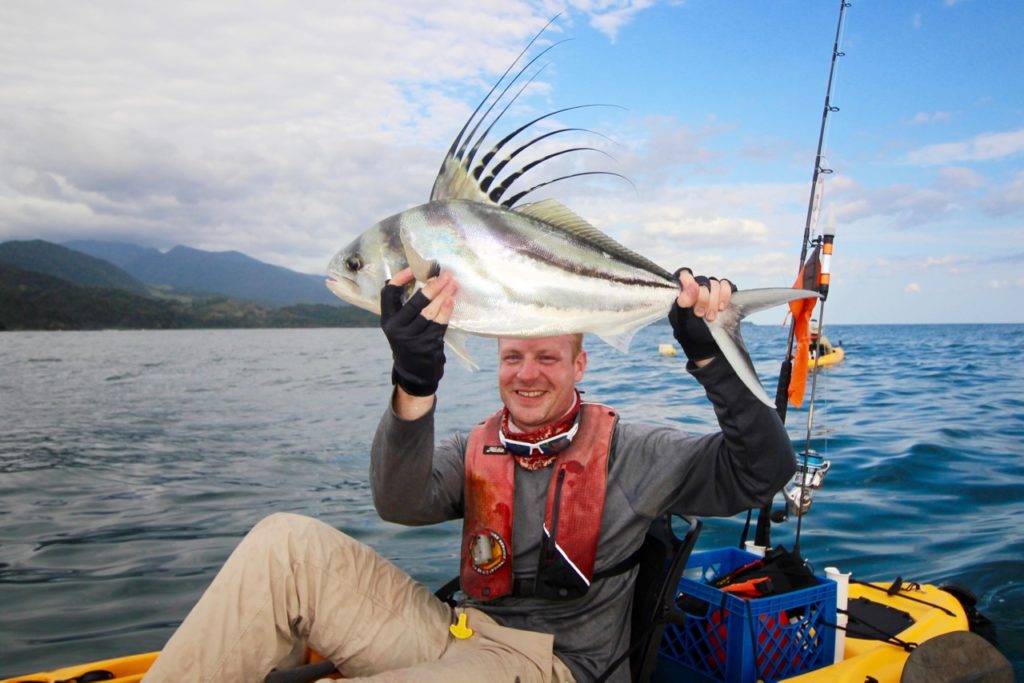 Bob Deane celebrates after landing a nice roosterfish
The following morning’s fishing spot offers another incredible seascape: turquoise rollers breaking on a long sand beach. Even better, it’s prime rooster water, and I’m trolling a live bonito. Sam is pedaling along beside me in a spare kayak, and when my bait gets hit, he coaches me through the procedure. I put the rudder over, spinning to face the rapidly departing bonito, and count a long 10 seconds, giving the rooster time to settle the bait in its mouth before I pop the drag into high gear. The fish is on, and it’s astonishingly, inconceivably strong. It tows me for almost a minute, with no sign of slowing. There’s so much pressure, I can’t lift the rod above horizontal. And then the fish is gone. Sam can’t believe it. Everything was textbook, he says. Subdued, we relate the story to Pascal back on the panga.
“Incroyable,” he says. “This should not happen.” Hooking a big rooster is the hard part, and while the fight is punishing, you usually land them in open water. Pascal then takes a closer look at my hook, then holds it beside a new one. They’re both tempered-steel 12/0 marlin hooks, as big around as a coffee cup, and half the thickness of a pencil, but they don’t match. “Look,” Pascal says. “Your hook has opened. In 12 years here, I have never seen this.” The difference is maybe a quarter-inch, but it’s enough. Wondering if the hook is defective, Pascal and Sam pull on it as hard as then can with two sets of pliers. They can’t bend it. Based on the fish’s behaviour and power, they say the only plausible candidate is a truly colossal roosterfish, surely 100-plus pounds, and one of the biggest specimens they’ve ever encountered.
Advertisement
The next best thing to catching a record-class fish is a great story about the one that got away, and this qualifies. Except that 90 minutes later, it happens again. A couple of kilometres directly offshore, I get a wrenching strike on a jig that’s near bottom in 100 feet of water. After a shoulder-popping fight, a bright orange, three-foot long blob emerges from the depths—a big cubera. But I rush the end-game. When the fish is still six feet down, I reach for my BogaGrip and, heartbreakingly, the cubera slips free. Perhaps it was weakly hooked or maybe I gave it a little slack. Either way, it’s another trophy fish gone. But it’s also another thrilling encounter with a remarkable animal.
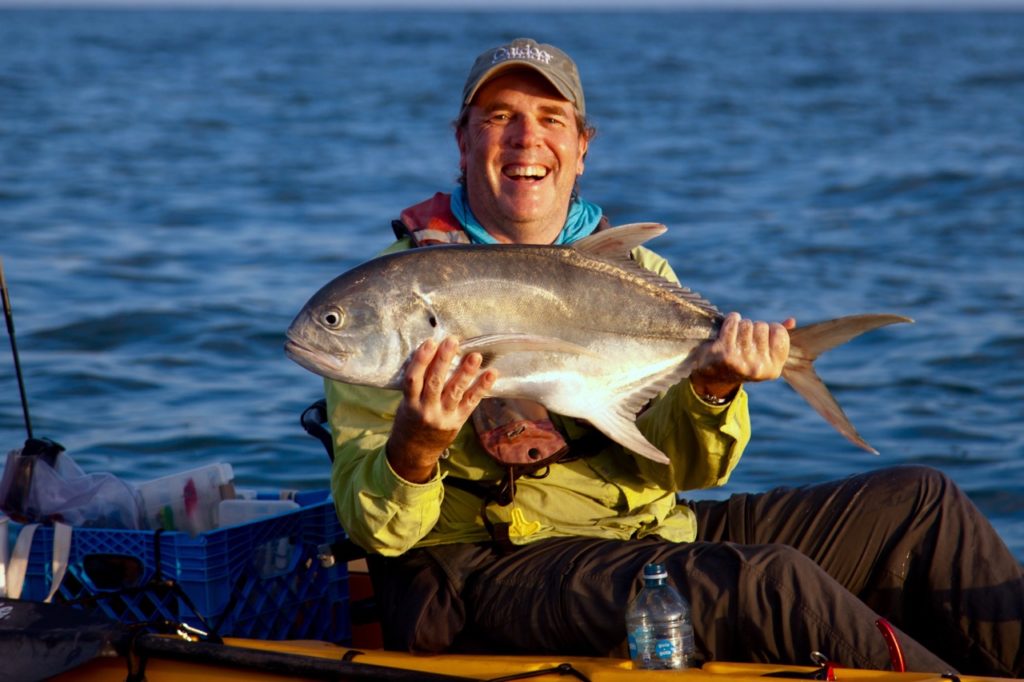 The author’s jack crevalle
At least the spot keeps producing. After lunch, we winch up various snappers and four- to eight-pound roosterfish on flat-fall jigs. Fluttering down horizontally, these four- and five-ounce teardrop-shaped lures are lethal, provoking thumping strikes. I finish the day with my toughest successful fight of the trip, landing a 12-pound Pacific jack crevalle. Jacks are very common, and not especially prized by saltwater anglers, but I love them. Pound for pound, they’re amongst the strongest fish anywhere. This one is a third the size of my lost cubera, but it pulls even harder. And it’s immensely satisfying to finally hold a big fish.
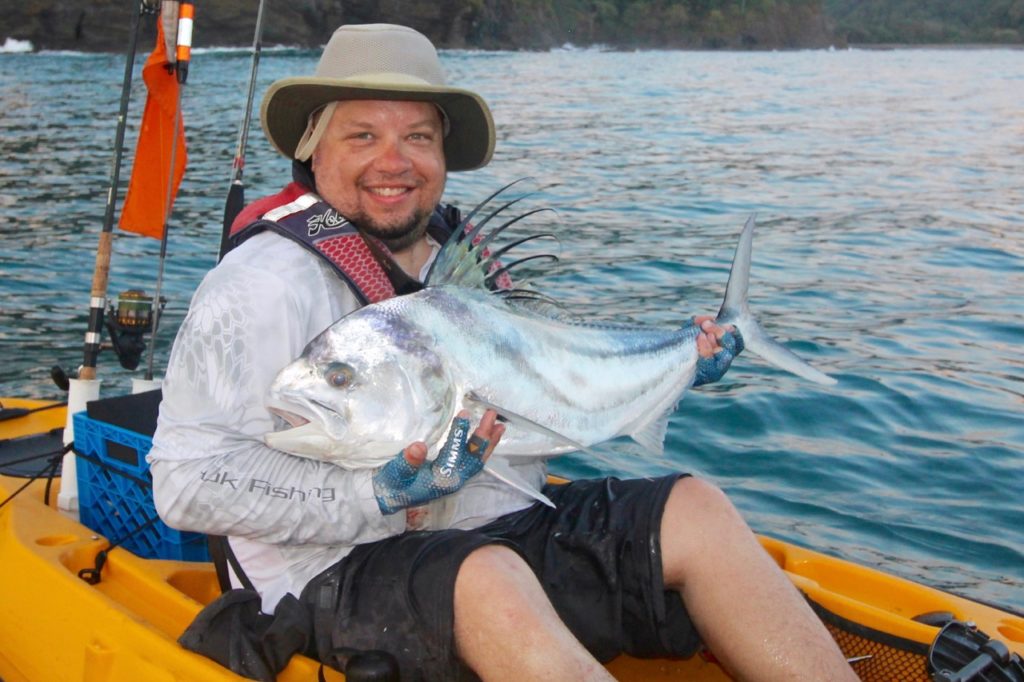 Jaime Nelson with a 20-pound roosterfish
For two more days we cast, jig and troll, catching a dozen different species, including a shimmering, toothy and terrifying six-foot-long needlefish (below) for Bob, and a big cubera for Jaime on a trolled popper. In the final hours of the trip, we return to the same headland we fished on our first morning, five days earlier, but we’re different anglers now.
Advertisement
We’ve been soaked, scraped, bruised and bitten. We’ve taxed our quads and strained our backs. But we’ve also adapted to the heat and exertion, and mastered our kayaks. We now know how to spot baitfish, which means it’s time to throw a popper. We can cast giant lures 80 feet and work them hard, all while keeping an eye out for rogue swells, which can push you onto the rocks. We’ve learned how to brace the rod butt, and conserve energy while reeling up tenacious fish. And now we can land—and safely release—trophy catches from small boats.
As we pedal back to the panga to load up the kayaks for the final time, the only thing we haven’t done is land a trophy roosterfish. Then Jaime, trolling a bonito, lands a beautiful 20-pound rooster, ticking the final box on a remarkable adventure.
Advertisement
If your idea of tropical fishing is sipping a margarita in an air-conditioned cabin cruiser while the crew bait and set your hooks, this is not your trip. The Wild Coast is a place for anglers who like to fish hard, and who relish a challenge. I’ve never learned so much about fishing—and myself—in such a short time. I’ve thought about this adventure almost every day since, and I’ve reached a single, obvious conclusion: to make the most of everything I learned, I have to go back. Soon.
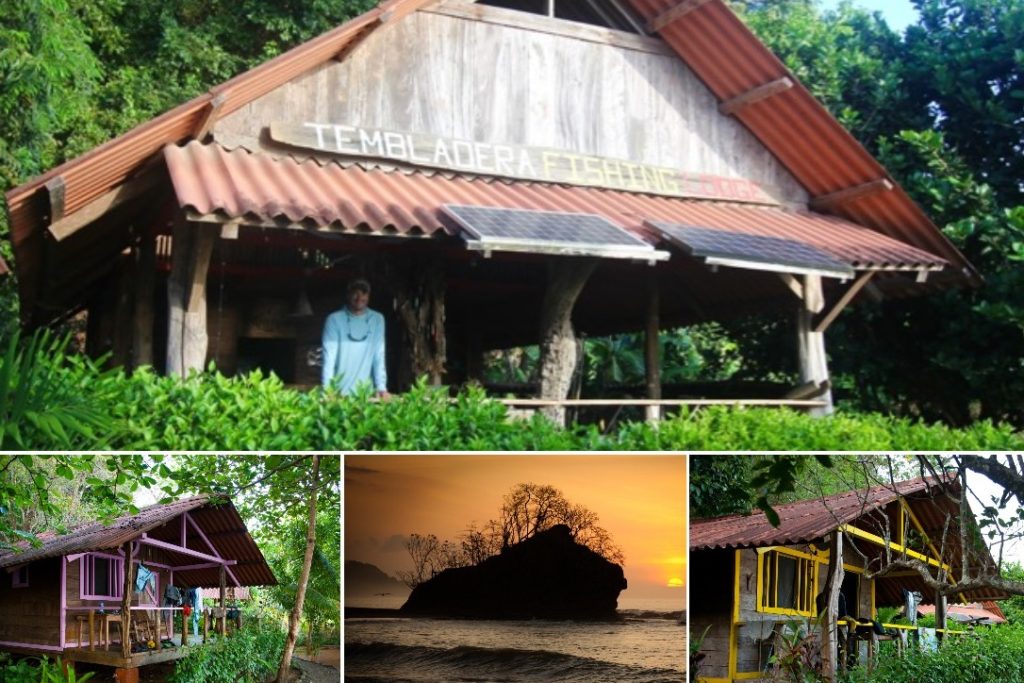
WILD COAST HOST
The Panama Kayak Adventure fishing season runs from December to July. They host six guests at a time (and welcome solo anglers), and the rates include five days of guided fishing, land transportation from Panama City, accommodations and all meals, which feature local, fresh and amazingly good food. Today’s Panama is safe, stable and welcoming to Norteamericanos, and most hospitality workers—including everyone at the lodge—speak English. Find out more at www.panamakayakadventure.com.