


THE ICON AND THE UNICORN
On the hunt for a one-antlered old buck in Saskatchewan, the legendary M1 Garand infantry rifle gets called back into service
Advertisement
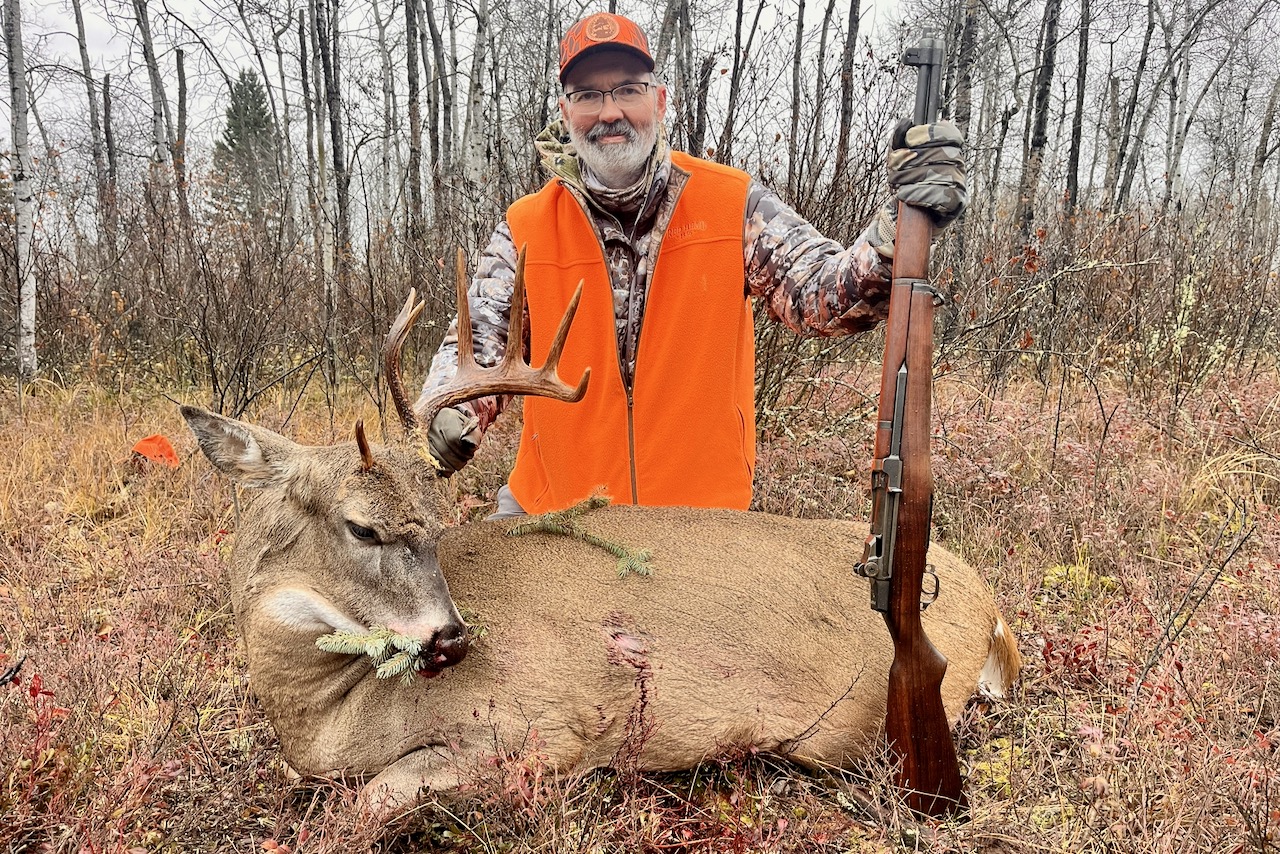 William Blake Rodgers and the unicorn
A few years back, I had the opportunity to acquire an M1 Garand rifle, manufactured in 1942 by Springfield Armory in Massachusetts. Designed by Quebec-born Jean Cantius Garand, the semi-automatic M1 was the primary infantry rifle of the U.S. from the late 1930s to the mid-1950s. General George S. Patton called it “the greatest battle implement ever devised.” For me, there was a personal connection: my father—an American—carried a Garand through sand and mud and rain during the Second World War.
Here in Canada, the Lee-Enfield No. 4 remained the Canadian infantry rifle of choice throughout the Second World War, and later the Korean War. However, the First Special Service Force, a combined Canadian-American commando unit, was armed with M1 Garands during the Second World War. The Royal Canadian Air Force also used the rifle for airbase defence during the early years of the Cold War.
Advertisement
Chambered in .30-06 and fed by an eight-round en bloc clip, the Garand was renowned for its reliability. The gases from a fired cartridge drove the operating rod rearward, engaging the bolt inside the receiver. Two lugs rotated to unlock the action, allowing the bolt to slide back and eject the fired cartridge, then forward once more to lift and feed another, rotating back into locked battery.
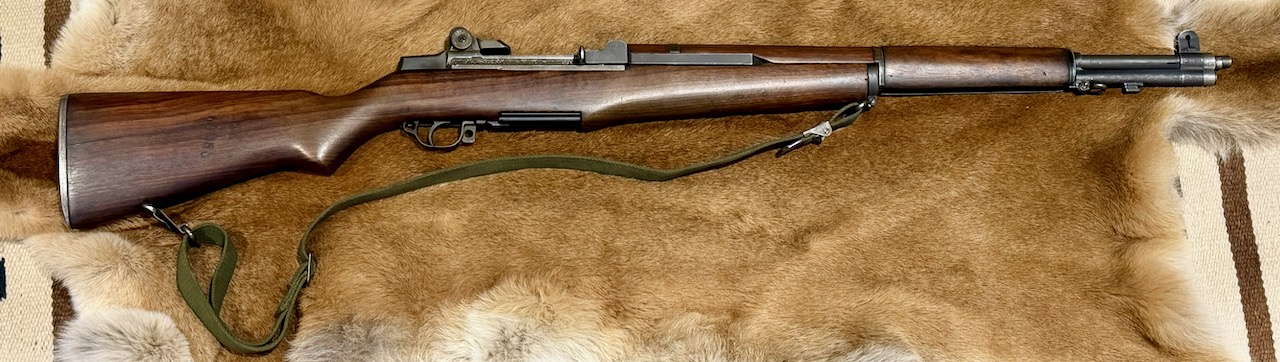 William’s M1 Garand
The receiver-based aperture sight, meanwhile, was windage- and elevation-adjustable, and calibrated out to 1,200 yards. In practice, however, the functional accuracy limit was a bit less than half that distance, at approximately 500 yards.
Practicing with military ball ammunition, I eventually became familiar with the famed ping of the Garand’s ejected clip. And despite the limited acuity of my 60-year-old eyes, I also became well acquainted with the metallic clang of a steel plate ringing some 200 yards distant.
Advertisement
After one particularly satisfying mid-summer range session, I began to muse about the possibility of hunting with the old rifle, iron sights and all, both to keep the playing field as level as possible, and to honour the memory of my father, who taught me to love the outdoors.
Sitting at the bench as the warm day cooled toward evening, I was suddenly once again a boy swallowed up inside my dad’s tattered green field coat, standing beside the young buck that was my first deer. I watched my father wet his hands in the warm blood and felt his calloused fingers streak that blood across my face. Leaning in, he whispered, “Remember this day and remember forever that that which you have taken, you can never hope to return.”