


THE ICON AND THE UNICORN
On the hunt for a one-antlered old buck in Saskatchewan, the legendary M1 Garand infantry rifle gets called back into service
Advertisement
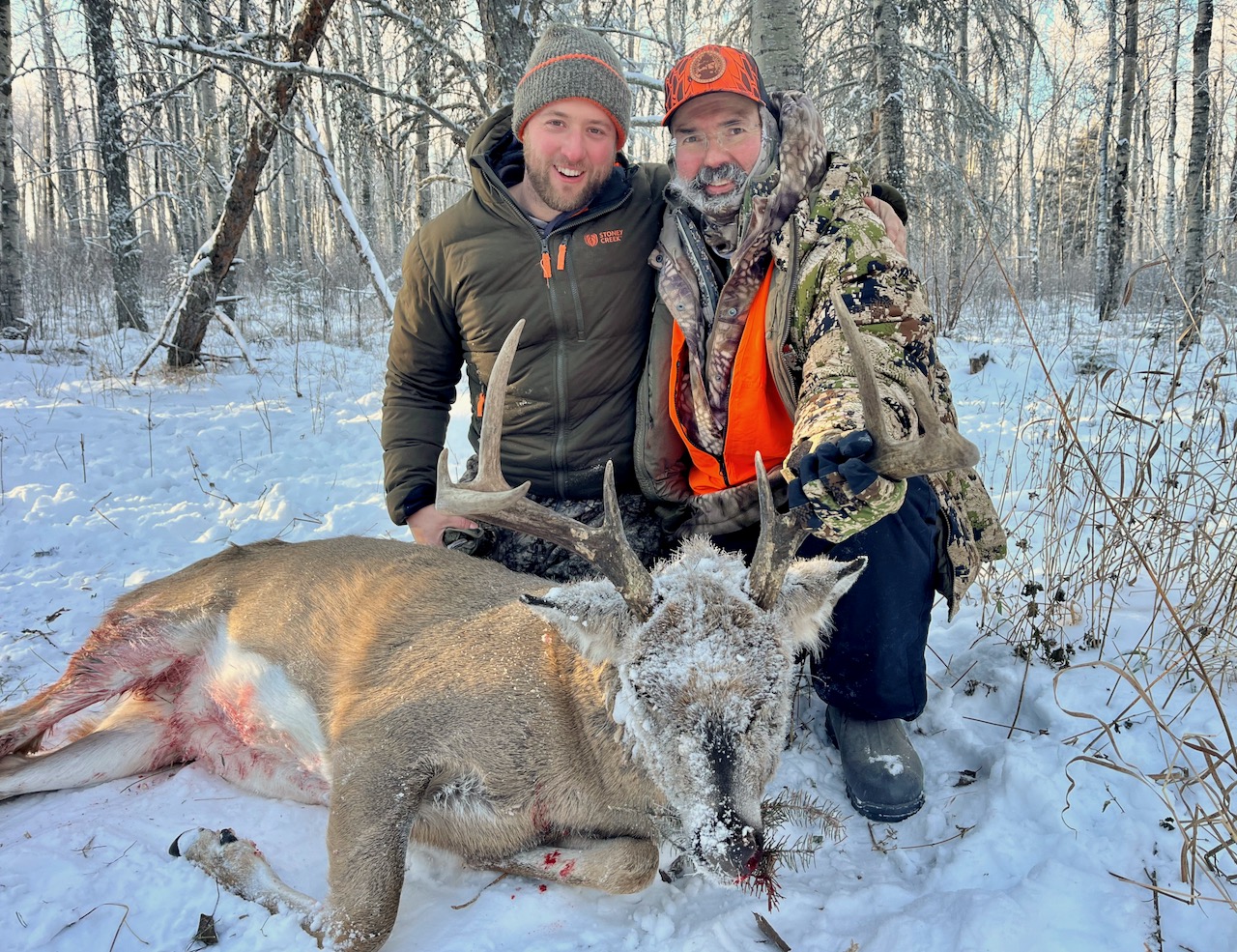 Joel Friesen (left) and William on a previous deer hunt
My musings soon coalesced into an action plan. As we do every year, a couple of buddies and I aimed to travel to Saskatchewan to chase mid-October whitetails with a dear friend, Joel Friesen of Friesen’s Outfitting. It was the perfect opportunity to put the Garand back into service. Joel meticulously manages his outfitting region, which produces huge bucks every year, as I can personally attest. Thanks to him, I knew the odds were high I would have the chance to harvest another memorable animal.
All that remained to be done was to work up appropriate rounds for the hunt. That would require a bit more effort, however, than simply running over to Canadian Tire and buying a box of .30-06 ammunition. That’s because the Garand’s gas-operated system is optimized for the Second World War’s relatively lightweight 150-grain M2 ball ammo and the available powders of the day. Combined, they generated gas pressures within which the operating system functioned safely. Not so with contemporary ammunition.
Advertisement
With heavier bullets propelled at greater speeds by modern powders, today’s ammo produces significantly higher pressures, which can damage the Garand’s bolt by slamming it against the receiver, or worse, force the operating rod back too rapidly, bending it. Some Garand-safe factory hunting ammunition is produced, but here in Canada I could find only target rounds. With that, I got to work and made my own handloads (see “Making the rounds”).
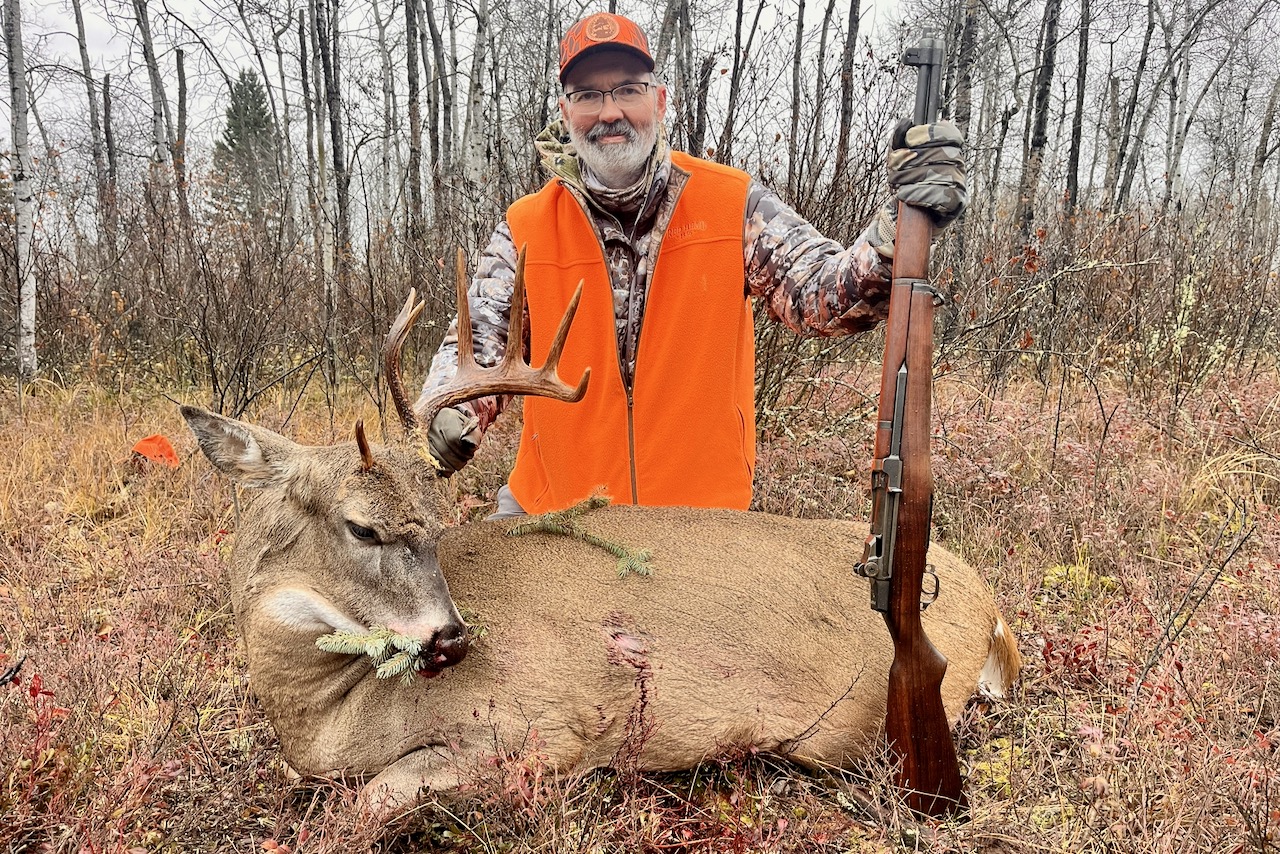
Summer soon gave way to autumn and the time for the Saskatchewan trip grew near. As Joel and I discussed our thoughts for the upcoming hunt, he texted me a trail camera shot of an old whitetail buck with a wildly malformed right antler. The deer’s sagging belly and Roman nose showed his age, and it appeared he had either sustained an injury to the pedicle during antler development or had somewhat questionable parentage. On the left, he was a beautiful mainframe five-point with a split and bladed G1; on the right, a single spike smaller than a child’s finger was barely visible.
I admit, I’m a sucker for unusual whitetails. Joel, for his part, would rather not have a one-horned Casanova cavorting with all the does and leaving him with a guide area full of one-horned offspring. For those reasons, I elected to only pursue that specific buck. The unicorn.
Advertisement
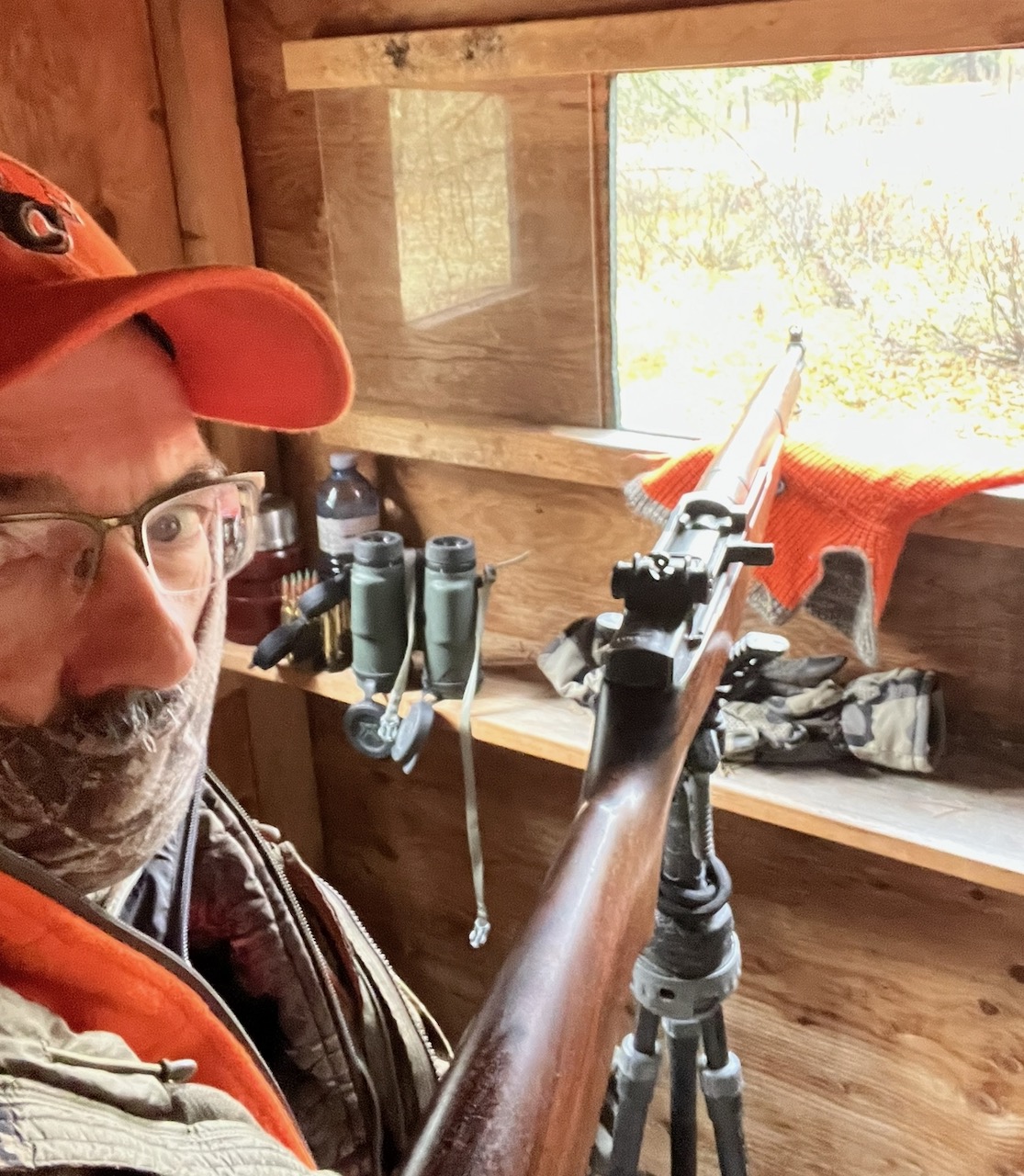 At the ready with the iconic rifle
The early deer season in Saskatchewan’s Forest Zone is usually a pretty pleasant time. Later in the year closer to the rut, however, things get a bit more rugged. The previous November, for example, when daytime temperatures hit a balmy -35°C, I decided the first eight-pointer that came by looked like a trophy to me. This time, however, such a buffet approach was not an option, and so for three days we searched high and low for the unicorn. On the third morning, in the grey half-light of a chilly dawn, he wandered into the clearing where I sat, shivering.
I’m not really a trophy hunter, although I’ve been blessed to take some great animals. As I’ve gotten older, I’ve found that I most cherish the fellowship of hunting with good friends. Following that, I enjoy employing alternate tools—such as a Second World War battle rifle—and different methods in the pursuit.
When I charged the Garand in the frigid darkness that morning, I carefully and quietly slid the cartridge into the chamber. As the buck appeared in the gloaming, it took a minute for my old man’s eyes to find the front sight blade circled by the aperture, and a minute longer to make damn sure I was centred on the chest of the target buck, and not the doe standing beside him.
And so it was with some surprise—and a few whispered profanities—that, after squeezing the trigger, I heard a thunderous click. Cycling the bolt, I found an unfired round with no indication of a firing pin strike. Then I remembered that the Garand action needs a bit of force on closing to lock the bolt lugs. Ah well, the gods hate a coward, I thought, letting the bolt slam forward with a clang. Seventy-five metres away, the buck looked up, confused, but apparently not startled.
My second attempt was more in line with expectations. The old deer bucked as the bullet struck home, then plowed into the thick willows. I radioed Joel and after waiting half an hour, we followed a less-than-generous blood trail into the bush for 50 metres. There we found the deer lying expired, both lungs pierced by the full pass-through. His death had been mercifully quick.
Joel and I paused, reflecting on that which had been taken and could never be returned, then spent a few minutes admiring the old warrior, his nose scarred and one ear torn. Looking carefully at the deficient right antler, we found no evidence of a pedicle beneath the nubbin’s base. There was an intrinsic asymmetry to the buck’s skull, too, leading to conjecture the old deer was afflicted with some unknown genetic abnormality.
Whatever the case, he had not appeared on Joel’s trail cameras in prior years; perhaps he’d been recently driven into the area by competition from other bucks. His scars told the tale of a fighter, a one-antlered warrior, but a warrior all the same. He looked to have made the most of the weapons provided to him. I imagine Jean Cantius Garand would have understood.