

KAYAK FISHING IN PANAMA
Experience is the best teacher, but these tips will get you up to speed
Advertisement
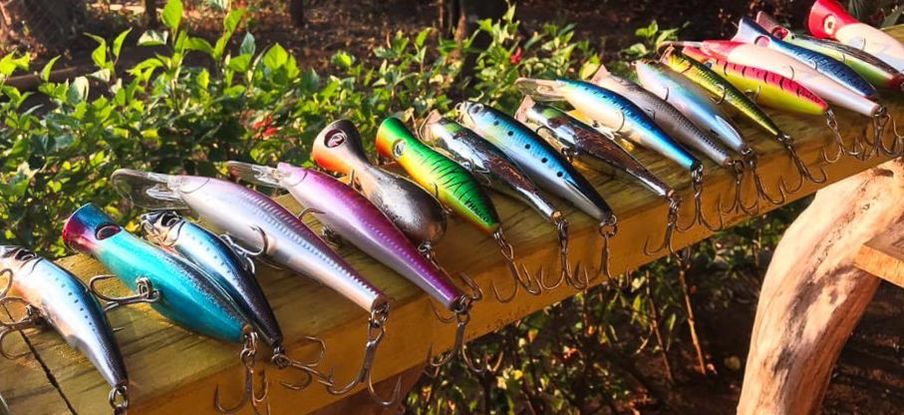 A few of the lodge’s suggested lures
#3 Take the right tackle, clothing and footwear
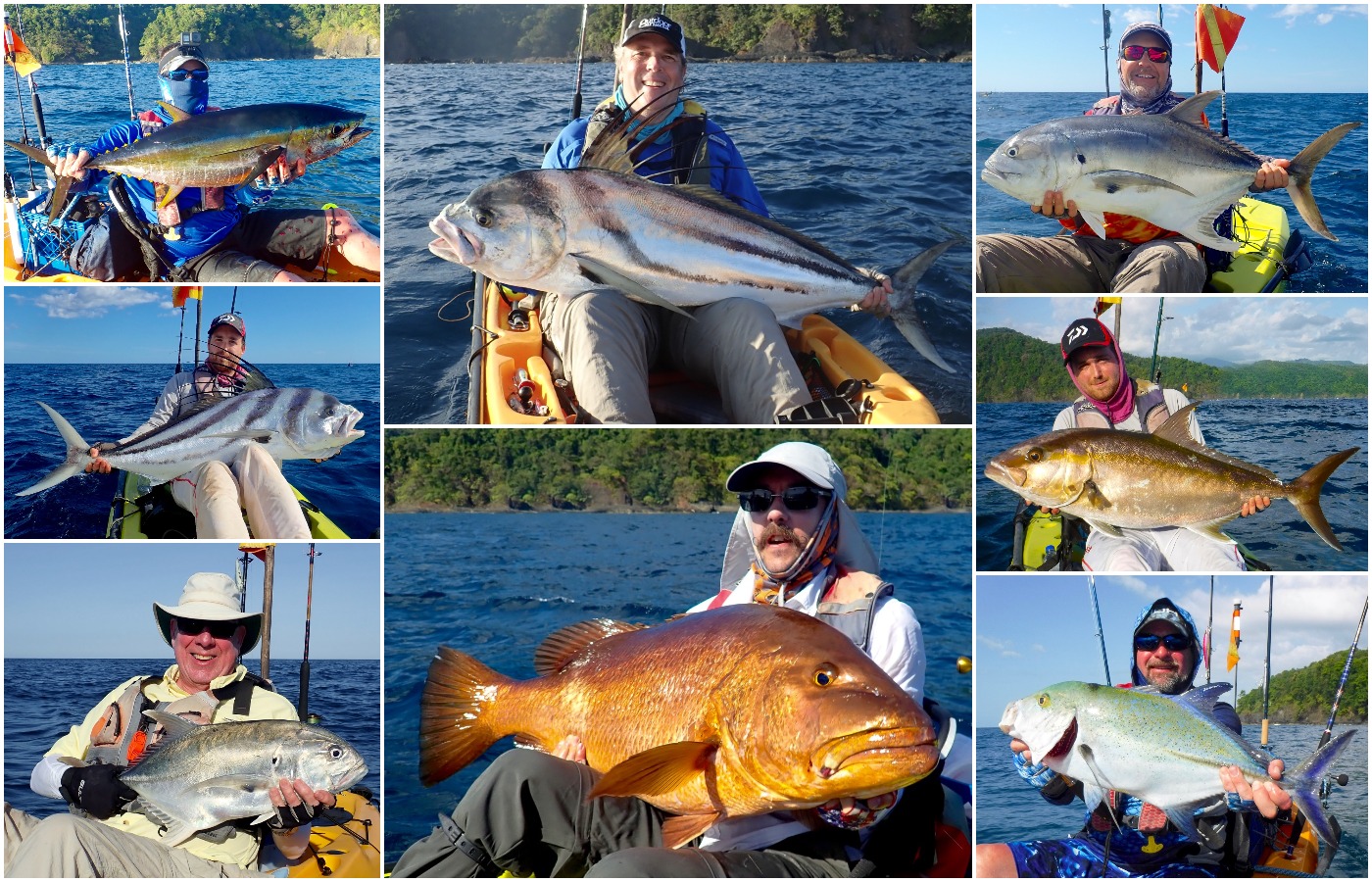
The more extreme a fishing experience is, the more important your equipment becomes. And angling doesn’t get much more extreme than going after roosterfish, cubera snappers, dorado, jacks and tuna in a small plastic boat.
I’ve been to a number of fishing lodges in North and Central America, and Panama Kayak Adventure supplied the most detailed and specific gear list I’ve ever seen—by a wide margin. So, when you put your gear together, treat that list like the Rosetta Stone. Don’t scrimp, and don’t freestyle. The lodge’s experts know what catches fish, what doesn’t and what gear will fall apart under pressure.
Advertisement
That said, there are ways to keep your tackle costs down. With lures, you don’t necessarily need every single item on the list, but you do need baits from every category. For example, if the lodge recommends five specific poppers, you don’t necessarily need all five, but you need at least a couple of them, plus spares. The lodge also rents rods and reels at a reasonable price, so don’t bring your own unless you’ve got heavy saltwater rods and 5000-series saltwater reels. On the Wild Coast, your toughest muskie or salmon rod is only strong enough to catch the bait. Seriously.
For hardcore tropical fishing, clothes and footwear are also important. That means lightweight, quick-dry tops, bottoms, base layers and socks, plus neckwear, gloves and sturdy water shoes. Skimping any of these will leads to sunburn, rashes, chafing and misery.
#4 Be very careful of the heat and sun
I’ve now spent 19 days in Panama, in late December and early January, and temperatures ranged from 25°C to 30°C, often with high humidity.
Advertisement
By the numbers, that’s similar to my region of central Canada in late July and early August, when I’m often in my kayak all day long. So it’s easily manageable, right? Wrong. So very wrong.
That’s because 25°C at the 7th parallel of latitude is not the same as 25°C in the northern U.S.A., Canada or Europe. In case you’ve forgotten your grade-school science, energy from the sun strikes the earth more directly near the equator (below), making it a lot more intense.
Advertisement
On the water, there’s nowhere to hide from that sun, plus you’re constantly pedalling, trolling and casting. It’s easy to get so caught up in the fishing, that you don’t realize you’re dehydrated. And most people have no idea how quickly sick you can get from sunstroke. On one of my visits, there was an angler who dismissed the advice about sun safety, and was so sickened by sunstroke that he spent three days—the rest of his trip—in bed, vomiting, sweating, occasionally delirious and really getting to know the bathroom facilities.
But the solution is easy: cover up and drink lots of water. Keep your water bottle nearby and drink regularly, even before you get thirsty. In fact, once you’re thirsty, you’re already flirting with dehydration. There’s no need to conserve, since panga is always nearby, with a 20-gallon jug of water to refill your bottle.
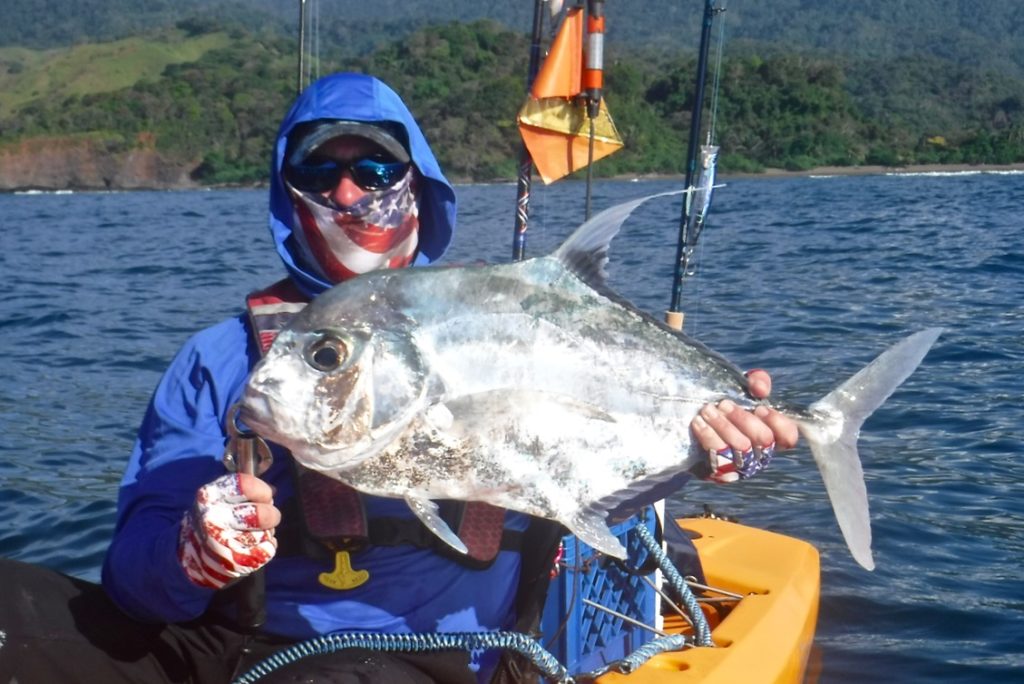 Sam Tomlin of Thurman, Ohio, stays sun safe, while showing off a nice African pompano
Covering up means long pants and sleeves, hats, neckwear and even gloves. Believe it or not, wearing this seemingly excess clothing actually keeps you cooler, since the sun isn’t beating on your skin. And don’t worry, you’ll still have plenty of tan to show off at home.