

HOLD THE SALT
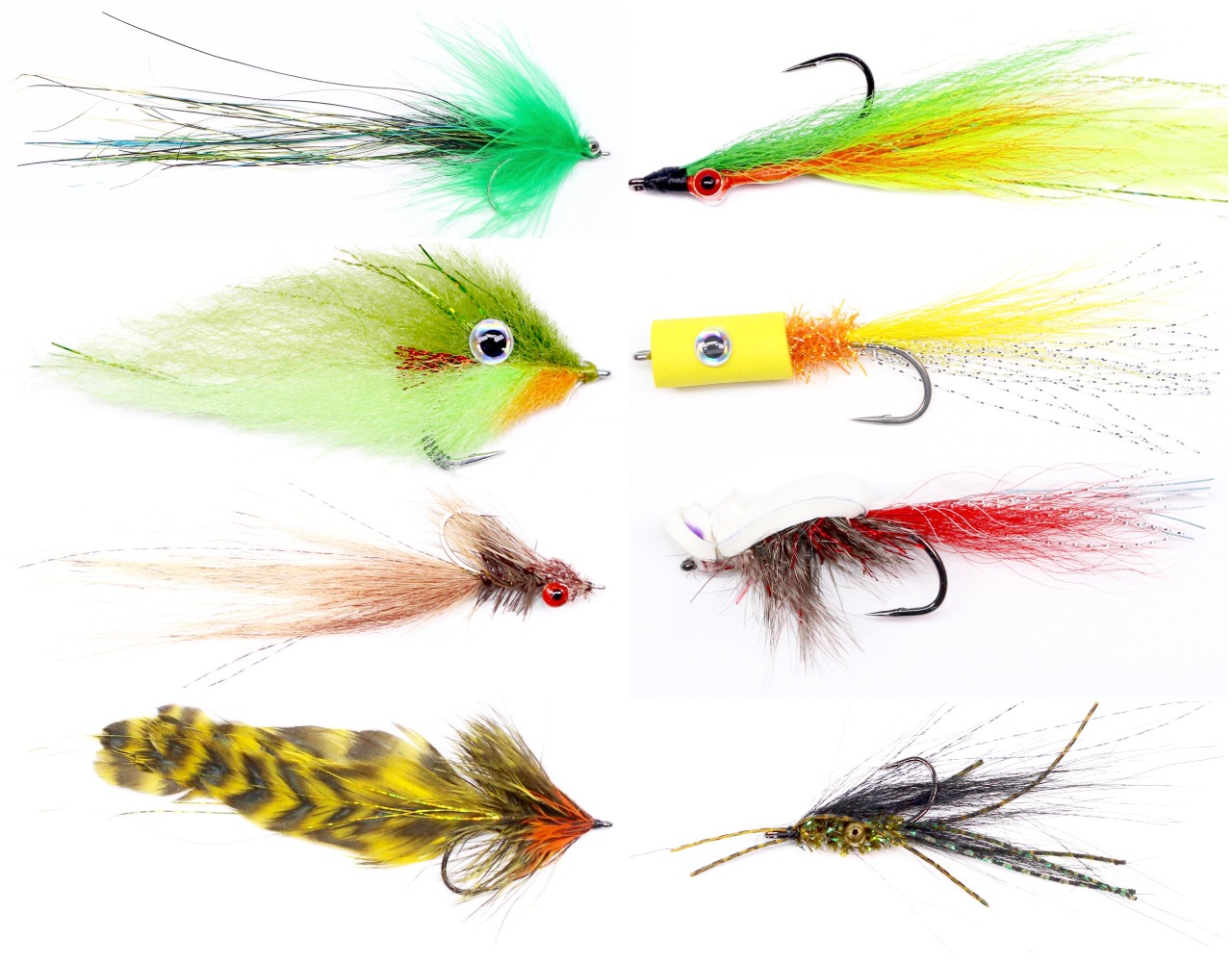
Though designed for ocean fishing, these eight exotic fly patterns are just as deadly on Canada’s freshwater fish
Advertisement
Saltwater fly fishing is the baby of the family—that happy accident no one expected, arriving to shake up a complacent fly-fishing family. But now that it’s here, it has enriched our angling world immeasurably, and we can’t imagine life without it. Before the 1950s, almost no one seriously fly fished in the ocean, and it didn’t really catch on until the ’80s. As a result, saltwater fly tiers seem less wedded to tradition, and more open to unconventional designs and new materials. They’ve created many highly original new patterns to meet the challenges of fishing in oceans, estuaries and marshes—and in water measured in both inches and fathoms—for species ranging from hyper aggressive to extremely spooky.
Advertisement
What’s more, many of those innovative saltwater flies are just as effective in freshwater. The most famous examples are the Clouser Deep Minnow and Lefty’s Deceiver, which first gained wide acceptance in saltwater circles, but have now crossed over into the wider fly-fishing world.
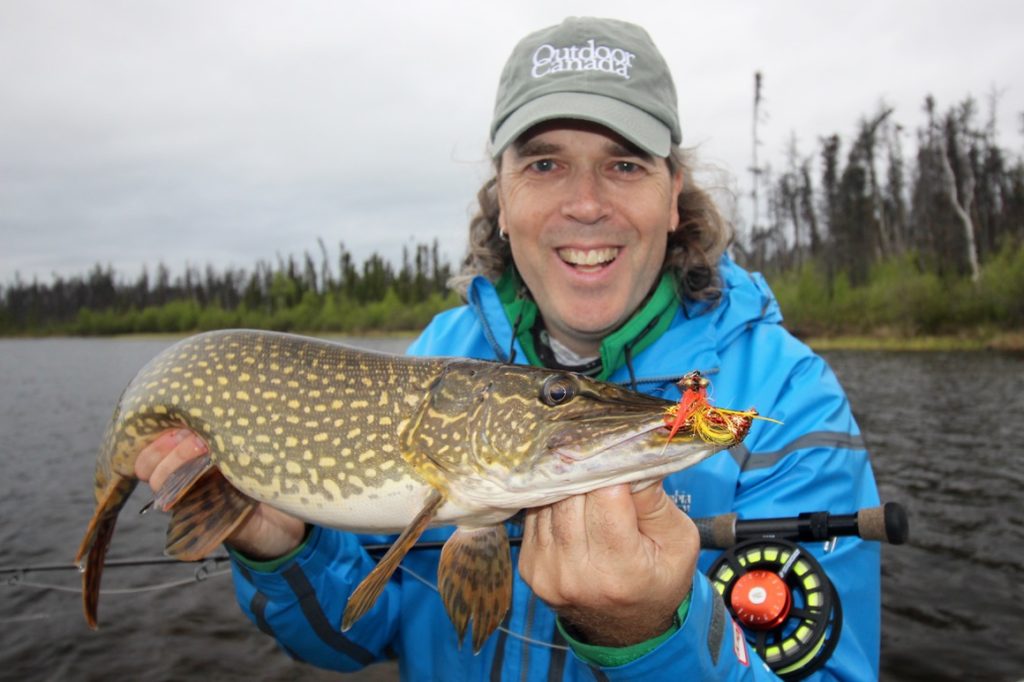 The author fooled this northern pike with a saltwater Flashtail Whistler
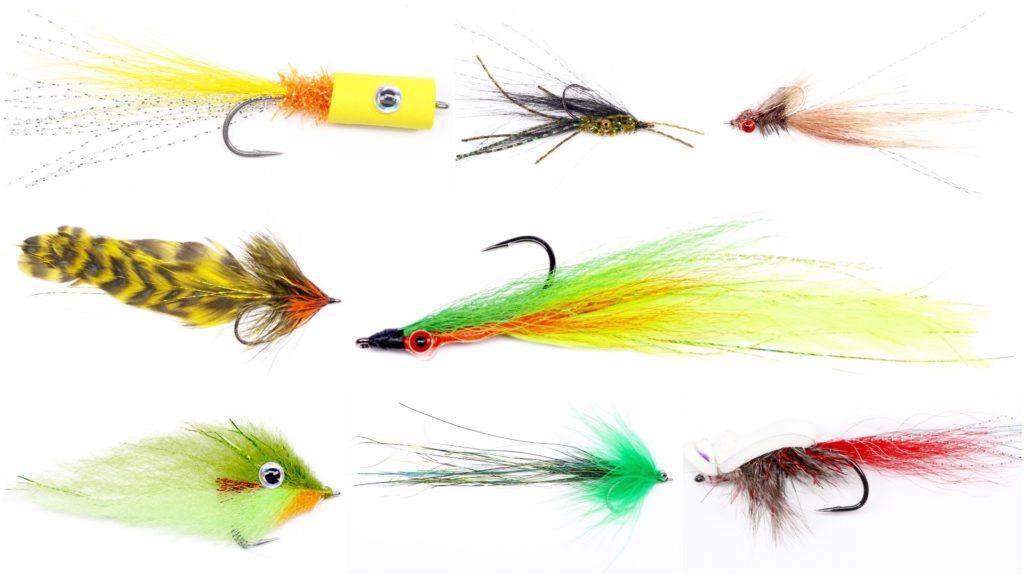
Of course, not all popular saltwater flies will be as familiar to inland anglers, such as the following eight patterns developed for striped bass, bluefish, snook, tuna, tarpon and bonefish. They’re also proven fish-catchers in Canadian lakes and rivers. They all offer characteristics overlooked by typical freshwater fly patterns, including unique profiles, action, durability or ease of casting. Even if you never plan to dip a toe in saltwater, these patterns deserve a place in your fly box.
For the fly-tying notes, photos and videos, see How to tie 8 awesome saltwater flies.
Advertisement
Looking for more even new flies? Check out our running list of the all-time best flies for Canadian anglers at www.outdoorcanada.ca/musthaveflies. And you can see all of Outdoor Canada’s expert fly tying tips at www.outdoorcanada.ca/flytyingtips.
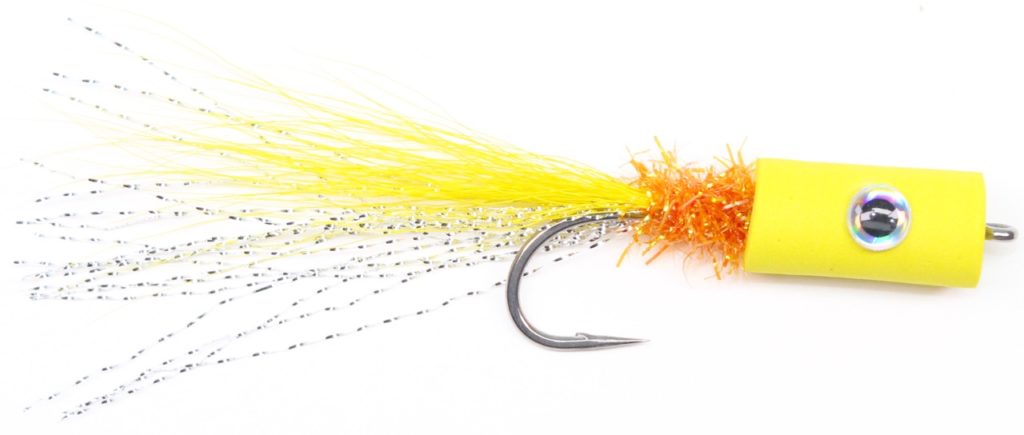
#1 BOB’S BANGER
Most freshwater poppers are designed for largemouth bass, and sport a lot of frippery. That’s because they usually work best when fished very slowly or paused, with the wiggly legs, feathery bits and long, swishy tails conveying the impression of life. But these flies aren’t well suited for fast or walk-the-dog retrieves. Enter Bob’s Banger.
Advertisement
Stripped down to the bare essentials of a surface fly, this extremely durable pattern is very easy to make, and it casts and pops well. It’s perfect for targeting shallow-water pike on the feed, luring aggressive smallmouths up to the surface, or any other time you want a more dynamic surface fly. With the saltwater original, the body is covered in shiny prismatic tape. For freshwater, however, I leave that out and just put a bunch of flashy stuff in the tail. To get maximum action on the water, tie the Banger with a loop knot (or clip it to a small snap), and fish it with a combination of line stripping and rod-tip twitches.
- HOOK: Mustad 34011 or similar, sizes 2/0 to 4/0
- TAIL: Bucktail over Krystal Flash
- MIDSECTION: Crystal Chenille or similar
- BODY: Half- or 5/8-inch-diameter foam cylinder
- EYES (optional): Large 3-D or flat
- DIFFICULTY: Easy
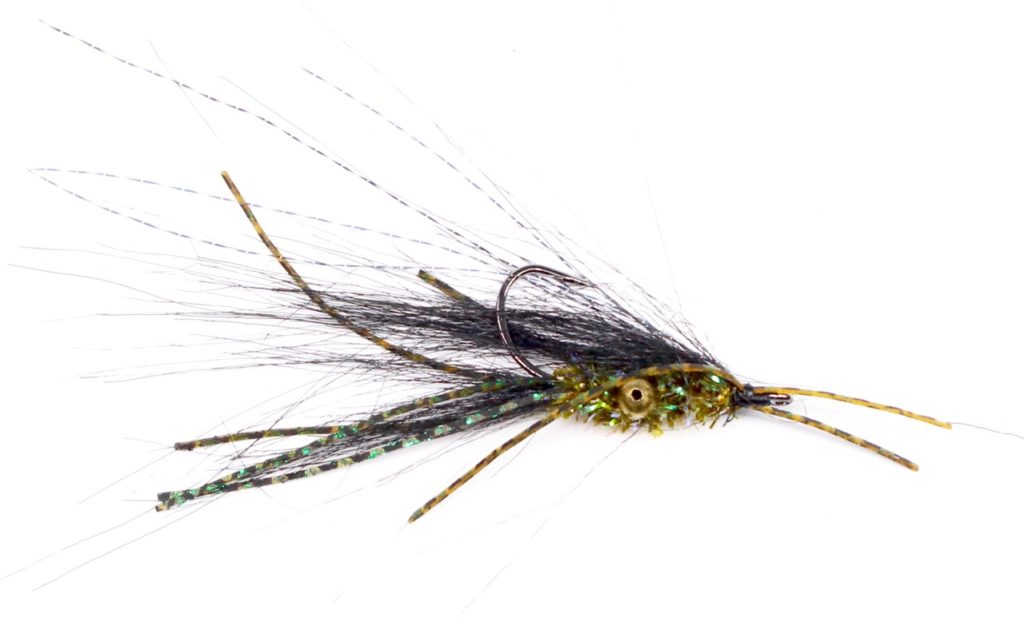
#2 BONEFISH SQUIMP
Known for reel-smoking runs, bonefish feed in shallow, ultra-clear tropical flats where they’re extremely vulnerable to predation by birds, sharks and barracudas. In a constant state of high anxiety, bonefish scurry around slurping up shrimp, crabs and other small critters. To catch the eye of such jittery diners, bonefish flies are designed to look alive and edible, rather than exactly duplicate the forage. The Squimp is a prime example. With bits that wiggle, swish and breathe, it’s one of the most alive-looking flies I’ve ever seen.
Designed to hop along the bottom, the versatile Squimp also swims in a fantastically erratic motion, jigging, wobbling and rolling thanks to the lightly weighted eyes and splayed rubber legs. It’s basically a tube jig for the fly rod. It looks so vulnerable and meaty that freshwater fish, especially smallmouth bass and stillwater trout, instinctively gobble it up. The original is a dull and shrimp coloured, but for freshwater, I prefer a sparkly chenille body. The black/olive version pictured above is hard to beat, but I also like all-black, brown/olive, chartreuse/white and all-white—and don’t feel bound by those ideas. By experimenting with colours, you can make your Squimp resemble a baitfish, leech, bug, amphibian, pizza slice or jelly doughnut—it doesn’t matter, because the fish will still hit it.
- HOOK: Mustad 3407, 3366 or similar, size 2 to 6
- EYES: Medium bead chain or dumbbell
- TAIL: Craft Fur, 1 to 1½ length of hook
- BODY: Plain or sparkly chenille
- WING: Craft Fur extending to end of tail, with a few Krystal Flash strands on top
- LEGS: Sili Legs or similar
- DIFFICULTY: Moderate