

HOLD THE SALT
Though designed for ocean fishing, these eight exotic fly patterns are just as deadly on Canada’s freshwater fish
Advertisement

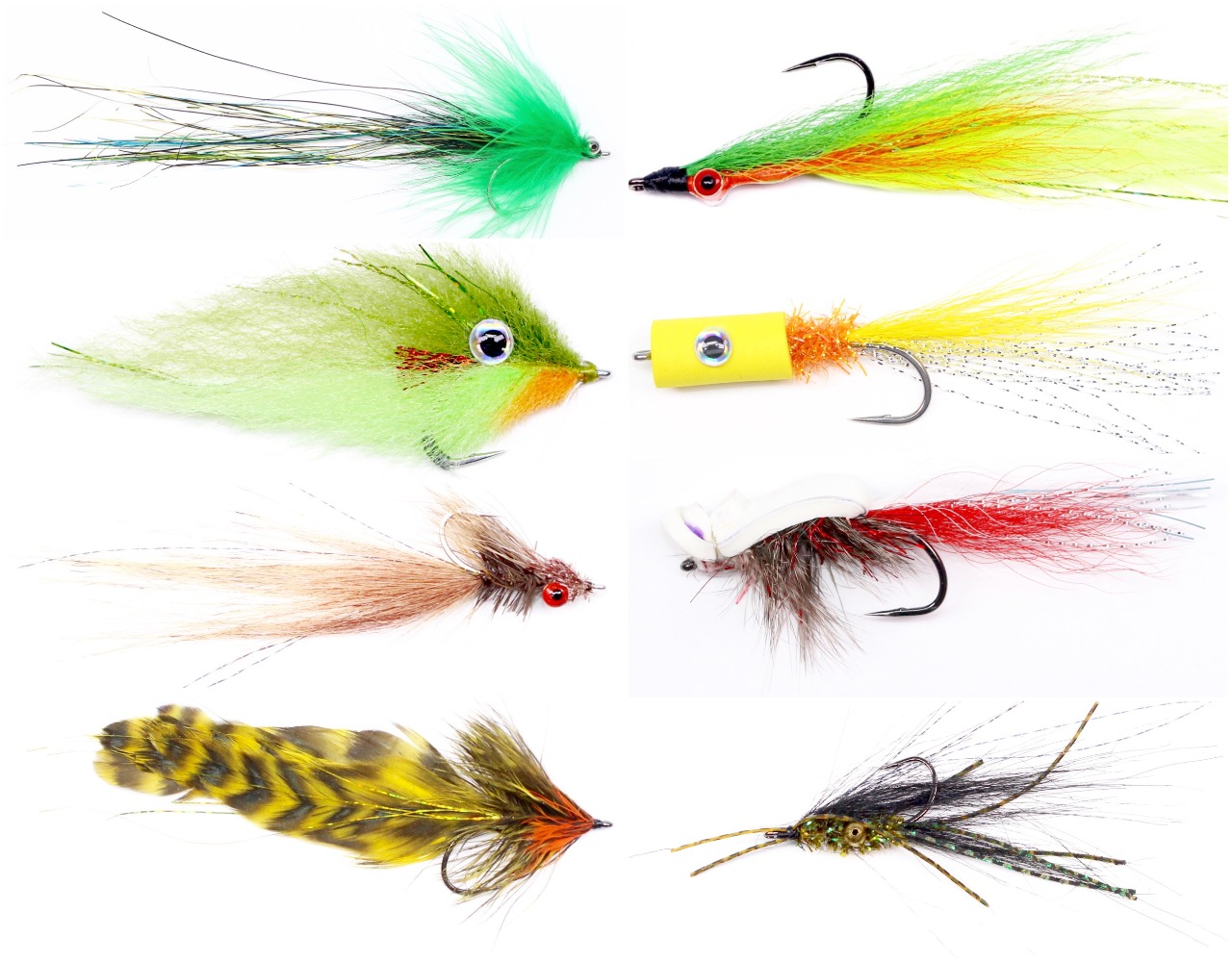
#3 BORSKI BONFISH SLIDER
In central Canada, gamefish such as smallmouth bass are getting fatter and fatter from eating invasive round gobies, which literally carpet the bottom in some lakes. Not surprisingly, local fly folk have been trying to come up with a great goby imitation, but Florida Keys artist and fly angler Tim Borksi has already done it. His Bonefish Slider imitates saltwater gobies, which Borski says are a fairly common, but little recognized, forage for big bonefish and redfish on the Gulf Coast.
Advertisement
Borski’s clever design is both realistic and very fishable. The deer hair pushes water just like the goby’s broad, toad-like skull does, while the dumbbell eye keeps the fly on the bottom, but with the hook upright to reduce snags. And the Craft Fur tail moves even when the fly is still.

Converted from the original tan and white to a mottled brown or olive, it’s a dead ringer for our nasty invasive round gobies (above). I’ve only tied Sliders to about three inches in length, but I’ve seen bass cough up six-inch gobies, so I plan to scale things up next season.
Advertisement
- HOOK: Mustad 3407, 3366 or similar, size 1 to 6
- EYES: Medium or small dumbbell
- TAIL: Brown, olive, black or blended Craft Fur, 2 to 3 times hook length, with a few Krystal Flash strands on each side
- BODY: Brown saddle hackle, palmered over tying thread
- COLLAR: Flared deer hair
- HEAD: Spun deer hair, darkened with a Sharpie
- DIFFICULTY: Advanced

#4 FLASHTAIL WHISTLER
Use this monstrosity when you want a fly that’s slinky and really, really visible. Though developed for the salt, the Whistler may be even better for freshwater fish that like a gaudy mouthful, especially largemouth bass, pike and lake trout. Flashing like a spoon, the voluptuous Flashabou tail flows and ripples more seductively than any soft-plastic, while the collar suggests volume and the bead chain produces both vibration and an erratic swimming action. Yet despite that bling and profile, it’s still almost weightless, making it easy to cast.
Advertisement
The original pattern has a few extra frills, but I favour my own stripped down version, which is more durable and (in my experience, at least) fishes just as well. The tail is usually gold or silver, but red, pearl, green, black or a blend are all excellent choices. Just firmly sandwich the Flashabou between the bucktail layers to keep the long tinsel from tangling in the hook. Marabou (pictured) makes a floofy body, while schlappen is sleeker, but neither stands up well to teeth. For a truly indestructible Whistler, collar it with a streamer brush—a blend of synthetic fibres twisted into a fine wire that’s wrapped around the hook, just like a hackle.
- HOOK: Gamakatsu SC15 or similar, sizes 1/0 to 3/0
- TAIL: Bucktail 1 to 2 times length of hook; 15 to 30 Flashabou strands, 2 to 4 times length of hook; second layer of bucktail
- BODY: Palmered marabou, schlappen or EP Craft Fur brush
- EYE: Large bead chain
- DIFFICULTY: Easy