

HOLD THE SALT
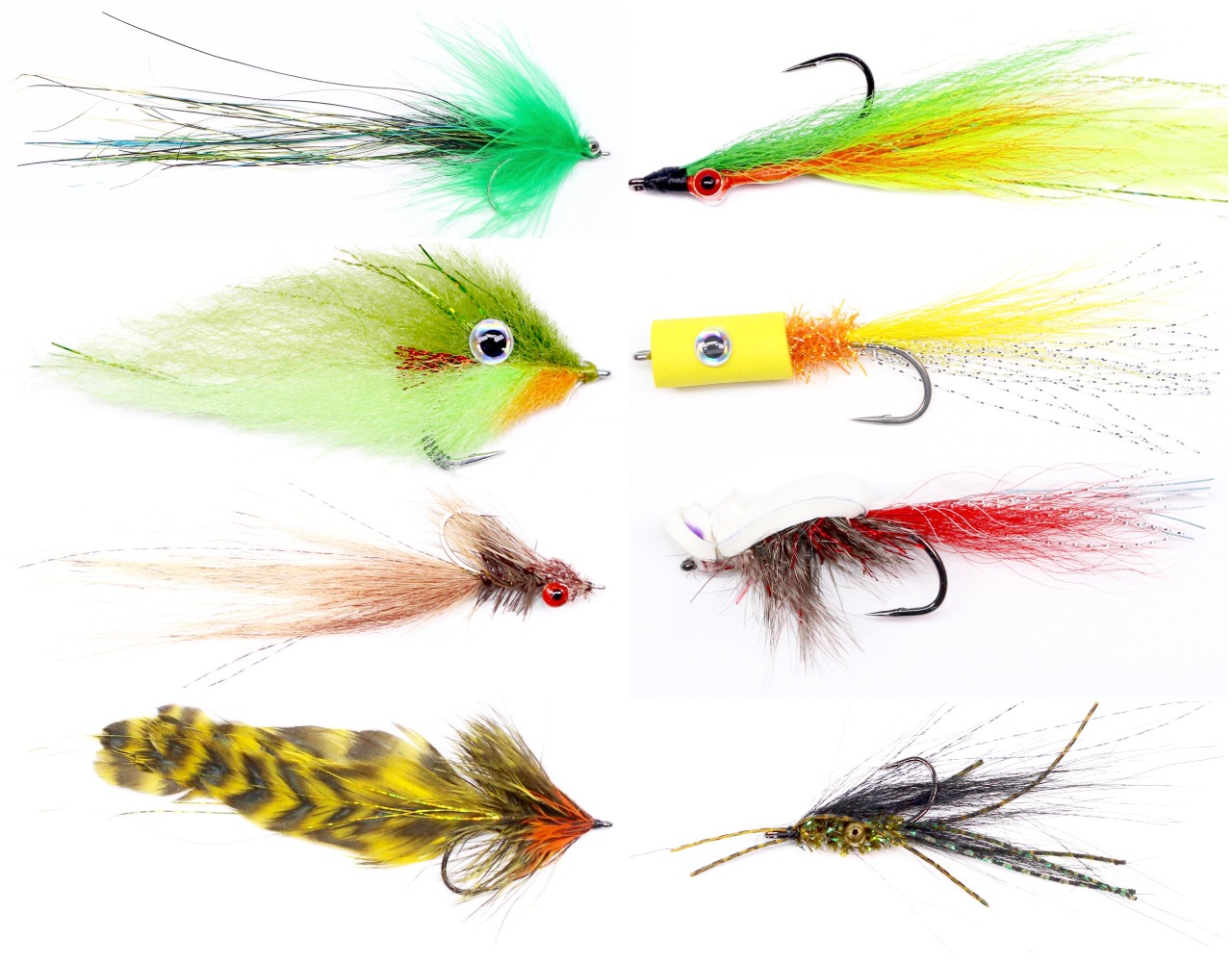
Though designed for ocean fishing, these eight exotic fly patterns are just as deadly on Canada’s freshwater fish
Advertisement
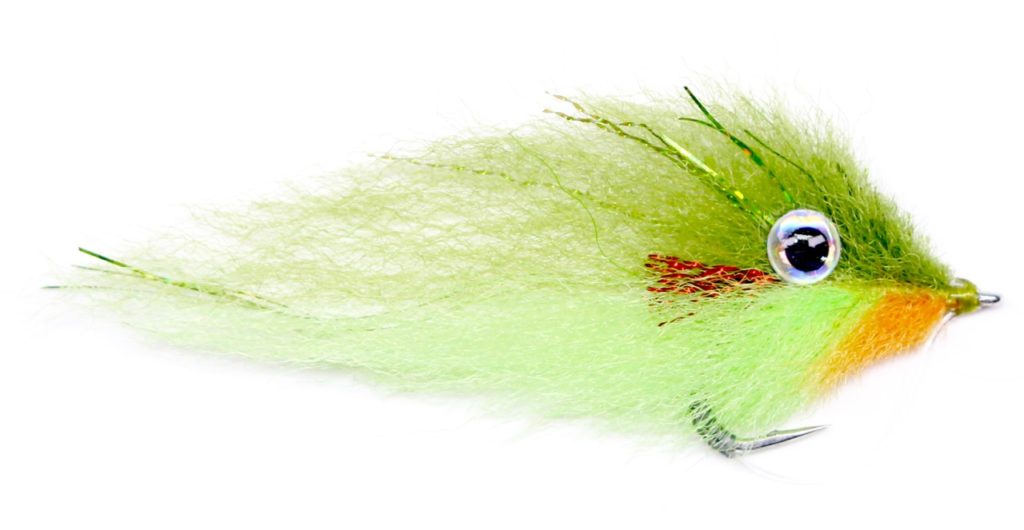
#7 PEANUT BUTTER
If I could only use one saltwater fly in Canadian lakes, I’d pick the Peanut Butter—no contest. It’s not even close. This fly is in a league of its own: utterly original, virtually indestructible and spectacularly effective.
Advertisement
Made of semi-flexible synthetic material, it’s flowy and translucent, with a unique, laterally compressed shape. And because the synthetic material doesn’t absorb water, even a big version casts easily, all day long. The short-shank, wide-gap hook is also well suited to a mono weed guard, so a Peanut Butter on an intermediate-sinking line is my go-to bass/pike/walleye fly in the cabbage.
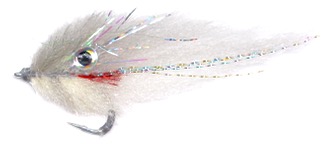
This fly is tied by layering small bunches of material along the hook shank, and trimming the resulting shrubbery into shape with scissors. It’s fiddly at first, but not hard once you get the hang of it. Fly materials are usually pretty generic, but the only stuff that works for the body are EP Fibers. The material costs about $10 a pack, which will make 15 to 20 flies. EP Fibers are available in most fly shops and online, and come in a rainbow of colours, but my favourite combos for freshwater are firetiger, all-black and grey, cream or chartreuse over white. (For more about this remarkable fly, see www.outdoorcanda.ca/peanutbutter.)
Advertisement
- HOOK: Gamakatsu SC15 or similar, sizes 1/0 to 3/0
- TAIL AND BODY ACCENTS: EP Sparkle or similar ultra-fine tinsel
- BODY: Layered EP Fibers
- EYES: Large 3-D
- WEEDGUARD (optional): stiff 20- to 30-pound mono
- DIFFICULTY: Moderate
#8 SEADUCER
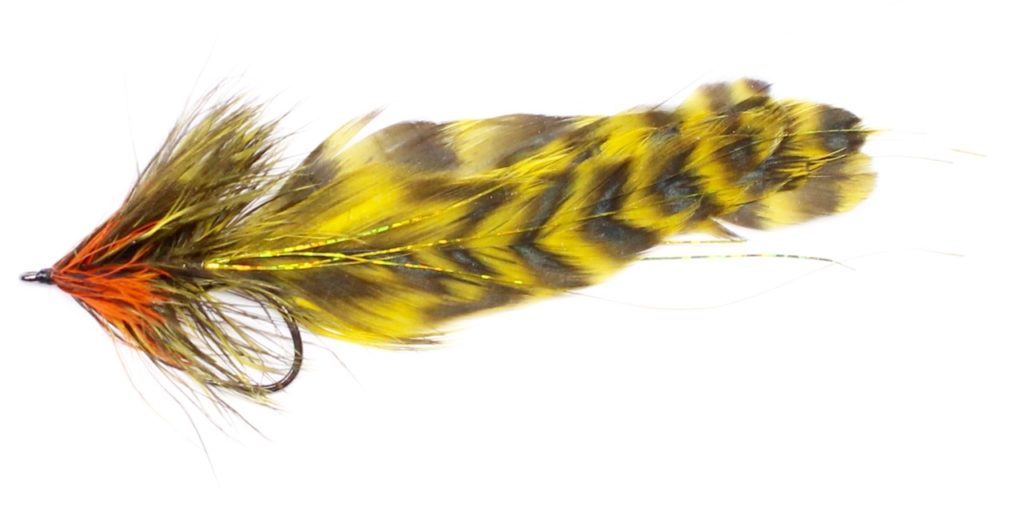
Simplicity, thy name is Seaducer. I don’t know of any other four- to six-inch-long fly that that is so attractive to big fish, while also being this rudimentary to tie. Even a novice can tie a Seaducer in just minutes. The secret is in the schlappen—the longest, softest and webbiest feathers on a rooster.
Advertisement
Schlappen has several unique merits: it’s inexpensive, it’s easy to work with, it looks amazing in the water and it’s fun to say. Try a Seaducer when you want something big, subtle and slow-moving that suspends, either in shallow water or in deeper spots on a sink-tip line.
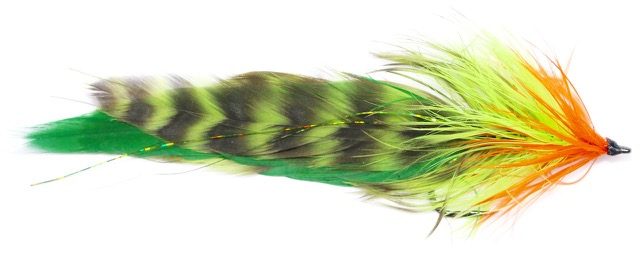
The fly’s only drawback is that the body isn’t super-durable, but the wire rib helps a lot. Just work it carefully through the schlappen without trapping too many fibres. And if or when the fly gets mangled, it’s quite easy to cut away the broken feathers, and just tie on a fresh body. The retrofit might be a smidge sloppy looking, but the fish will not care. Typically, the tail and back of the body are the same colour, with a contrasting front, though I’m pretty sure that is more for aesthetic reasons than fishing effectiveness. I’ve recently developed a fondness for the mangy yellow grizzly colour pictured at the top, although white/red and white/chartreuse are hard to beat, as are yellow/red, all-black and firetiger.
- HOOK: Gamakatsu B10S Stinger, Mustad 34007 or similar, size 1/0 to 3/0
- TAIL: 4 to 6 schlappen feathers, with 2 to 10 strands of Flashabou on each side
- BODY: 2 schlappen, paired and palmered
- RIB (optional): Fine wire counter-wrapped over schlappen
- DIFFICULTY: Easy