


THE OTHER DEER RUT
Their breeding patterns may be similar to whitetails, but you need to adjust your timing and tactics to successfully hunt rutting mule deer bucks
Advertisement
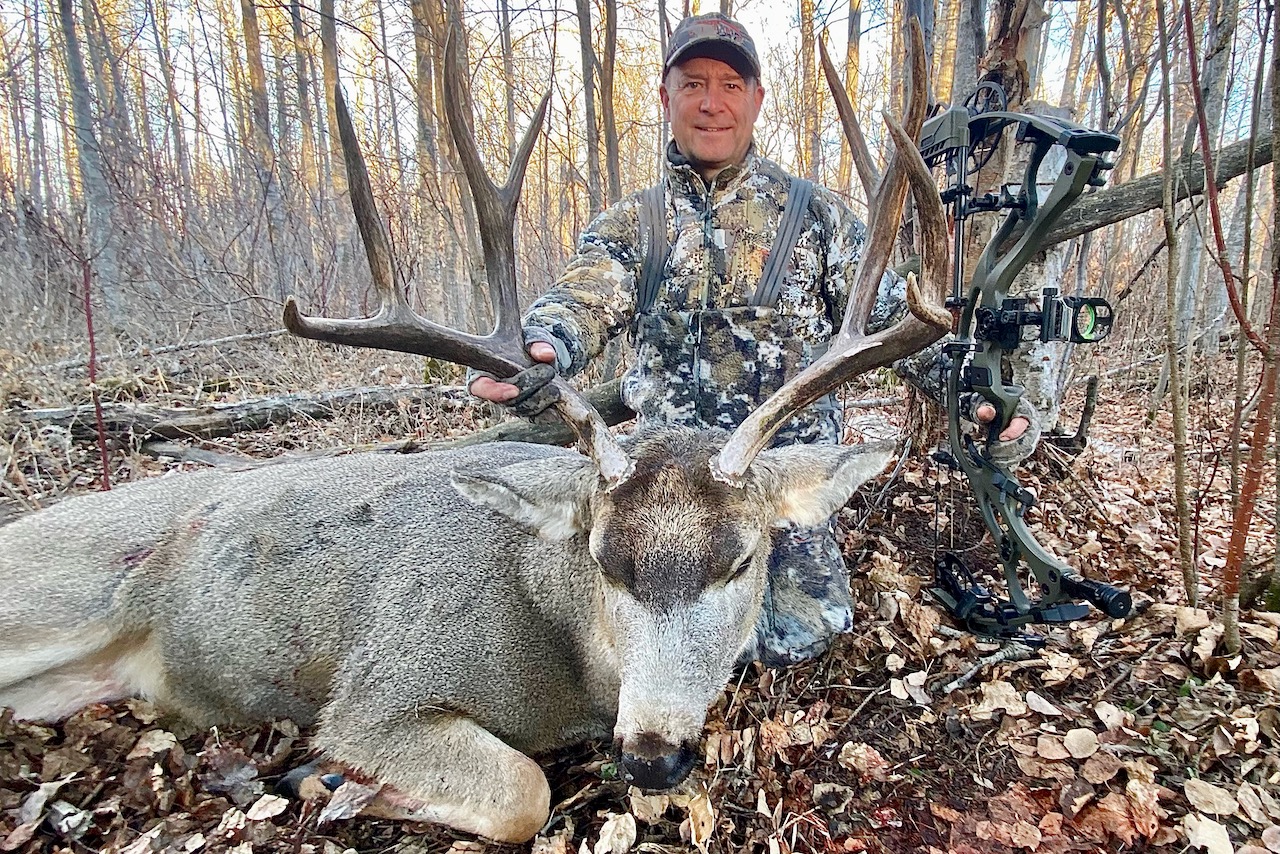 Kevin Wilson and a peak rut buck
It was November 28, the peak of the mule deer rut in Alberta, and bucks were on the move. It was also unseasonably warm, with the mercury reading a relatively balmy 2°C. It was so warm, in fact, I had to strip down to a single layer to hike in to my stand. After I’d settled in 20 minutes before daylight, it didn’t take long for a few whitetails to show up. The area also had a good population of mule deer, and I was hoping to take one of the bigger bucks I’d seen on trail cams travelling through the very pinch point where I was sitting.
Just after 11 a.m., I caught movement off to my left. Clearly focused on scent-checking and looking for a hot doe, a mature mulie buck turned at 40 metres and made his way toward me along a heavily used deer trail. As he walked under a giant spruce, I drew back and made a short grunt call. The buck halted at 30 metres, and I sent the arrow on its way. I waited an hour or so, then followed the blood trail right to him.
Advertisement
On November 22 a few seasons earlier, my wife, Heather, had a similar opportunity in a heavily wooded area several kilometres away, where we had two archery stands set up in the same tree. Around noon, we spotted eight mule deer does and one handsome buck travelling perpendicular to us roughly 55 metres to our right. It was the late pre-rut stage at that point, so I suggested Heather use her doe-in-estrus can call.
Her bleat immediately pulled the buck away from the does and he slowly, but intentionally walked toward our position along the deer trail we were sitting over. Heather was already at full draw when the buck presented a broadside shot opportunity 20 metres from the stand. She released her arrow, and the buck disappeared into thick cover. We waited 45 minutes, then followed a solid blood trail right to where the buck had collapsed, just 70 metres away.
For both of those hunts, Heather and I had set up in Alberta’s famous Edmonton bow zone, where resident archers can take a mule deer on a general tag from September through November. That allows for relatively rare hunts during the peak of the mule deer rut, as well as the various stages of the estrus cycle leading up to it. No matter where you’re hunting in Western Canada throughout the rut, here’s what you need to know to boost your odds of success.
Advertisement
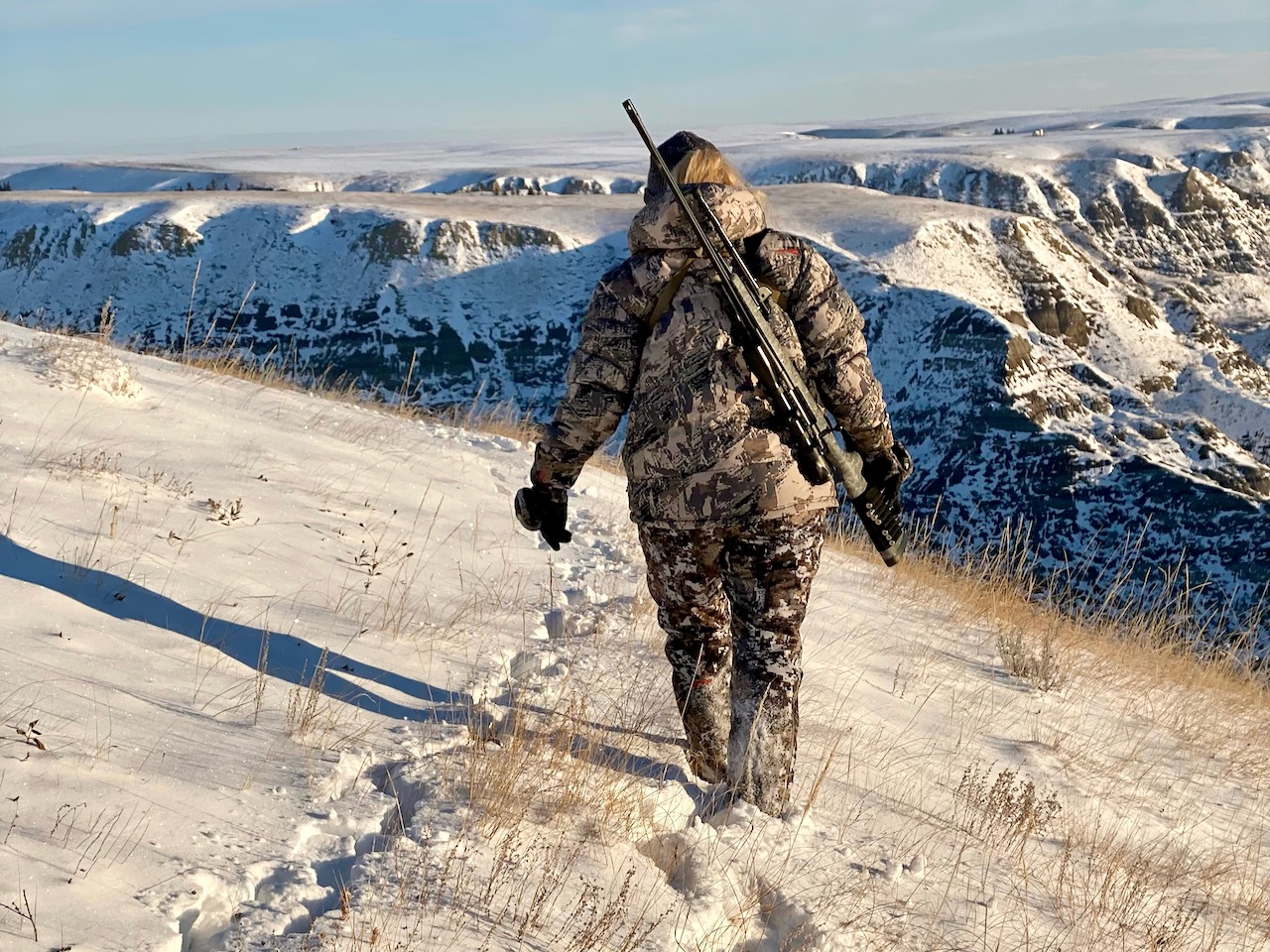 Mule deer spend much of their time out in open country
THE OPPORTUNITIES
Volumes have been written about whitetail breeding behaviour, and how hunters can capitalize on it. Equally notable, however, is how little has been published about mule deer. For many of us, mule deer are less mysterious and, in turn, perhaps not as sexy as whitetails, but they are extraordinary nonetheless.
While mule deer live in a variety of different habitats, they also spend a great deal of time out in the open, making them easier to hunt. Overharvested then managed to recovery in many home ranges across Canada and the U.S., mule deer are strictly regulated. Part of the management regime involves minimizing harvest during their most vulnerable time, the peak of the rut. As a result, many hunting seasons are either closed or winding down by the time the does go into estrus.
B.C. offers the most access for hunting mule deer, with many regions allowing general over-the-counter tags for both residents and non-residents. Alberta requires all non-resident hunters to use an outfitter, while in Saskatchewan, mule deer hunting is strictly reserved for residents only through the province’s Big Game Draw system. As for Manitoba, there’s a regulated, resident-only mule deer season in specific areas bordering the U.S. and Saskatchewan; there are no opportunities for non-resident hunters.