


KNOW YOUR PLACE
Five field-tested strategies to avoid getting lost while hunting—and a game plan if you do lose your way
Advertisement
People joke you can’t get lost if you don’t care where you are going, but if you’ve ever been truly lost, you know it’s no laughing matter. I speak from experience. I was once following a moose track so intently though the snow, that when I finally looked up after several hours, I had no idea where I was. I was a wet-behind-the-ears 20-year-old, and up until that moment, invincible. Then the knot in my gut told me I was in real trouble. It was -25°C and overcast, and it would soon be dark. Panic started to set in, but I somehow knew I had to keep it together if I was going to get out of the situation alive. I weighed my options.
I could try to backtrack, but it would soon be dark—really dark—and I had no flashlight. I was also several hours from my truck, and had gone through some extremely thick stands of willow, so the odds of making it back in the dark were slim. This was long before cell phones and GPS units, and I didn’t have a compass with me. And with the overcast sky, I had no idea which direction was which. My only real option was to gather firewood, make a big fire, and hunker down for the longest, most miserable night of my life.
Advertisement
The following morning, I backtracked for roughly two hours before running into my hunting partners on the trail. They had been certain they’d find me dead. They gave me some coffee and a sandwich, and we continued toward my truck, still several hours away. I vowed I’d never find myself in that position again, and to this day, I haven’t.
Nowadays, most hunters rely on GPS technology to find their way, and it’s generally pretty useful. But it can fail, and you need to be prepared in case it does. To keep from getting lost, here are five key steps I take each time I head into the backcountry.
Advertisement
#1 KNOW THE AREA
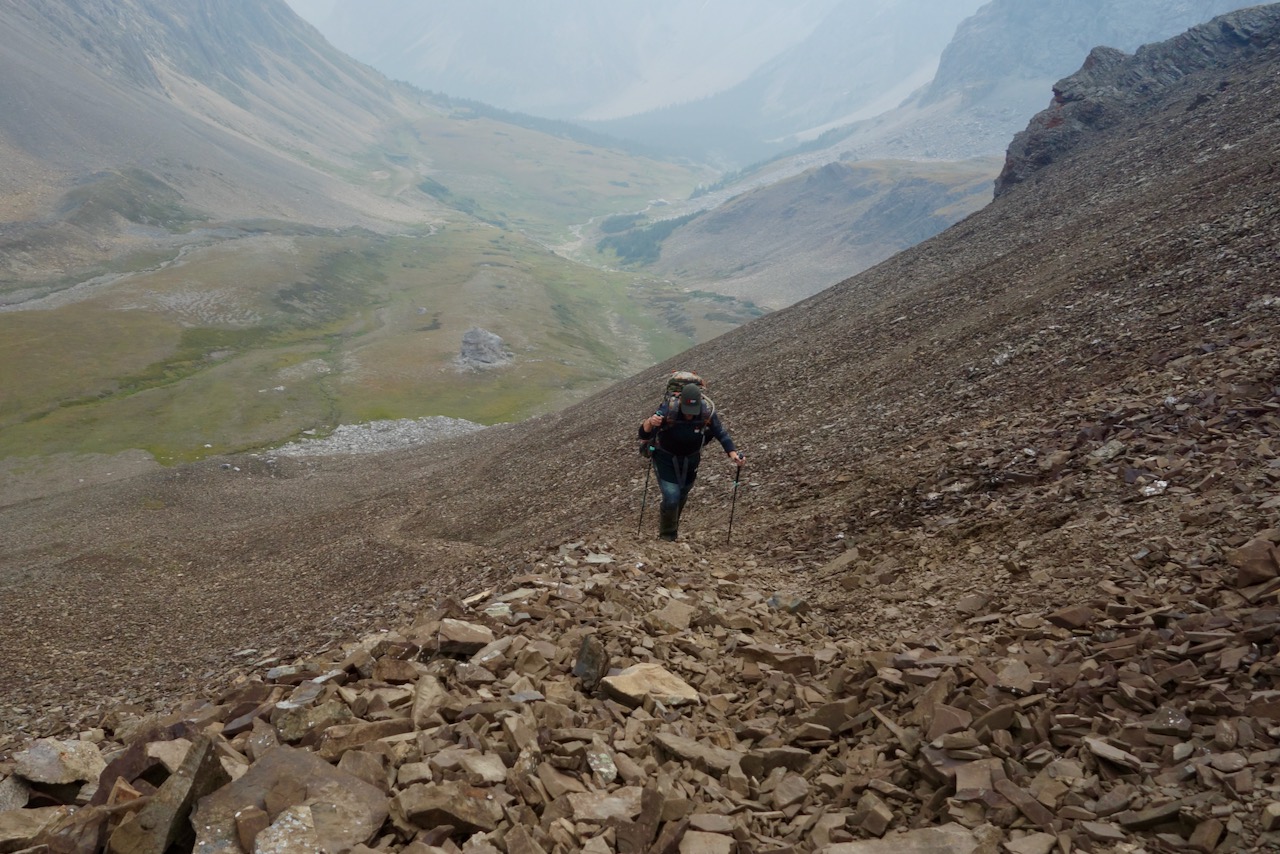
It astounds me how many people get lost in Alberta’s Rockies, where I spend a lot of time hunting, hiking and fishing. The mountains are natural barriers, after all, and the valleys are natural travel routes. If you didn’t climb over a high mountain pass to get where you’re going, you shouldn’t climb over one to get back. Yet every year, many people become disoriented and just start blindly walking.
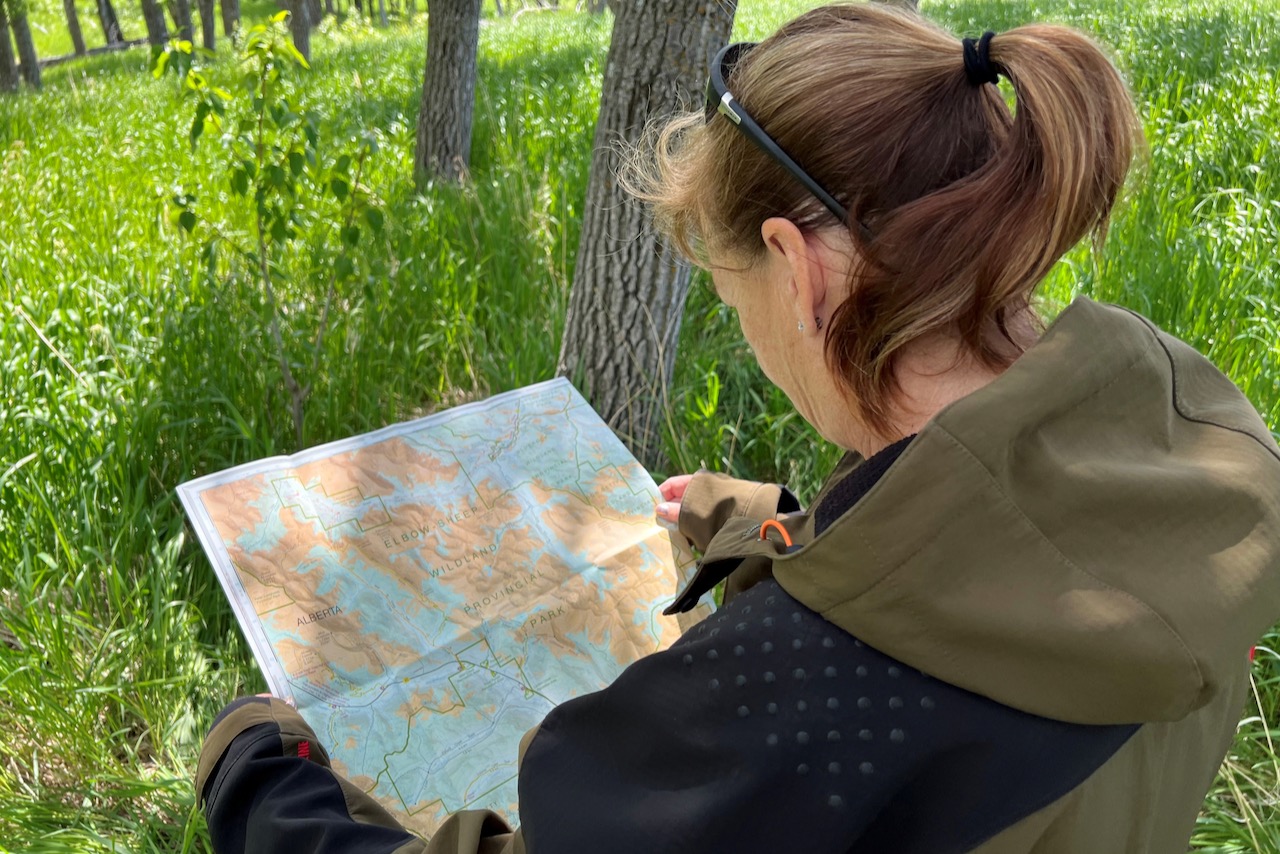
Before venturing into a new area, learn the terrain by studying a topographical map. Back in the old days, that meant a paper map. Today, apps such as Google Earth are ideal. Also note where trails, roads and other human infrastructure are located. The accepted advice is to stay put when you become lost, although if you’re in thick cover or way off course, the chances of being found are pretty remote. But if you know that heading in a particular direction will eventually lead to a road or trail, the odds of finding your way out increase significantly.
After spending hours tracking game, I’m not always certain where my truck is. But by knowing where trails or roads are, I can confidently head toward one, then follow it back to my vehicle. It may be a longer route, but it’s the safest and typically the easiest. Knowing where rivers, creeks and lakes are located can also help establish where you are. That’s half the battle. The other half is finding a route back to safety. So, before ever heading out, always know which direction safety is.
#2 UNDERSTAND MOTHER NATURE
While most of us know where the sun rises and sets, few of us understand which direction the sun travels between sunrise and sunset, and how much that changes throughout the year. On June 21 in the Calgary area, for example, the sun sets in the northwest (around 310 degrees). On December 21, however, it sets in the southwest (around 240 degrees).
While using the sun is not an exact science, it can give you a rough indication of direction. If, for example, you know there’s a road to the west, heading toward the setting sun will take you in a westerly direction. It’s not an exact way to navigate, and you may end up walking a few extra klicks, but it’s often accurate enough to get you to a road or trail. On heavily overcast days, of course, the sun can be no help at all.
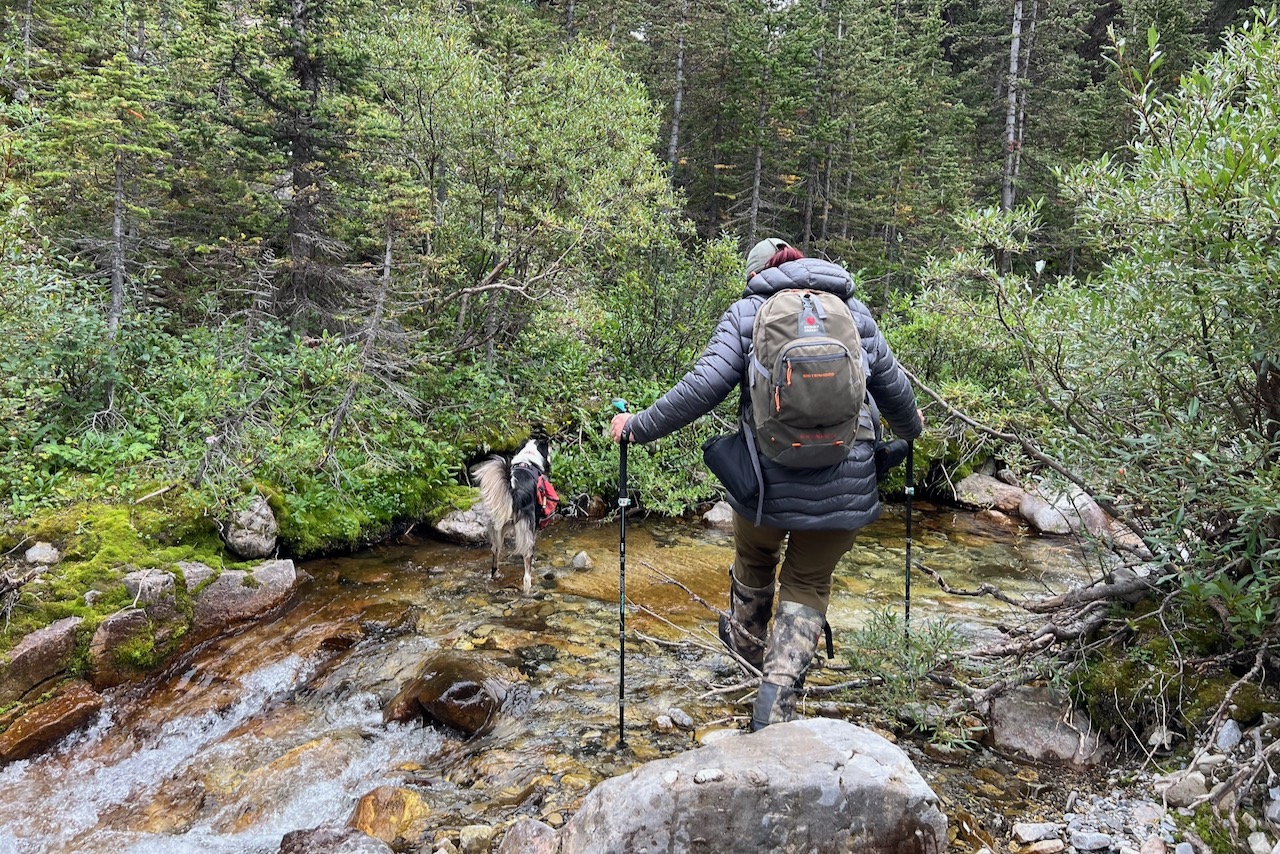
Nature also offers up plenty of clues as to direction. Creeks and rivers usually all flow in the same direction throughout a region, so learn which way that is before heading out. A tree tends to have more branches on its south-facing side because it receives the most sunlight, and moss really does grow primarily on north-facing hard surfaces, such as trees and rocks. South-facing slopes are generally more open and contain a wider variety of plant life, while north-facing slopes usually have thicker timber and less grass and berries. In areas exposed to wind from a predominant direction, meanwhile, trees will have much thicker branches on the leeward side. Put all those clues together, and it can be a reliable way to navigate.
 Creeks tend to flow in the same direction in a particular area
#3 TRACK YOUR PROGRESS
Remain aware of your surroundings as you go, and keep track of how long you’ve been in the woods. Not doing that was my fatal mistake when I got lost—I was so focused on the moose tracks I didn’t watch for landmarks or make note of the time.
The average person’s walking speed in the woods is approximately 3½ to four kilometres per hour, depending on the terrain. Knowing your speed and how long you’ve been hiking is a good indication of how far you’ve travelled from your camp or vehicle. Also be sure to make a mental note if you cross creeks, pass through large openings or change directions significantly. Without snow, it’s practically impossible to retrace your steps, but you can use landmarks as signposts.
One trick I’ve learned is to frequently turn around and assess the view as if I were returning on the same trail or route. An area you just passed through can look markedly different when you look back at it. If you cross a large opening or there is a very distinct landmark, it also doesn’t hurt to turn around and take a picture of it with your smartphone.