

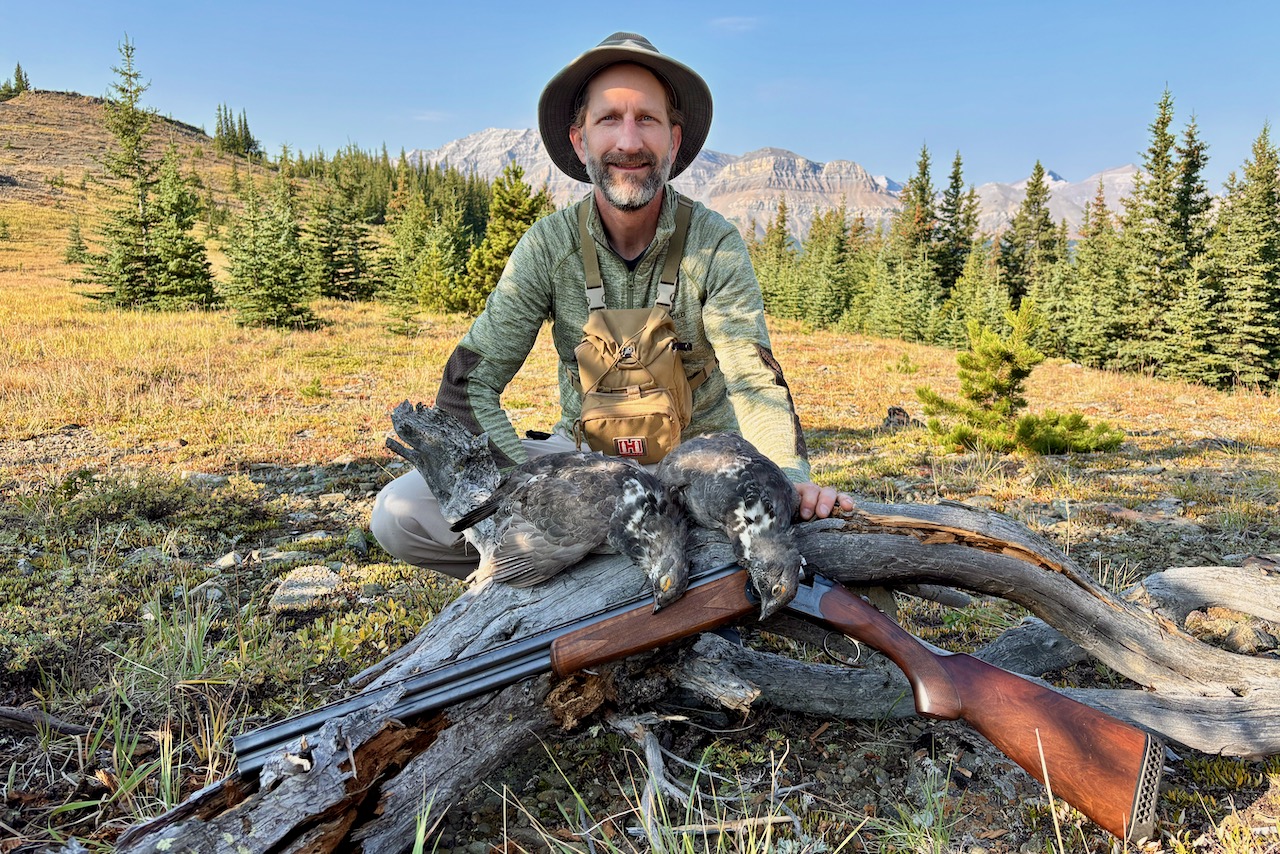

HIGH HOPES
In the remote upper reaches of Kananaskis Country, a horseback hunt for the reclusive dusky grouse yields mixed results
Advertisement
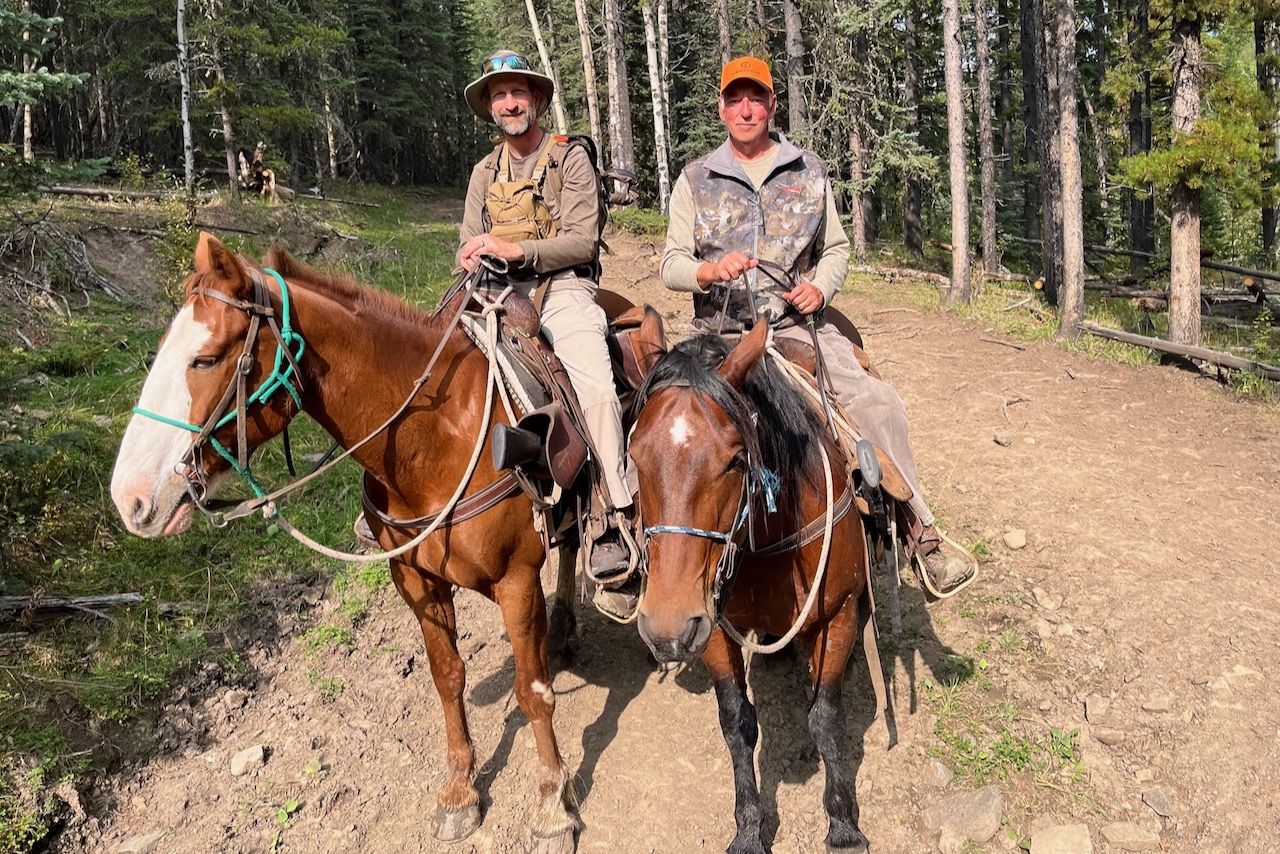
Riding back down the mountain was harder than going upBy mid-morning on Sunday, it was time to pack up. We pulled down our tents and cleaned up the campsite, ensuring we didn’t leave behind a scar on the natural landscape. My final chore was to case my shotgun and pack up my shells. After emptying my pockets, I carefully started putting the shells back into their boxes. Despite searching everywhere, however, I couldn’t find the last two slugs that would have filled the five-shell box they came in.
Advertisement
Troy hadn’t seen the shells either, and after going through all my gear a second time, I was still mystified. Then a light came on. In my haste to load my shotgun when I saw the grouse the day before, I grabbed two shells out of the wrong pocket and, without looking, dropped them into my shotgun. In hindsight, I’d clearly loaded two slugs instead of the #6 shotshells tucked in my other pocket. No wonder I’d missed what should have been a gimme! It was an absolute rookie mistake, and I didn’t know whether to laugh or cry. It turns out you’re never too old to make foolish errors, or to learn new lessons.
Soon, Vic and Roy arrived with the horses and we loaded up our gear. I’d assumed riding down the mountain would be easier than riding up, but that was not the case. As I leaned back in the stirrups and guided Chunky back down over the rocks and through the chicane of trees, I never was able to get comfortable in the saddle.
By the time we got back to the trucks, I’d rubbed one of my shins raw on the hard leather of the stirrup. Then on the drive home, my sore butt confirmed I’d also rubbed one of my cheeks raw. I was still putting cream on both open sores two weeks later, rose-red reminders of the less-than-love feelings I have for horses.
Advertisement
Troy and I have since talked about the prospect of hunting dusky grouse again, which intrigues and excites me—I feel like that mountain owes me an unpaid debt. But the idea of climbing back on a horse to collect it? Let’s just say it might take another 30 years before my memory deceives me once again.
Edmonton-based senior field editor Ken Bailey says he’s always up for a challenging (but horse-free) hunt.
 Photo: Alan Schmierer/Wikimedia
DUSKY DETAILS
Before 2006, the grouse of Canada’s western mountains were all referred to as blue grouse. That year, however, the American Ornithological Society split the blue into two distinct species—the dusky grouse, found mostly on the drier eastern side of the Rocky Mountains, and the sooty grouse of the moist, western side of the Pacific Coast Ranges. The two birds are similar in appearance, but DNA analysis determined they were, in fact, two distinct species.
Few people hunt dusky grouse because of their limited range, the remote places they call home and their preference for mountainous habitat, usually higher than 2,100 metres above sea level. The difficulty in hunting them also increases as autumn progresses, as they’ll migrate to increasingly higher elevations. Further, the risk of snow preventing travel increases proportionately.
Even in good habitat, hunters must contend with difficult conditions; the terrain is invariably steeply sloped, and what isn’t open alpine meadow is instead dense coniferous habitat littered with deadfall. Navigating through the trees is onerous at best, impossible at worst. And if you’re hunting without a dog, as we were, it only adds to the challenge.
Dusky grouse have a reputation for being slow-flying, somewhat dimwitted birds, but that’s probably not fair to them. It’s more likely they simply haven’t learned to associate people with danger, since their habitat is so difficult to reach and very few hunters actively pursue them.