


POWER PRIMER
For electrifying your fishing adventures, lithium batteries are now the way to go
Advertisement
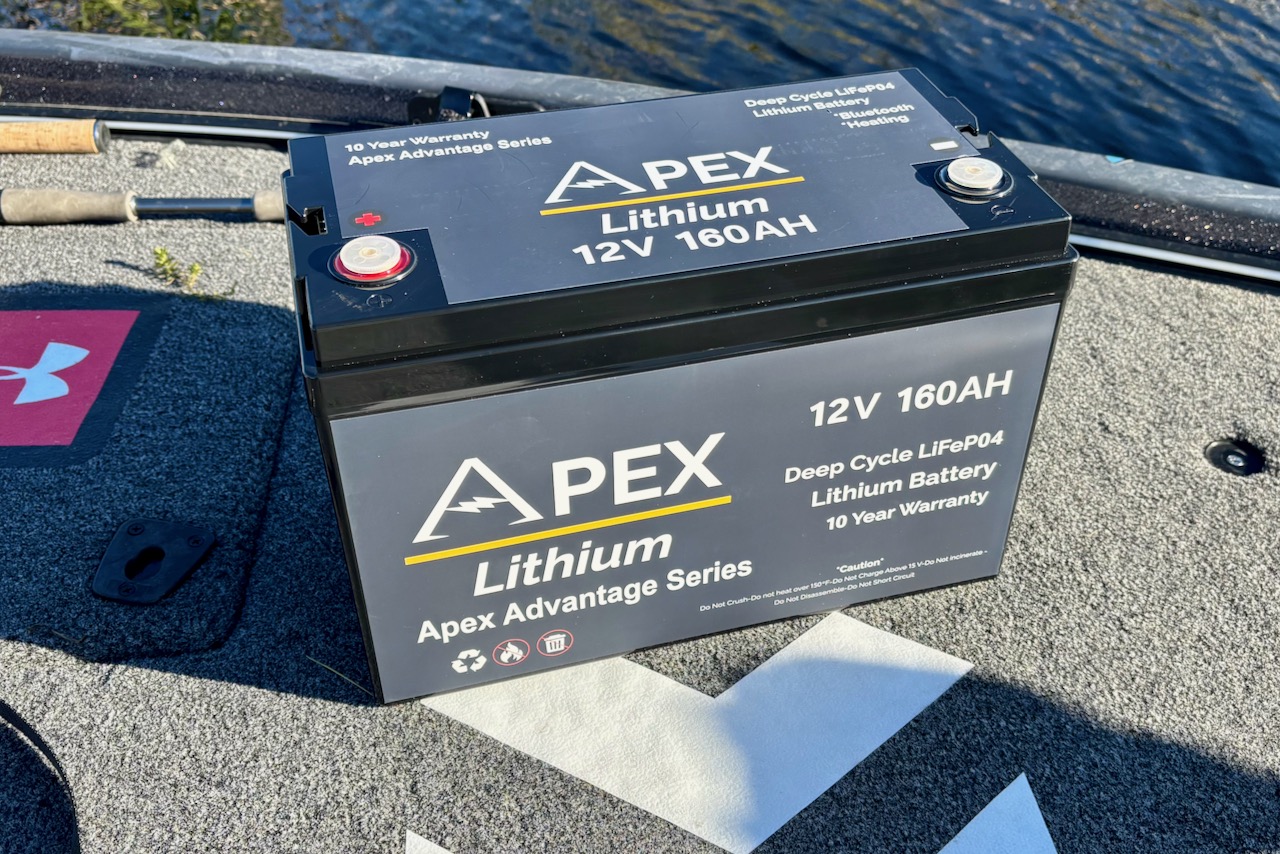 Lithium delivers consistent voltage from full charge to empty
CONSISTENCY
One of lithium’s greatest features is stability. Lead-acid batteries steadily lose voltage as they discharge, which slows trolling motors and dims sonar screens. It can also degrade forward-facing sonar returns as the day wears on. Lithium delivers a nearly flat voltage curve from full charge down to empty, so motors and electronics run at peak performance from first cast to last light.
That consistent voltage matters more than ever because modern sonar and imaging technologies are power-hungry, and many of the major electronics manufacturers rate their units to operate in the 17- to 20-volt range. Why? Because technologies such as side-scanning, 360-degree imaging and forward-facing sonar reveal more detail with stronger, steadier voltage. When your power supply stays stable, your gear performs the way it was designed to.
Advertisement
Lead-acid batteries also shouldn’t be drained much below 50 per cent to avoid the risk of damaging their cells. In practical terms, that means you’re often only using roughly half the capacity you paid for if you want the battery to live a normal life. Lithium batteries, by contrast, can provide close to their full rated capacity without damaging them.
So, even when the label on both types of battery promises the same amp hours (Ah), lithium typically gives far more usable runtime. That’s why many anglers report two to three times more practical all-day power after switching to lithium. It’s easy to see why many anglers choose to run a separate lithium battery just for their electronics—it provides clean, steady power that keeps images crisp, while helping to reduce interference from other loads in the boat.
WEIGHT
The first time you pick up a lithium battery, it’s clear that weight is another game-changer. Swapping out a bank of three lead-acid batteries for lithium can cut well over 100 pounds from your rig. That weight reduction can improve your boat’s fuel economy, hole shot and shallow-water draft, all while maintaining consistent power. You’ll also experience less strain when rigging, less hassle when swapping out components, and less dead weight on every outing.
Advertisement
Lithium’s weight advantage isn’t only for big boats. Even small, 12-volt, 10-Ah lithium batteries that can run a fishfinder all day weigh less than three pounds, opening the door for lightweight canoe and kayak set-ups and portable sonar shuttles. Such lightweight batteries can also fit in a backpack, making them easy to carry into the backwoods, or bring on fly-in fishing trips when the weight allowance is tight, but reliance on electronics is high. In other words, lithium doesn’t just make your set-up better—it can also expand what’s realistically possible in how you like to fish, whether it’s minimalist adventures or fully rigged tournament days.