


ALONG THE TRAIL
In the forests of rural Nova Scotia, the time-honoured craft of trapping lives on. An up-close look at one man’s personal pursuit
Advertisement
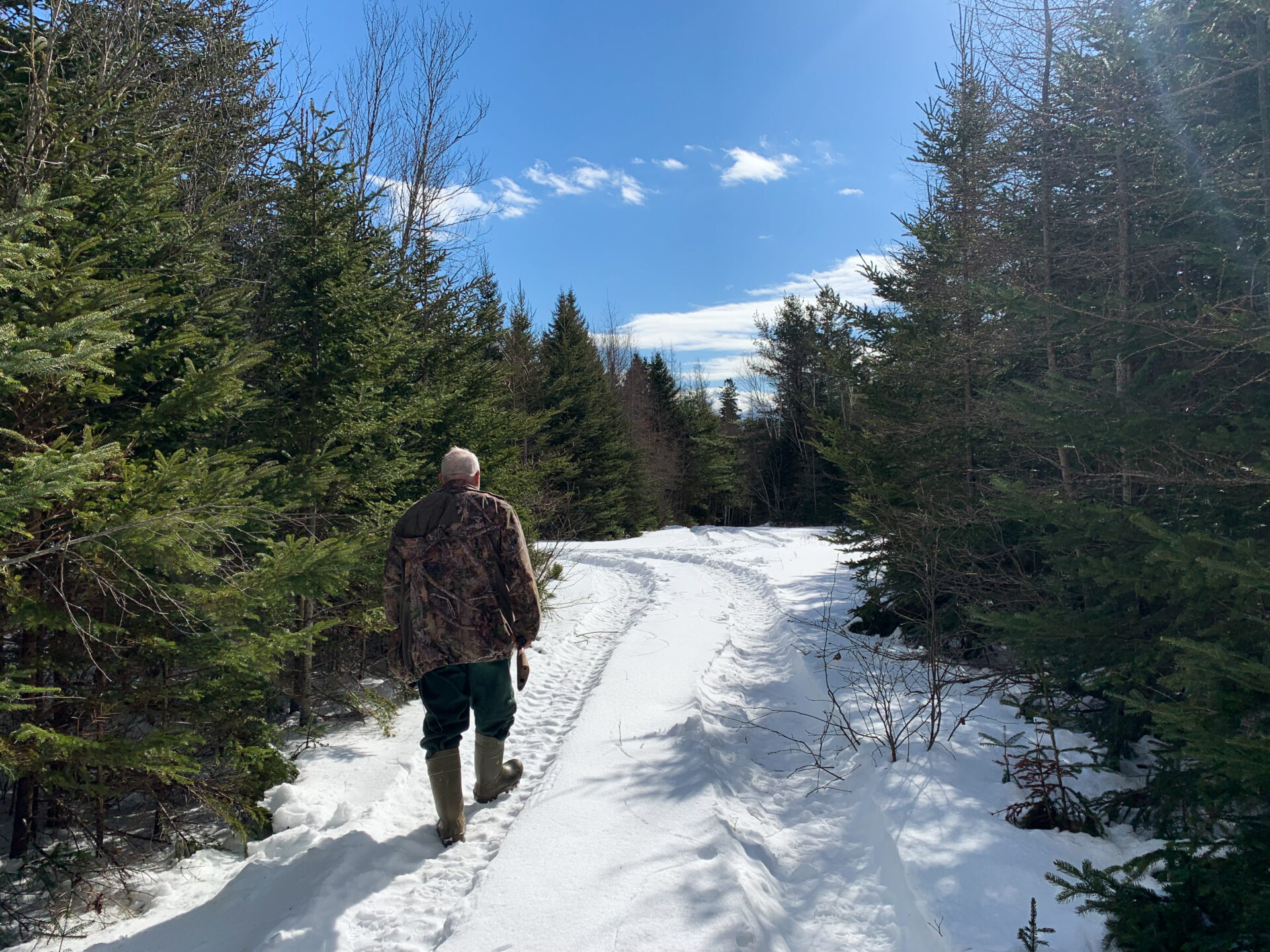 Ross White sets out to check his trapline
Ross White makes his way down a roadside ditch in rural Nova Scotia and into the woods. The 76-year-old moves slowly through the thick snow toward his traps just off the gravel road, three small metal nooses tied to small trees at thigh height. One of the nooses worked—a dusting of snow covers the carcass of a dead coyote, limp on the forest floor. Its neck is constricted by the metal cable.
White looks down at the beast, unimpressed. “Too much movement,” he says noting the coyote took longer to die than he would have liked. The snare—set by a novice trapper White is training—is tied to a thin, three-foot-tall sapling, which allowed for too much sway. Twists and kinks on the cable show the coyote struggled as it tried to escape, slowly choking to death.
Advertisement
Bending down, White brushes off the snow to reveal the coyote’s greyish-yellow coat. He presses his hand to its body. “That was killed last night,” he says. He knows, because the body is still warm.
Standing just under six feet tall, White has a full head of white hair, a bespectacled round face, and the body of a well-fed man for his age. Clad in overalls, a camo jacket and rubber boots, he looks the part of a woodsman. He’s a chatty person, happy to talk. “I was vaccinated by a gramophone,” he says. “I’m the only guy you’ll see with a sunburnt tongue.”
One of seven children, White grew up in New Ross, a community in Lunenburg County that is home to the historic Ross Farm Museum. His father was a Second World War veteran who struggled with PTSD and became, in White’s words, an alcoholic who couldn’t afford to drink. He died from a brain hemorrhage while working on highway construction in Cape Breton, leaving White’s mother to raise him and his six siblings on her own.
Advertisement
It was an austere childhood, and meat was a rare treat, so White started hunting deer at age 15. It was a big deal for the teenager—and his family—when he put venison on the table. He only began trapping later in life, during the mid-1970s when he was well into his career as a middle school industrial arts teacher and became interested in self-reliance. Since he did not come from a trapping family to learn from, White built a gun cabinet for a trapper friend in exchange for teaching him the ways of the trapline. Since then, trapping has been a key activity in his life.
Today, White lives with his wife, Jackie, in a 19th-century farmhouse on a three-acre lot along the outskirts of the village of Bible Hill, near Truro. The house is a mere 30-second walk from a pond where he regularly sets beaver traps. As with most trappers, White says the pursuit is mainly a form of recreation for him—if he’s lucky, he’ll make enough from selling pelts to pay for the gas he burns driving from trap to trap. Often heading out alone, he says trapping gives him both a sense of calm and excitement. “You hope that it’s dead, but what if it’s alive?” he says of his quarry. “It’s primal. I’m a predator—what are we going to do to be the best on the block?”