

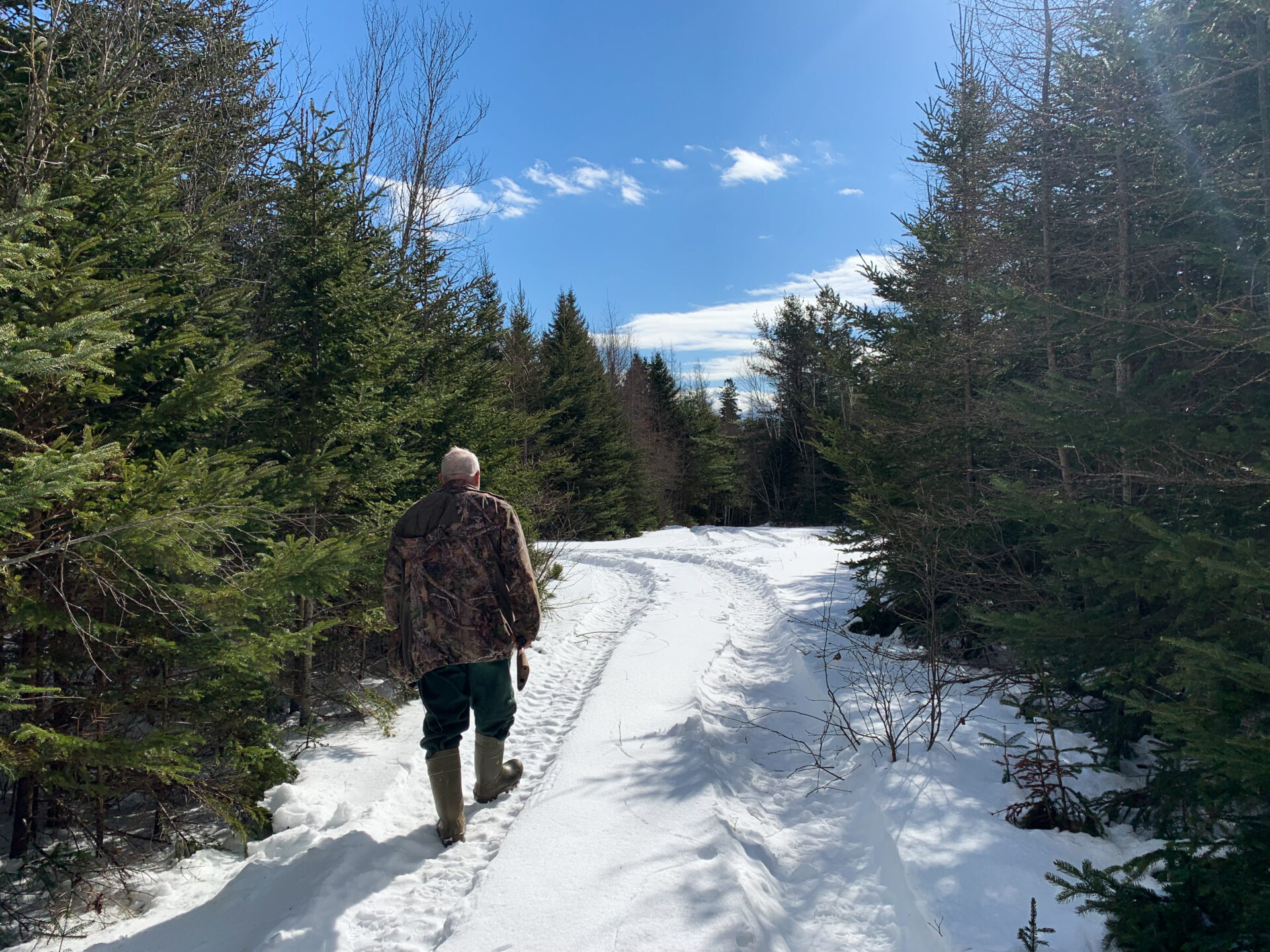

ALONG THE TRAIL
In the forests of rural Nova Scotia, the time-honoured craft of trapping lives on. An up-close look at one man’s personal pursuit
Advertisement
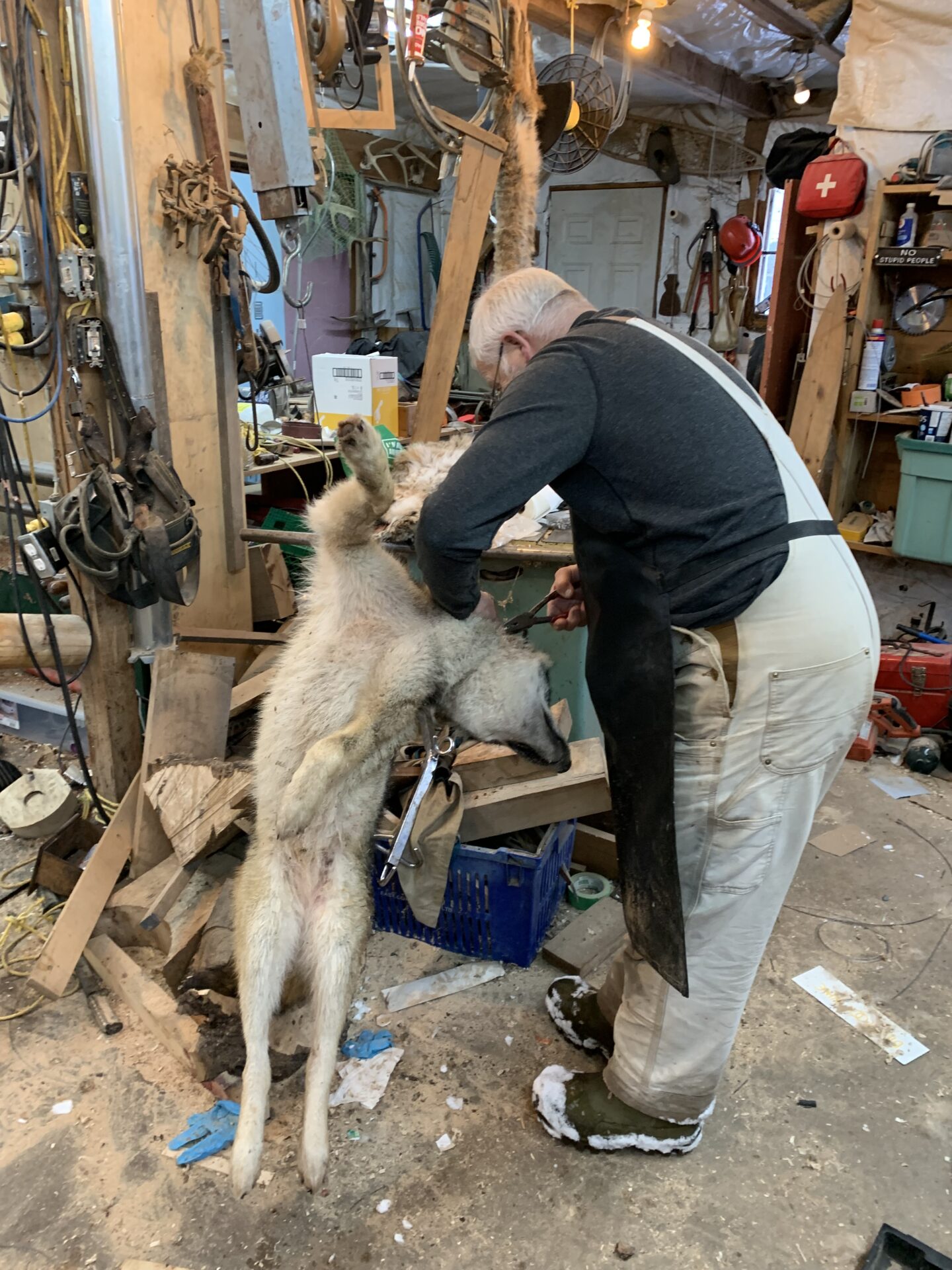 Removing the snare is step one in skinning a coyote
After carrying the coyote out of the woods and placing it in the bed of his pickup, White climbs into the driver’s seat and turns the key. On the ignition switch is a beaded rainbow wristband that reads “LGBT.” It’s a gift from his daughter. A single-shot .22 lies on the backseat, at the ready in case an animal in one of his traps is still alive.
Following the logging roads and blue highways of Colchester County, White heads home in his 10-year old Toyota. Under a fresh blanket of snow, the surrounding landscape is storybook Canada. As he pulls up in front of his workshop in a small barn just steps from his house, three golden retrievers run out to greet him.
Advertisement
Inside the workshop, the smell of burning wood and animal flesh hangs in the air. A few sets of deer antlers are on the wall, and a beaver pelt is stretched out and nailed to a plywood board to dry. Sawdust and wood shavings coat the floor. The shelves are littered with tools and miscellaneous yard-sale finds, including a plaque that reads, “No Stupid People.” It’s a Sunday, and Delta blues is playing on the radio. Other days, White listens to classical music. No 20th-century composers, though—he finds their music erratic, making him lose focus. In his workshop, he likes to be calm.
White ties the coyote by its front paw to a cable hanging from a winch on the ceiling, and weighs it. At 45 pounds, it’s large. The coyote’s swollen head makes the snare wire difficult to access and remove with plyers, so White uses a handheld electric grinder instead. High-pitched whirring fills the air, and sparks fly for a second. The coyote is freed.
Now the skinning begins. First, White uses a four-inch knife to remove the fur around the coyote’s legs, exposing the flesh. He then hangs the animal by its legs on a set of hooks hung from a cable, and spreads sawdust on the floor below to absorb the blood. Slowly, he works away, making small incisions to gradually cut away the tissue holding the pelt to the coyote’s body. Taking care not to make holes, he pulls the skin downward, cuts some more, then repeats the process. At one point, he cuts the coyote’s urethra and urine spills onto the floor. He gags at the scent, and tosses down more sawdust.
Advertisement
Finally, all that’s left hanging is the coyote’s skinned red carcass. One side of removed pelt is fur, while the other side is gummy raw skin with a thin layer of fat, which White scrapes off in a process known as “fleshing.” He then stretches the pelt across some plywood and nails it down to dry. He calls this “boarding.” Finishing up, White wraps the stripped carcass in a large plastic bag. “This is a job you couldn’t pay most people to do,” he says. “There’s no kissing your wife after you’ve been doing this.”
Once dry, the pelt would typically be shipped to a fur auctioneer, but not this time. Coyote fur was once used for the trademark hoods of Canada Goose jackets, but prices dropped when the company decided to phase out fur in 2022. Besides, White’s student wanted to keep the pelt for herself.