


ALONG THE TRAIL
In the forests of rural Nova Scotia, the time-honoured craft of trapping lives on. An up-close look at one man’s personal pursuit
Advertisement
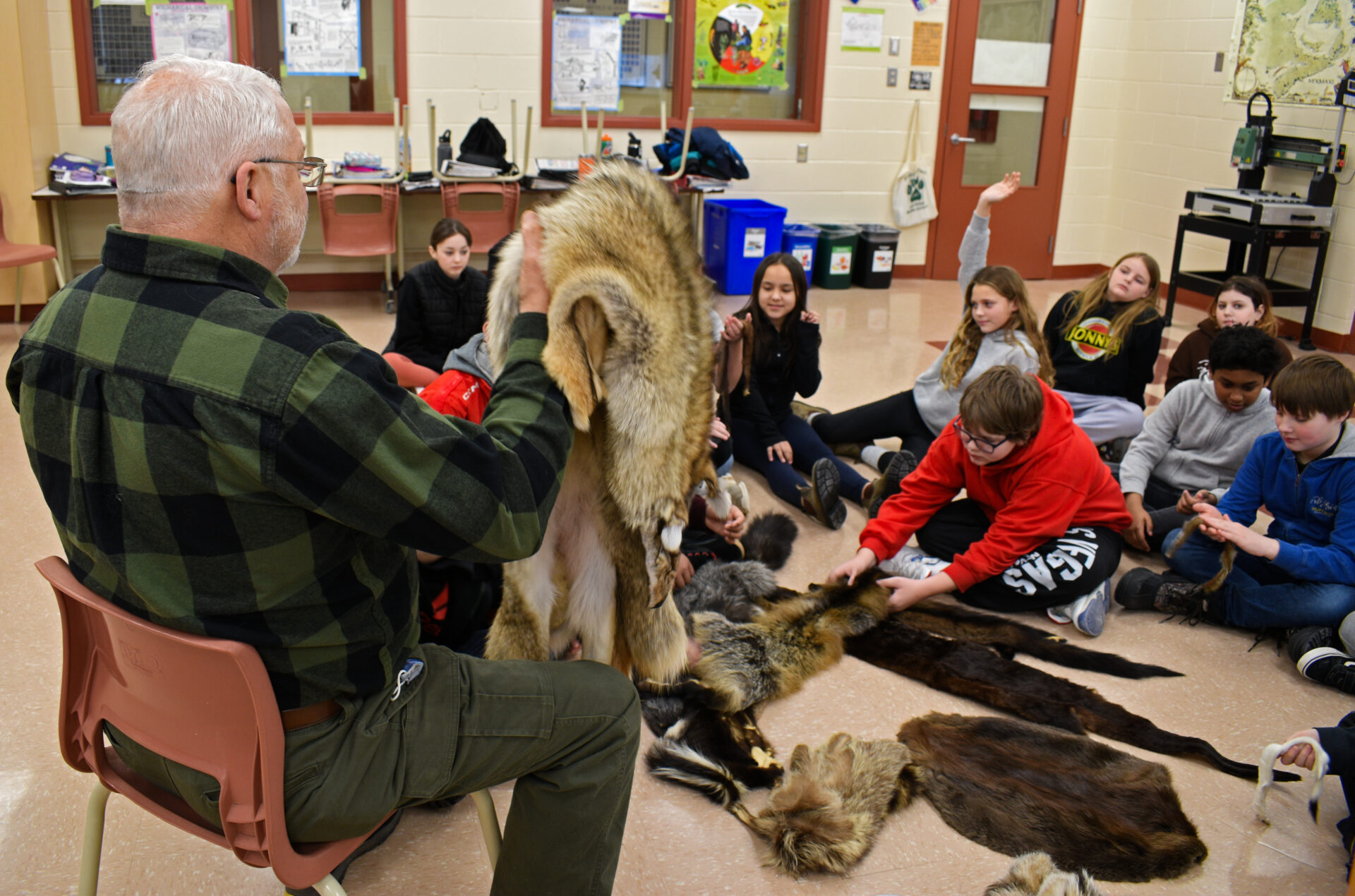 White shares his passion for trapping with young students
It’s a Wednesday morning at Pine Ridge Middle School in Kingston, and White is pulling animal pelts out of a hockey bag. Fox, raccoon, otter, coyote, bobcat, lynx, fisher, martin and beaver lie on the floor in front of him, along with a rubber cast of a bear turd. As he sits on a chair in the middle of the classroom, a crowd of kids enters and stares at the pelts.
“These are from dead animals,” White tells the students. “We treat them with the utmost respect. These animals gave their life so you could learn about different fur-bearing species.” He picks up one pelt at a time, and describes the animal it came from. The kids ask questions, and he answers. When the talk is over, the students get to pick up the pelts, to touch and wear them. One kid puts his hand inside a fisher pelt and uses it as a puppet.
Advertisement
There is clearly a lot of interest. In fact, White was enlisted to speak after a teacher overheard some students expressing interest in trapping. Wanting to make sure they learned about ethical trapping, she called the trapper association. White says he was happy to volunteer his time, noting he wants the association to offer elementary and middle school students more sessions on the world of trapping.
Before leaving, White is introduced to a Grade 6 student who has a special interest in trapping. He tells the boy he should get involved with the trapper association, and get his trapping licence when he turns 16. He also suggests there might be an opportunity for the boy to go out trapping with a member of the association, since any youth under age 16 can register as an apprentice. The boy grins and thanks White. Afterwards, the teacher says, “I don’t think I’ve ever seen that kid smile like that.”