


Vise advice
Veteran tying tips and tricks to help novices create better flies
Advertisement
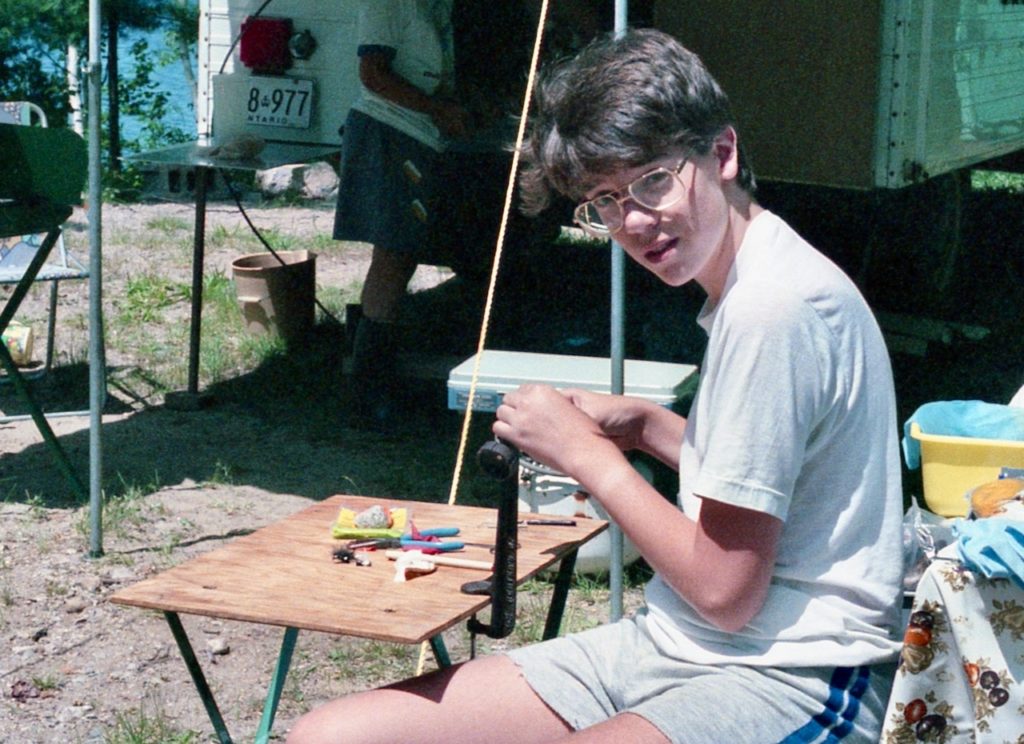
I’ve been part of the fly-fishing world for 35 years, and in all that time, I’ve never met a fly angler who doesn’t want to tie flies. I’ve only met anglers who do tie flies, and those who sheepishly say, year after year, that they keep meaning to learn. If you fall in the latter category, I’m here to help. Although I learned pretty solid fly-tying fundamentals when I was in my teens (yep, that’s me above, nerd glasses and all), it took many seasons before my time at the vise became truly productive and enjoyable. Here are some fly-tying tips I wish I’d figured out years ago…
Advertisement
Looking for even more help? You can see all of Outdoor Canada’s expert fly tying tips at www.outdoorcanada.ca/flytyingtips. And for fly pattern ideas, check out our running list of the all-time best flies for Canadian anglers at www.outdoorcanada.ca/musthaveflies.
 Swift Fly Fishing
#1 TIE MULTIPLE FLIES AT A TIME
The best way to become proficient at a pattern is by tying a bunch of flies in a row. If you make 10 flies of the same pattern and line them up as they come off the vise, I guarantee the last ones will be neater and more uniform than the first few. But there’s a caveat: When you’re tying the first one or two, take your time. Make sure you’re putting the fly together correctly and in the most efficient way possible (or at least in a way that works for you). Then once you’ve got the hang of it, crank out the rest. If you’re tying different sizes of the same fly, start with the largest and work your way down. Smaller flies are more challenging, so warm up on the big ones.
#2 PLAN OUT YOUR TYING AREA
To tie in volume, lay out your materials ahead of time, ready to go. If you’re tying a dozen Adams dry flies, for example, count out the hooks, get a big clump of body material ready, and pluck out all the hackle feathers you’ll need (this is especially helpful with sizing feathers, which I always find tricky). It would be pretty hypocritical for me to tell anyone to be tidy, but at least try to organize your work area so you always know exactly where everything is. That way, you’re not constantly fumbling for tools and materials.
#3 COPY EXPERTLY TIED FLIES
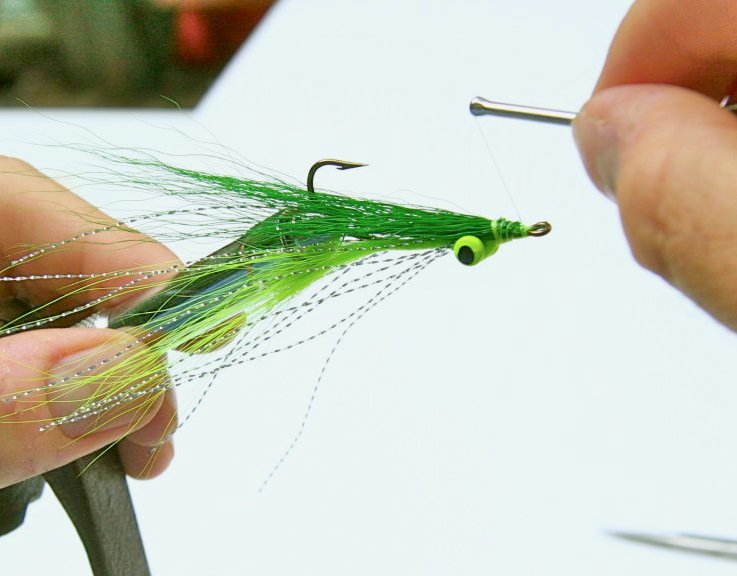
Even if you mostly tie your own flies, it can be super helpful to buy a few premium fly-shop flies. They’re usually perfectly tied, making excellent models to copy. Even after reading articles and watching videos, for example, I couldn’t get the Peanut Butter (above) fly just right. Then I bought a couple and saw exactly how they were put together. In fact, I even traced them onto a sheet of light cardboard, and still use the patterns I made to get the proper size and shape on my own.
Advertisement