

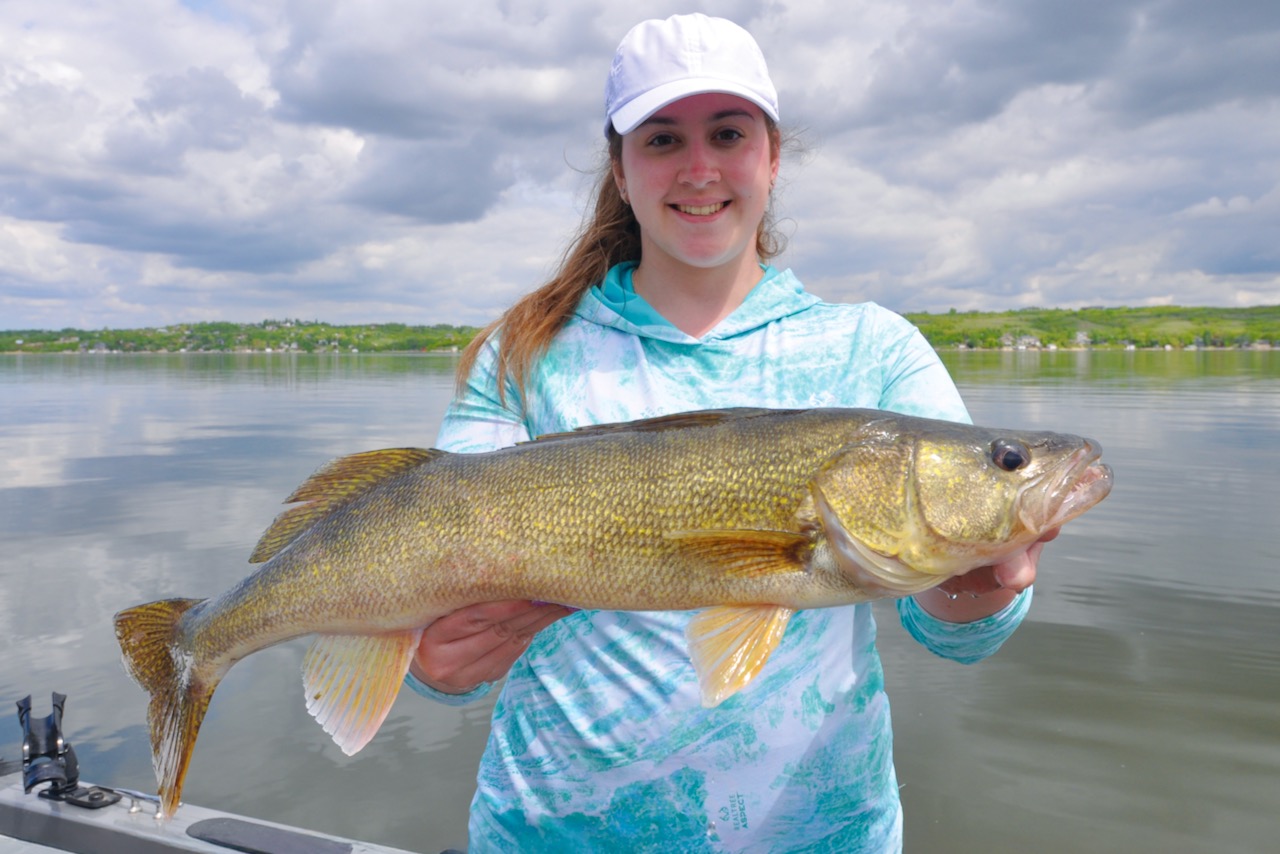

A MATTER OF DEGREES
To find and catch springtime walleye, head for the warmest water you can find on your lake
Advertisement
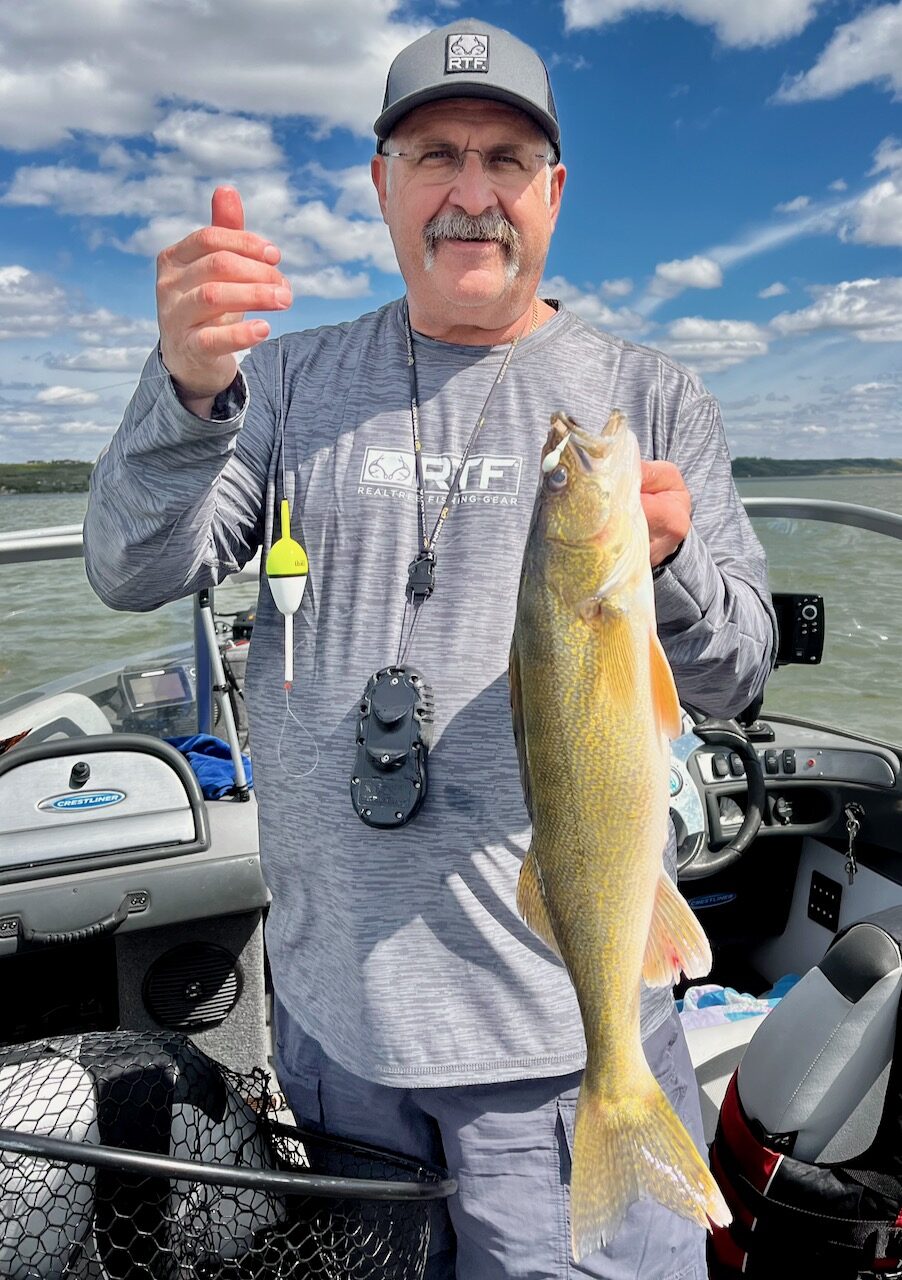 Use a slip bobber to suspend a bait near bottom
TOP TACTICS
Although you’re looking for the warmest water to find the most active fish, it’s important to remember the water temperatures will still be lower than they would during the summer. That means the walleye will be less aggressive when feeding, making it necessary to use slower presentations and smaller baits. Here are the best options.
SLIP BOBBERS
One of my favourite early-season presentations is a slip bobber, which allows me to anchor over a hot spot and suspend a bait near bottom. In this situation, my go-to bait is a leech, which has a slow, enticing wiggle when suspended.
Advertisement
To set up a slip bobber, slide a bobber stopper onto your line, positioning it so the line below reaches your desired depth for the bait. Then slide on a small bead, followed by the bobber itself; the bead helps prevent the bobber from sliding up the line past the stopper. Next, I like to add a second bead under the slip bobber, followed by a second bobber stopper. That acts as an insurance policy to save my bobber from floating away in case the line below gets broken or bitten off.
Early in the season, I skewer the leech onto a small octopus hook, adding just enough splitshot 12 inches up the line to make the bobber sit upright in the water, with just the upper tip above the surface. I place the smallest splitshot closest to the hook, with the larger shot higher up the line. This helps ensure the fish don’t feel any resistance when they take the bait. As spring progresses and the water gets a little warmer, I swap out the single hook for a jig to give the fish a bigger, more colourful target.
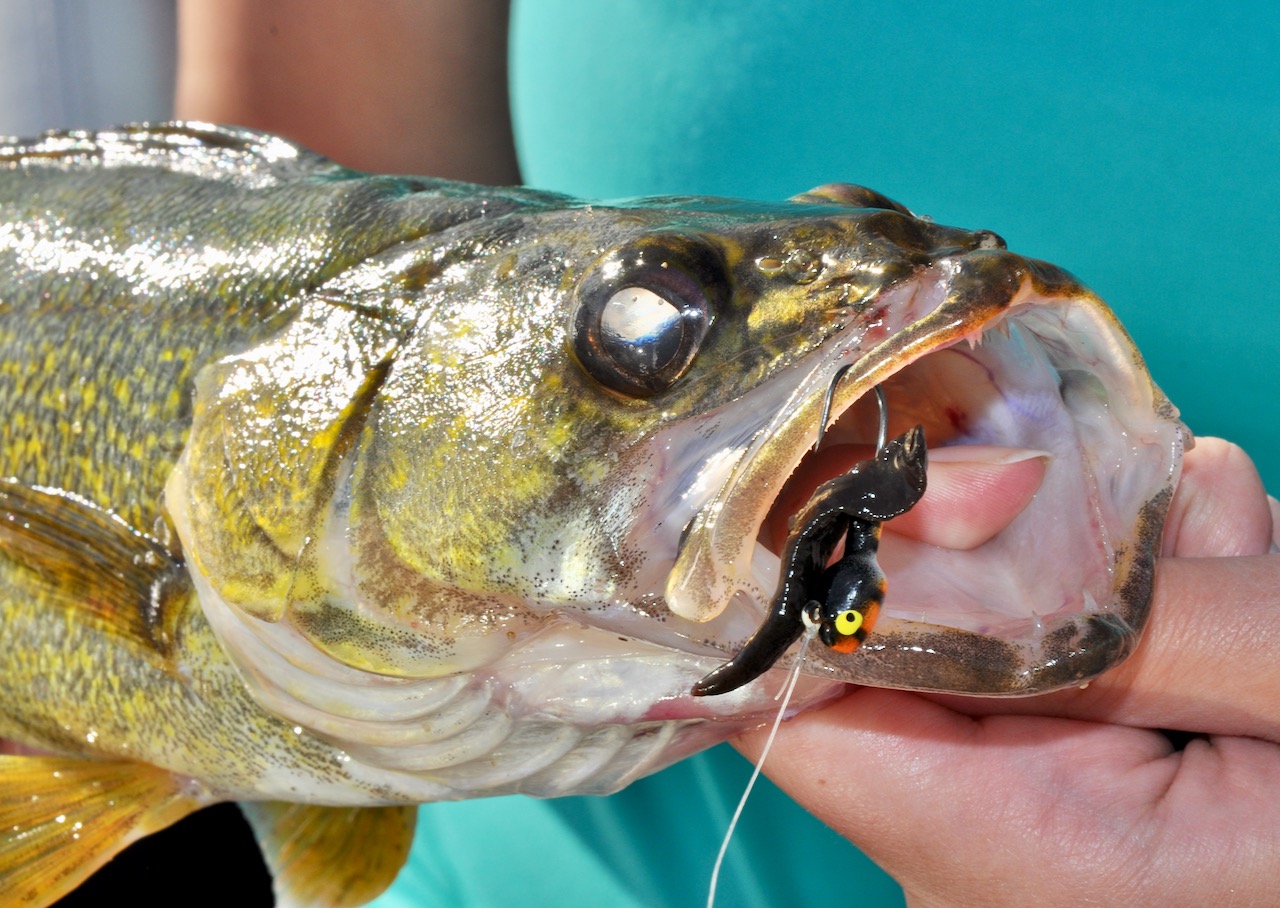 Cast and slowly retrieve a jig tipped with a leech or minnow
JIGS
These are another excellent early-season presentation. Since you’re typically fishing very shallow water, try 1/16- to ¼-ounce jigs tipped with leeches or minnows. Cast and slowly retrieve them, rather than jigging vertically as you might during summer. My best success often comes when casting towards shore, then bringing the jig back towards the boat. In fact, I sometimes cast my jig right onto shore, then hop it into the water. Often, the sound and flash of the jig hitting the water will trigger a strike. If it doesn’t, I’ll slowly hop and twitch my offering along bottom, with short pauses.
Advertisement
Another options is to troll slowly at 0.5 mph and drag small, bait-tipped jigs. Let out approximately 50 feet of line so the shadow of your boat on the shallow bottom will be long gone by the time the fish see your offering. As you troll, periodically lift the jig to give it some action and hopefully trigger a strike.
Whether you’re casting or trolling a jig in the early season, don’t expect violent strikes. The bites will be light, so the moment you feel any weight or lose contact with your jig, set the hook. A gentle hookset works best, because walleye will often grab just the tip of the bait at this time of year; a hard hookset will only pull the jig out of the fish’s mouth.
Advertisement
 Troll a Lindy rig baited with a leech to cover large areas of warm water
LIVE-BAIT RIGS
Later in the early season, when there are larger areas of warmer water to cover, try trolling a Lindy rig, also known as a live-bait rig. When using these rigs in the spring, I thread a 1/16- to ¼-ounce bullet weight onto my main line, followed by a small barrel swivel. I’ll then tie on a three- to five-foot leader with a size 6 octopus hook baited with a leech. This presentation allows the leech to flutter naturally when you slowly troll the rig at between 0.3 and 0.5 mph.
Since shallow-water walleye can often be skittish, let out enough line so your weight and rig are well behind the boat and its shadows. When a fish bites, start feeding it line as you continue to troll. Again, since walleye aren’t as active as they are during summer, this gives a biter plenty of time to get the bait completely in its mouth before you set the hook. I like to wait about 20 seconds on the first fish, then adjust the time accordingly depending on what happens. If I miss the fish or it’s only hooked on the tip of the lip, I’ll give the next fish a little more time. If the fish is deeply hooked, on the other hand, I’ll set the hook sooner the next time. It’s all part of the rewarding challenge of fishing for springtime walleye.
Saskatchewan contributor Mike Hungle fishes for walleye throughout the season.
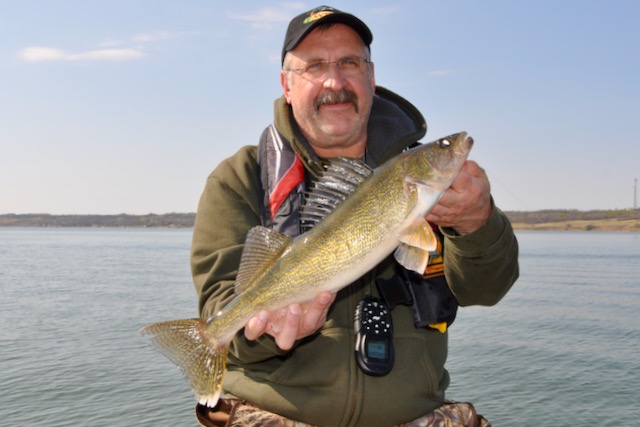
BONUS TIP: DRESS FOR SUCCESS
Even under sunny skies, sitting in boat on a cold lake can be quite chilly in the springtime. Throw in a little wind, some clouds or a rain squall, and it gets even chillier. To stay comfortable and focused, dress in layers so you can adapt to changing conditions accordingly. Raingear is a must, and it doubles as an effective wind-blocking outer layer. Also bring a toque and gloves, which you’ll appreciate when driving the boat. Warm socks and shoes (or boots) are a good idea, too, and keep a towel in your boat to dry your hands after handling fish.