

KAYAK FISHING IN PANAMA
Experience is the best teacher, but these tips will get you up to speed
Advertisement
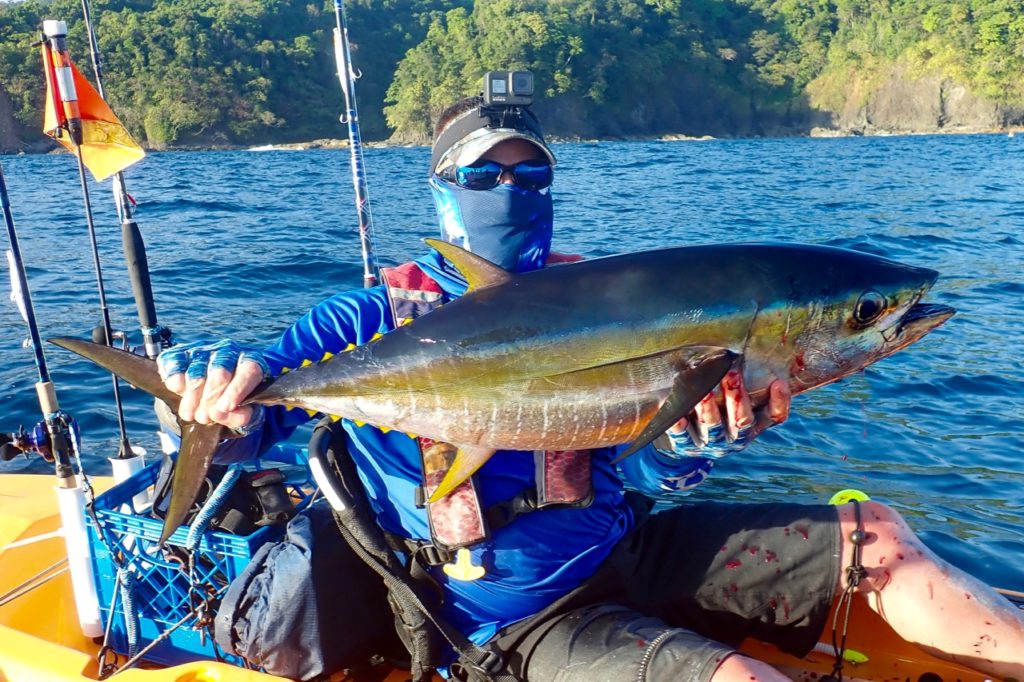 Sam Tomlin hoists a hefty yellowfin tuna, caught on a Tacklehouse Feed Popper
#5 Poppers are the most productive lures, but fishing them isn’t easy
I’ve fished poppers since I was kid, mostly for bass in the summertime. In my home waters, they’re a marginal bait—fun, but only modestly effective. So I didn’t grasp that on the Wild Coast, poppers are the most universally effective lures. On my first tip to Panama, I only packed a couple of cheap, non-lodge approved ones. And they didn’t work. Lesson learned (see Tip # 3).
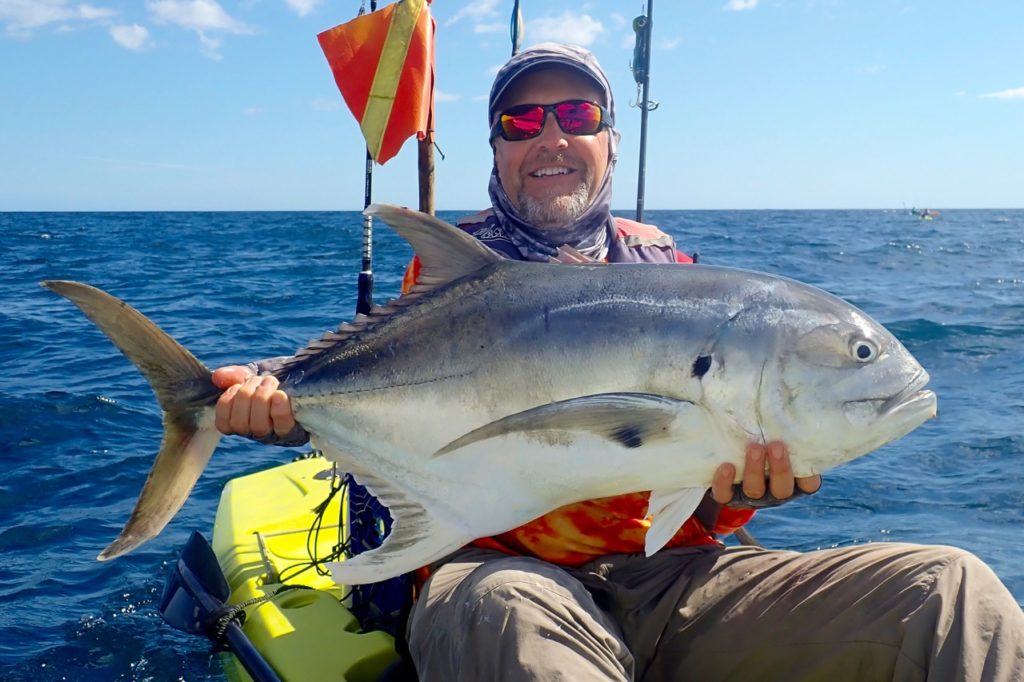 Mike Dodds took this monster jack crevalle on a popper. Jacks this big are rare, and very, very powerful
Also, the way you work a popper in saltwater is totally unlike gentle freshwater popping. You make long, brisk pulls with the rod, so the lure throws a sheet of spray. At the same time, you must madly crank up the slack, so you can immediately pull again. This sustained commotion suggests baitfish activity, which calls in predators from surprising depths and distances.
Advertisement
But to speedy pelagic predators, prey only looks edible if it’s going fast. So popping only works if you move the bait literally as fast as you can. With a big rod, and a 6-inch, 2.5 ounce popper, this is seriously hard work. Maybe an Olympic decathlete could do it all day long. Maybe. But a regular angler simply can’t. So I would pop for 15 or 20 minutes, then rest up by jigging or trolling.
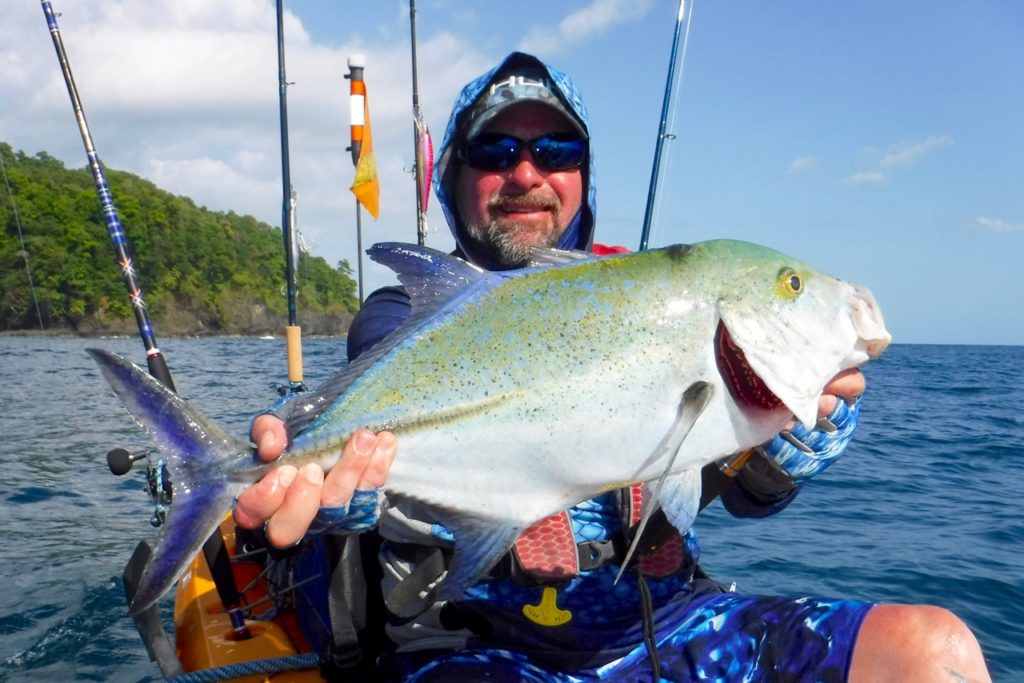 Sam Tomlin was particularly adept as using poppers around the rocky shorelines for fish like this bluefin trevally
But after a break, I’d always return to popping. At first it feels odd to use a surface lure in 100 feet of water, but it’s a terrific tactic offshore, where speedsters like jacks and tuna T-bone the lure, resulting in heart-stopping strikes. Poppers also work extremely well inshore for cubera snappers, bluefin trevally and other structure-oriented species. They really are the do-it-all lure.
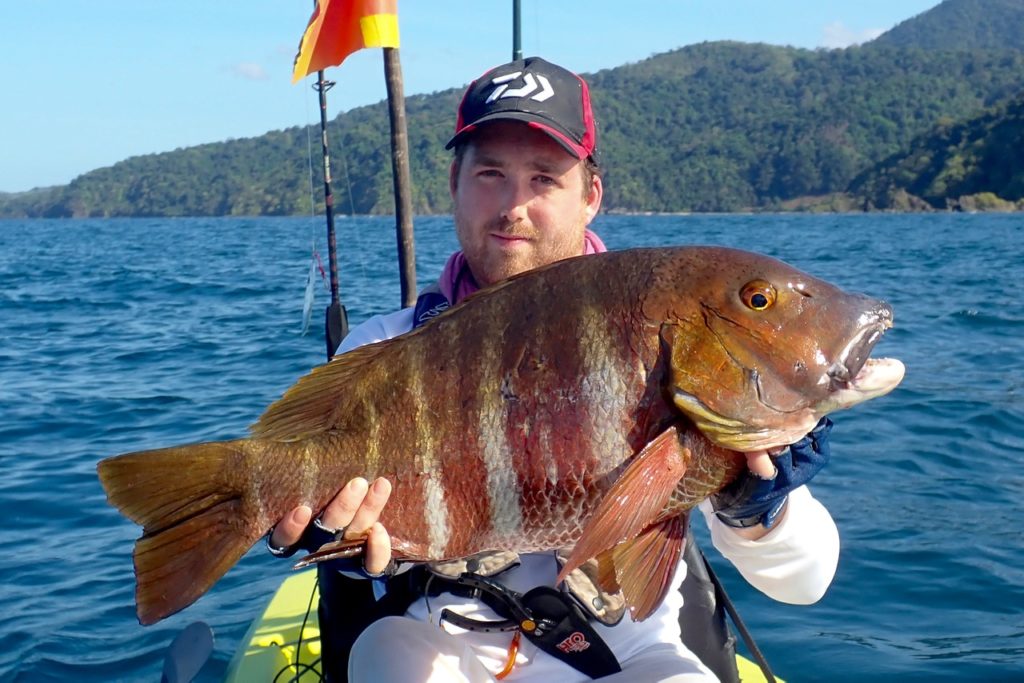 Dan Teage with a nice rock snapper, caught on a jig
#6 When jigging is hot, it’s super effective—and exciting
Deep saltwater jigging is a great way to give your shoulder a break from casting, but it’s exciting in its own right. The top styles are slow-pitch (aka flat-fall) and knife (aka speed) jigs, ranging from two to four ounces. And again, unless you’ve jigged in 100 feet of water, forget everything you know about using jigs in lakes and rivers.
Advertisement
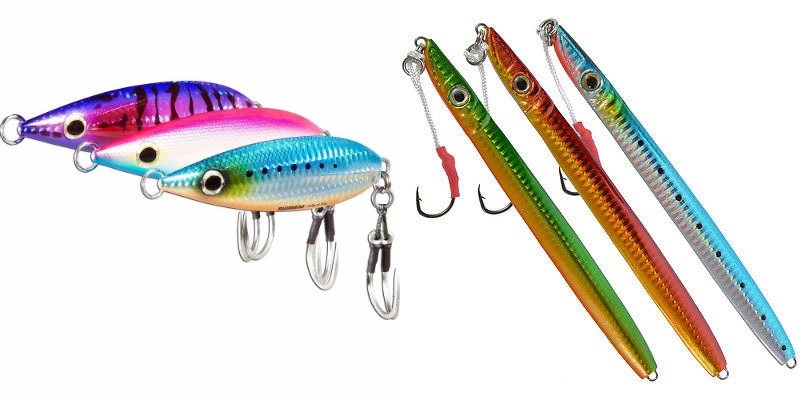 Flat fall (left) and knife jigs
The jigging technique is very active, and not particularly intuitive, but it’s also not difficult to learn. So pay close attention during Sam Wadman’s famous on-the-water jigging seminars.
At times, virtually any fish found in deep water will hit a jig. Though unlike tip-tapping a walleye jig along bottom, there is no mistaking the thumping strikes. Over the course of my two trips, the species hooked on jigs include: roosterfish, cubera, rock and yellow snappers, African pompano, jack crevalle, yellowfin tuna, orangeside triggerfish, sierra mackerel and bonito.
Advertisement