

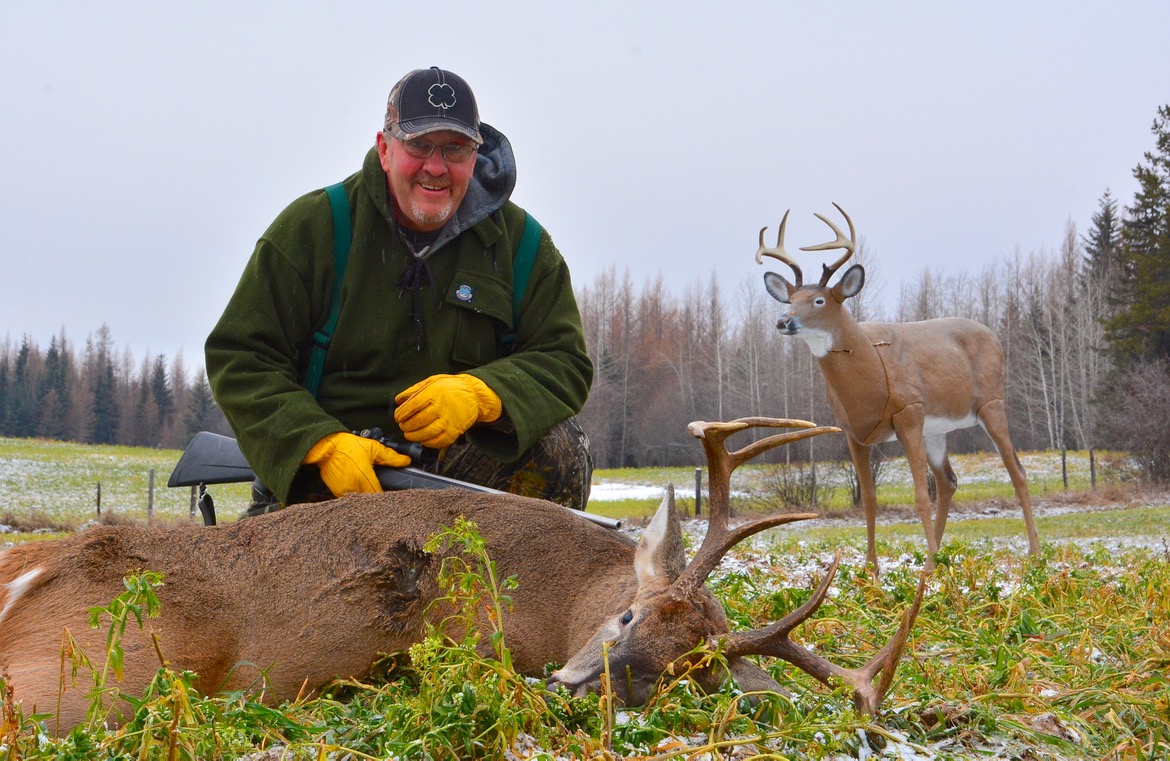

DUPING DEER
Lure wary bucks into range by adding a decoy (or two) to your set-up
Advertisement
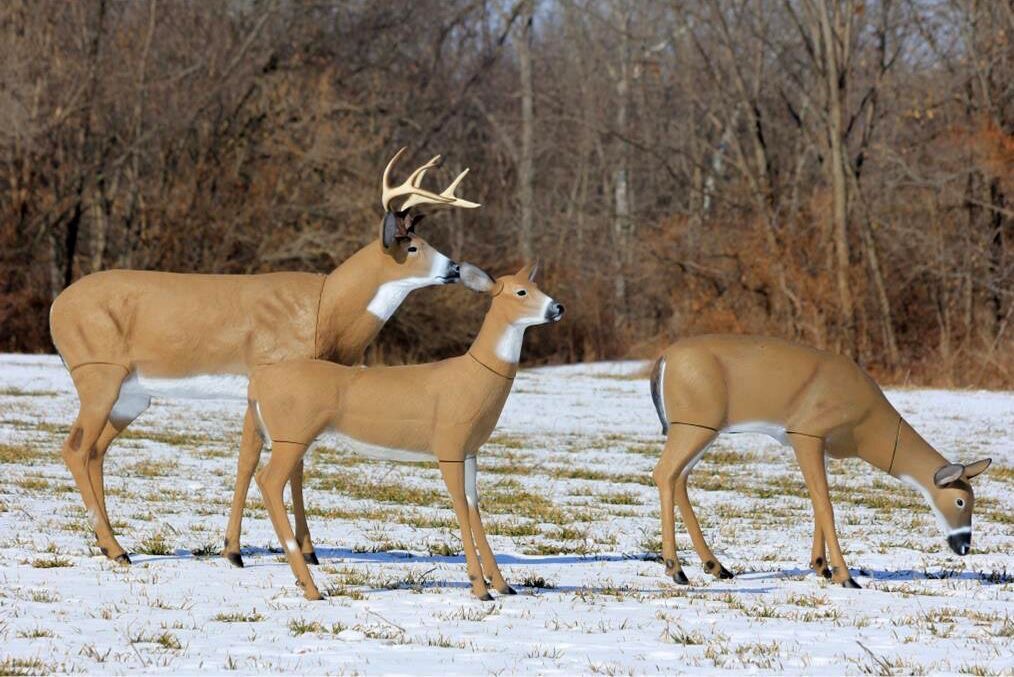 Experiment with different decoy combinations to learn what’s working
#4 POSITIONING
Irrespective of whether you use a doe, a buck or multiple decoys, their placement is critical. Always situate your decoys upwind of your blind or stand to lessen the likelihood of a deer picking up your scent. Field edges, clearcuts, cutlines and natural clearings or meadows within cover are prime locations. Remember, this is a visual game, and you want any approaching deer to see your decoys from as far away as possible.
Consider the natural terrain as well, and place your decoy on a rise if possible. I always try to situate my blind in a swale or low spot, and my decoy on higher ground. And position the decoy so that it faces away from your blind. That way, you avoid the risk of any approaching deer noticing movement within the blind, as they tend to look in the same direction as the decoy does.
Advertisement
Be sure to take your decoy down at the end of the day, even if you’re planning to return the next morning. Leaving it up overnight runs the risk of deer investigating it in the dark, and once they’ve got it figured out, the game is up. One morning last year, for example, I had a buck visit my decoy for a couple of minutes before walking off. Twenty minutes later, he reappeared 100 metres away, but ignored the decoy, having already determined something wasn’t right.
#5 ATTRACTANTS
For me, the jury is out on using scents with decoys. A few years ago, I taped a light piece of white cloth to the tail of my doe decoy to give it a little movement in the wind (a strip of a white garbage bag also works). Figuring I had a great receptacle for doe-in-heat scent, I liberally sprayed the cloth each time I went afield. I can’t say with any confidence the scent made the decoy any more attractive, however. Watson agrees, saying he’s actually had deer spook once they caught a whiff of commercial doe-in-heat scent.
I know some hunters who do believe that scent helps, with some of them preferring to spray the ground beneath their decoys or on cotton balls hanging from nearby branches. Again, experiment and decide based on the reaction you get from the deer. The most important thing is to manage your scent, and that includes not handling decoys with your bare hands. And don’t be shy about mixing in other attractants, including rattling and buck grunting, to increase the chances of bucks seeing your decoy.
Advertisement
There’s no denying that deer decoys can be a valuable part of your hunting arsenal. They’re not a panacea—nothing is when you’re hunting crafty whitetails—but they’ll unquestionably improve your odds of fooling deer, including big bucks. They’ll certainly continue to play a significant role in my whitetail playbook.
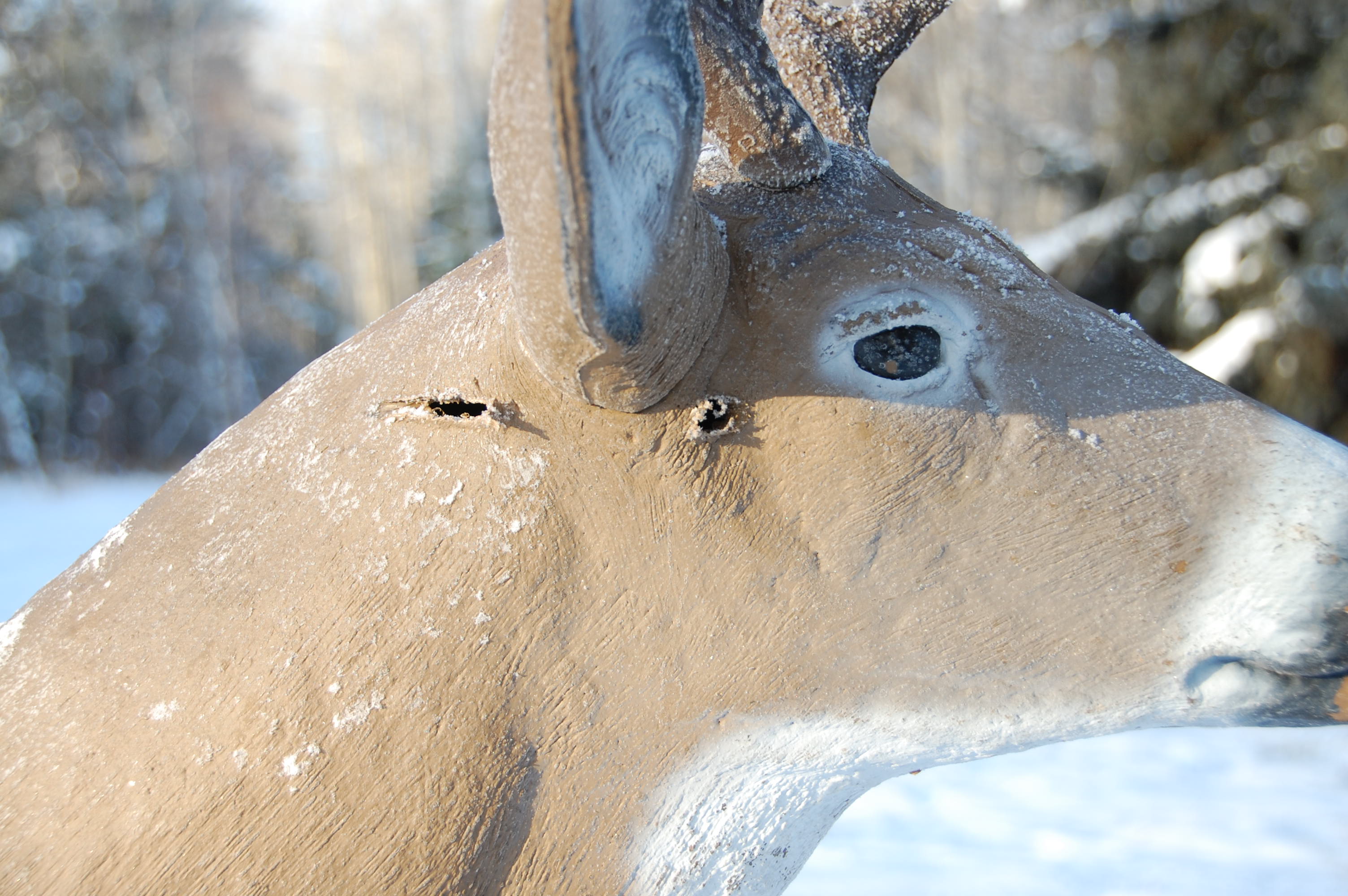
BONUS TIP: PLAY IT SAFE
Many modern deer decoys look exceptionally lifelike, which is both a blessing and a curse. The problem is that other hunters can easily mistake a decoy for the real thing at a distance, with possibly dangerous consequences. Three years ago, for example, my hunting partner was sitting in his blind watching his decoy when a truck appeared across the field. A hunter jumped out and started shooting, hitting the decoy three times (above). My partner was both terrified and irate, and once the shooting was over, he jumped out of his blind and had a rather heated conversation with the irresponsible hunter.
The lesson here is that you must be extremely careful about where you choose to hunt over a decoy. Some hunters won’t use them in combination with a ground blind, and there’s no arguing that a treestand is the safest option. The key to deciding where, if at all, to put out a decoy is to carefully consider the risks of another hunter seeing your set-up. I only use my decoy when I’m hunting on private land to which I have exclusive access.