


LESSONS FROM THE BLIND
Sage advice on everything a total greenhorn needs—from the proper gear to effective strategies—to start enjoying duck hunting.
Advertisement
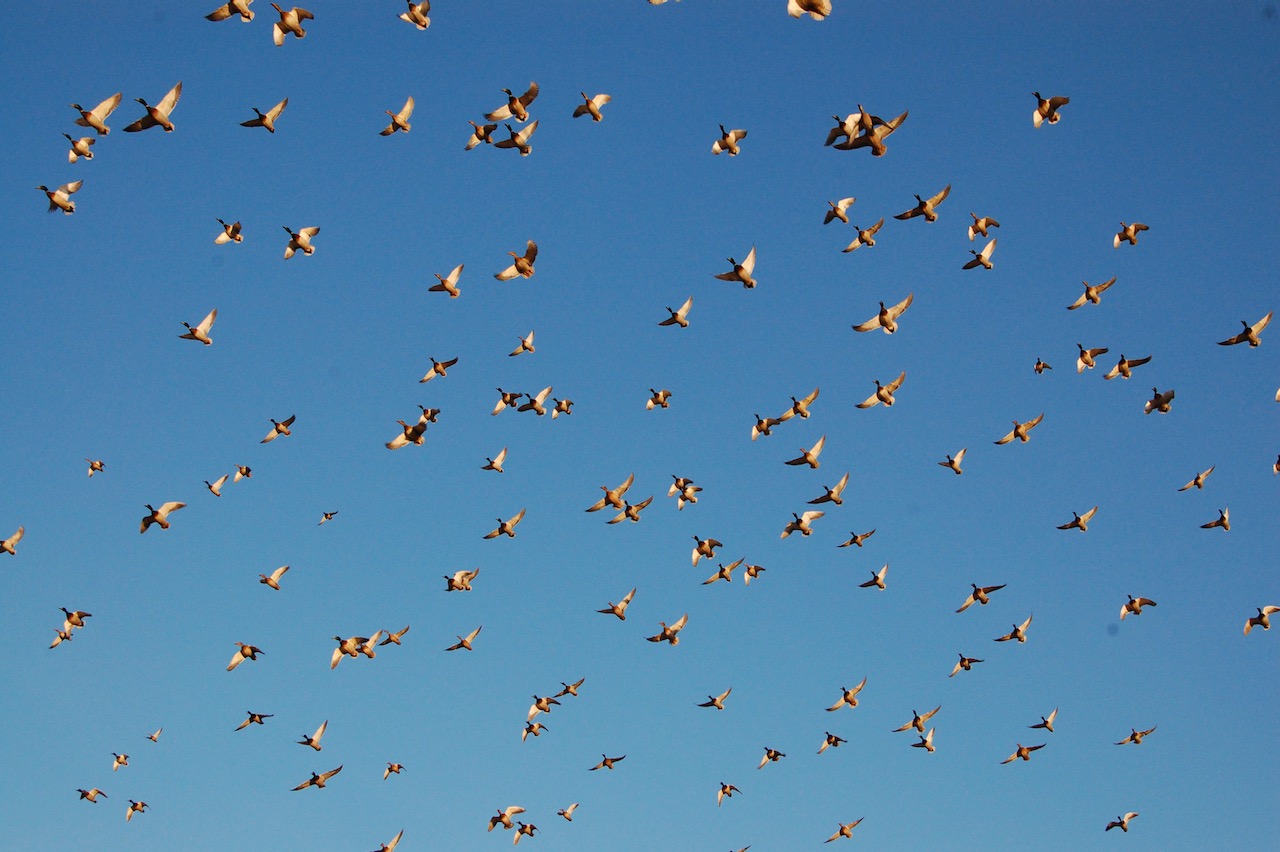 Watch for large flacks settling into a field
SCOUT TO FIND BIRDS
The single biggest variable to successfully harvesting ducks is to make spotting integral to your hunting plans. By their very nature, ducks are highly mobile animals. In the fall, they’re driven to move by many factors, including the instinct to migrate, the availability of food resources, the weather and hunting pressure. While you can almost certainly find a few ducks with little or no scouting, time spent doing some reconnaissance is critical for consistent success.
Spend as much time as possible learning the fields and wetlands ducks are using. If you discover an active area, watch it until dark. Birds that are put to bed without disturbance will usually be there the following day.
Advertisement
Understanding the relation between available food sources and roosting water is key. Look for ducks wherever food crops are found in proximity to large wetlands that offer roosting habitat. Mallards and pintails take advantage of unharvested or waste crops in fields, with barley, peas and corn being their favourites.
Early in the season, scouting is best at first and last light, as ducks typically feed twice a day. As the season progresses however, the birds may feed only once, so late-morning spotting can be the best option.
Spotters have two choices. The first is to wait near the shore of a roosting lake and follow the birds out to their feeding area. The challenge is deciding which flight of birds to follow; pick the wrong one and you could find yourself sitting on a field with only a handful of birds.
Advertisement
The second approach is to drive along roads adjacent to staging wetlands and watch for milling birds. Ducks tend to circle for a considerable period before settling in to feed, creating a vortex of birds that can often be spotted from several kilometres away. Find more than a couple hundred birds settling into a field and you’ve got the makings of a great shoot.
When watching ducks going into a field, pay attention to how they land. If they settle tentatively, they’re probably landing in grain stubble. Alternatively, if they go down quickly and confidently, there’s a good chance they’re settling into a small pothole or flooded section hidden within the field. That’s the best possible scenario, so always hunt those areas first.
Advertisement
If you’re hunting for a mixed bag of species in wetlands, large or small, look for protected areas where the water is shallow enough to provide ducks with access to food, including aquatic vegetation and invertebrates. If you’re searching for diving ducks, you’ll need to identify the beds of submerged plants they favour. That can be difficult from shore, but patience will eventually reveal the preferred feeding sites.
GET PERMISSION ON PRIVATE LAND
If you’ve identified a target location that’s on private land, be sure to contact the owner to ask for hunting permission. Considerate hunters are seldomly refused, but if you enter the property without the owner’s consent, you risk embarrassment and potential legal problems. You’ll also be giving hunters everywhere an unnecessary black eye.