

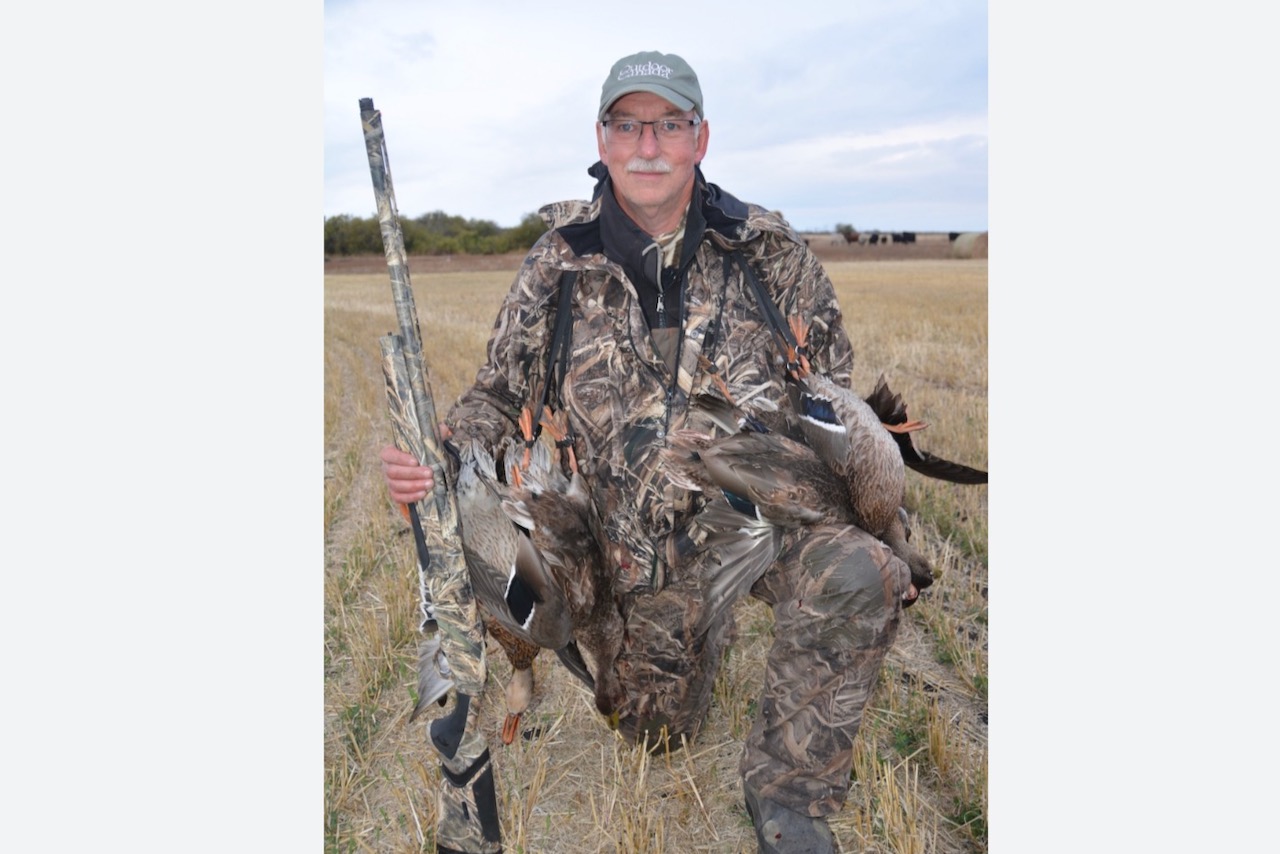

LESSONS FROM THE BLIND
Sage advice on everything a total greenhorn needs—from the proper gear to effective strategies—to start enjoying duck hunting.
Advertisement
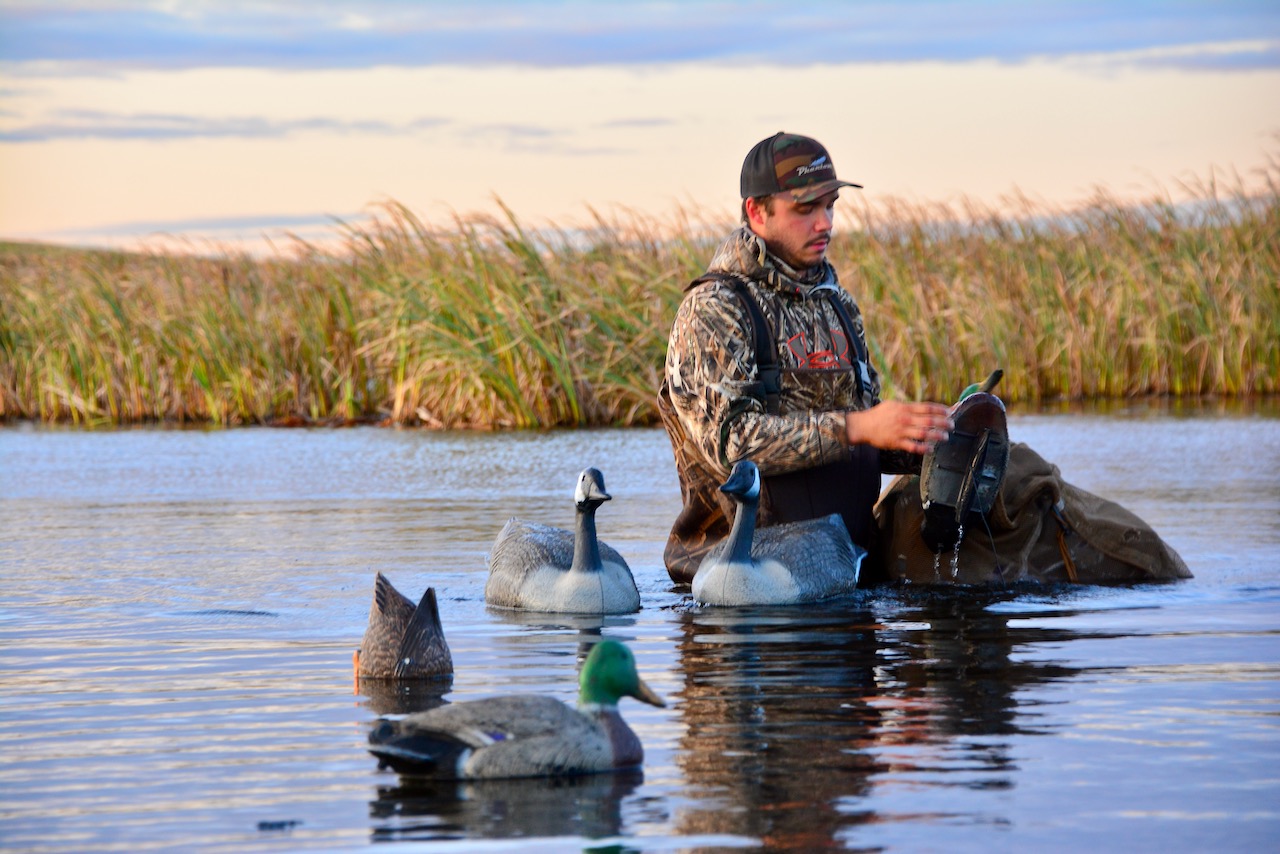 Fields require more decoys than small wetlands
TACTICS TUTORIAL
Whether you’re hunting small wetlands, fields or big water for the first time, here’s how best to connect with ducks.
SMALL WETLANDS
Advertisement
If I were to recommend a starting point for new duck hunters, it would be the shore of a small wetland, preferably a couple hundred acres in size down to an acre or two. Walk-in shoreline access on a larger lake would also be a good bet. Such areas require the least amount of specialized gear, and they nearly always provide shooting opportunities. And once you discover which wetlands are reliable producers, you won’t have to keep scouting to find new ones.
Select points of land to shoot from; wind direction isn’t critical as long as it’s not blowing directly into your face. Where available, use natural cover to hide in. Otherwise, set up a simple panel blind or use cut shrubs as cover. A dozen or two floating decoys placed randomly out front is all you’ll need, though a spinning-wing decoy is a valuable addition. Space out your decoys, making sure none are beyond shooting range, which is typically inside 40 metres.
Then it’s just a matter of sitting patiently, waiting for ducks to fly in to investigate. With such a set-up, the birds are unlikely to land in your blocks, so be ready to shoot the first time they fly over. If you’ve got a retriever, great. If not, be prepared to wade out to retrieve downed birds. A mixed bag of species is common, and one of the great rewards of this hunting style.
Advertisement
FIELDS
Hunting agricultural fields is the most popular approach to hunting ducks across the Prairies for one primary reason—when it goes well, it goes really well. Stories of six-, eight- and 10-man limits invariably originate from a field shoot. Alternatively, when it goes bad, it can go really bad.
Advertisement
Success starts with thorough scouting. Identify where exactly in the field the ducks were feeding the evening before—the spot on the spot—and set up there. Setting out blinds and decoys requires time, so plan accordingly, remembering you’ll also have to conceal vehicles.
Consider the wind direction when establishing your blind. Ducks will almost always land into the wind, so you want it at your back. There are lots of options for blinds, including everything from commercial A-frames and layout blinds to simply hiding in natural cover along the field edge. They can all work fine, with your choice often depending simply on your budget. Whichever option you choose, dress it well—the more natural vegetation you have concealing you and your companions, the less likely incoming birds will detect unnatural movement. Remember, they’re going to be coming straight toward you.
With decoys, it’s generally a case of the more the merrier. If all you have is a couple dozen, however, don’t worry—at times, that can be enough for ducks that want to feed in a particular field. And you can use duck or goose decoys, whichever you have available. A spinning-wing decoy makes an effective addition to any duck spread.
Much has been written about decoy patterns, but a simple U-shape is usually effective, with your blind at the base of the U. Just make sure you leave an opening downwind of your blind where incoming birds can settle. Space out your decoys randomly but somewhat evenly, setting one at a precise distance, say 40 metres, to help you judge the range of approaching birds.
Designate one hunter in your group to call the shot, directing the others when to rise and shoot. Resist the urge to peek over the top of the blind as ducks approach—shiny faces spook more ducks than nearly anything else.
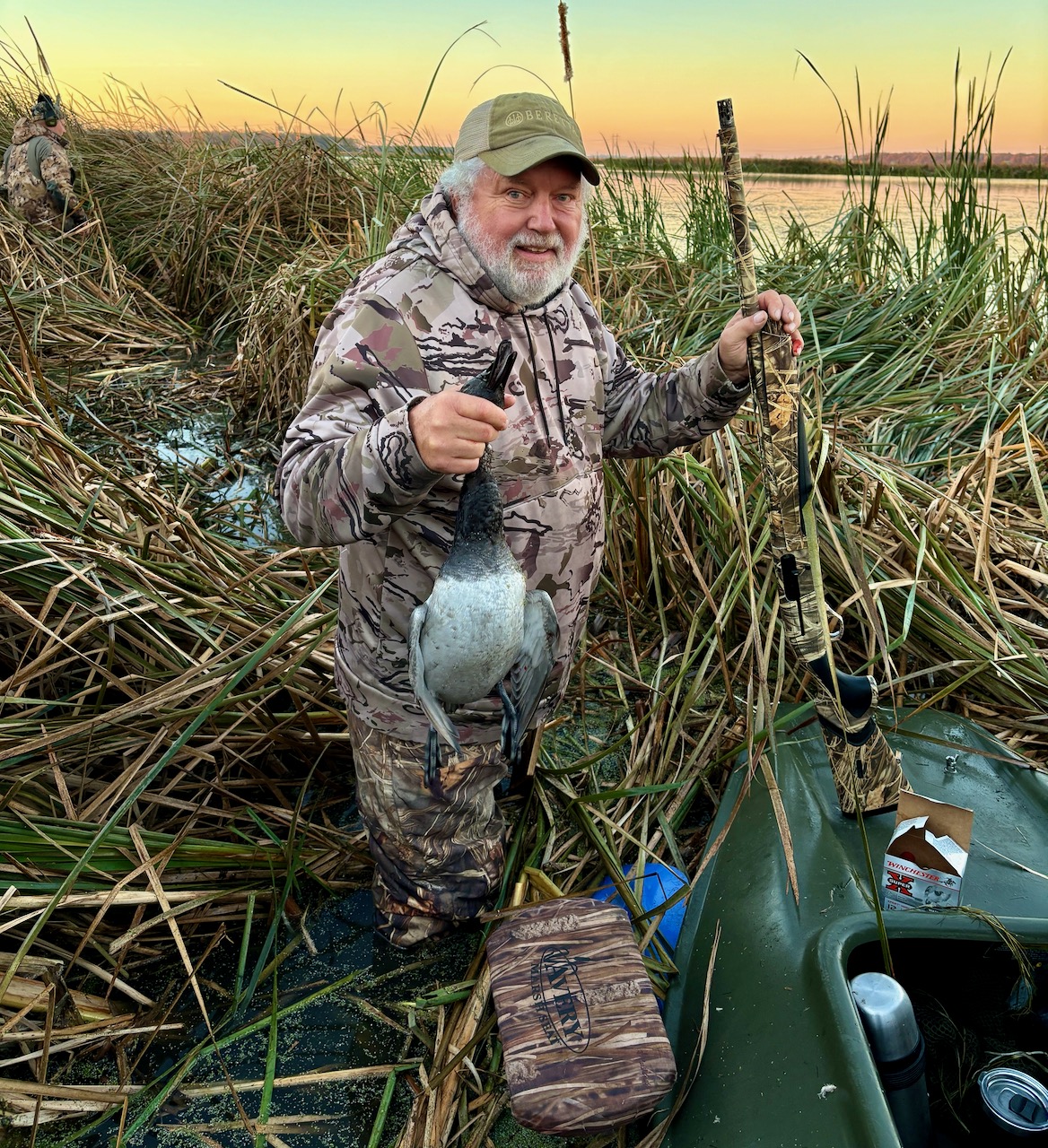 Big-water hunts often require boats
BIG WATER
Pursuing diving ducks on large wetlands is the most complicated duck-hunting style, but it’s steeped in tradition and romance. Requirements can include boats and motors, disciplined retrievers, long strings of decoys and the ability to make difficult shots.
The best diving-duck lakes tend to be well-known locally, but selecting the optimal place to shoot from will vary depending on wind conditions and the location of food. You have two choices—shoot from a boat or set up on a point or island. I recommend the latter for new hunters, as dry land affords a more stable shooting platform, along with better concealment for both hunters and dogs.
Diving ducks don’t like to fly over land, so avoid setting up with the wind at your back as you would in a field. Instead, set your blind and decoys in a crosswind configuration so incoming birds approach left to right or right to left when landing. If there’s natural cover, use that for your blind. Alternatively, a simple panel blind is effective, as you generally won’t have ducks approaching head on.
Consider running a long line, with your decoys extending out downwind anywhere from 100 to 200 metres, set approximately 10 metres apart. I prefer the beginning of my line to be 25 metres offshore and slightly upwind of my blind, so the prime landing area is directly in front me. A couple dozen floaters 10 metres offshore on either side of my blind completes the spread, although I also often put out a spinning-wing decoy or two; the movement works wonders in attracting divers.
When wounded, diving ducks can be extremely challenging for retrievers, so be prepared to immediately swat any bird that hits the water with its head up. You’ll be amazed at how fast and how far they can travel underwater. Remember, your ethical and legal obligation is to make every reasonable effort to retrieve downed birds.
Unexpected weather conditions can make hunting on large lakes somewhat dangerous, so use common sense, carry basic survival gear and be willing to wait out a storm or high winds on an island or remote shore, if need be.