

THE KAYAK IS TH DRAG
On Panama’s rugged Wild Coast, that’s just one important lesson learned on the hunt for trophy fish
Advertisement
Bobbing in my kayak on that first morning, I force my attention away from the dramatic tropical vista and pull a rod out the holder behind me. I start trolling a shallow-running crankbait, and get familiar with my craft. This is my first time in a pedal kayak, and I immediately love it. These 12-foot Hobie Outbacks are stable, fast and manoeuvrable, and they leave your hands free for fishing. It’s also comforting to have the lodge panga nearby, the crew ready to assist with big fish, put small ones on ice, refill our water bottles and generally offer support.Still, pedalling in the 25°C heat is tough, especially after arriving from a wintry December in Toronto. Less than an hour in, I’m thinking about a break when my rod jerks. Looking over my shoulder, I see the golden body of a bull dorado rocketing out of the water and wildly shaking its instantly recognizable blunt head. It jumps again, and is gone before I can even reel in the slack. “Nothing you could have done,” Sam said later. “They’re just insane.”
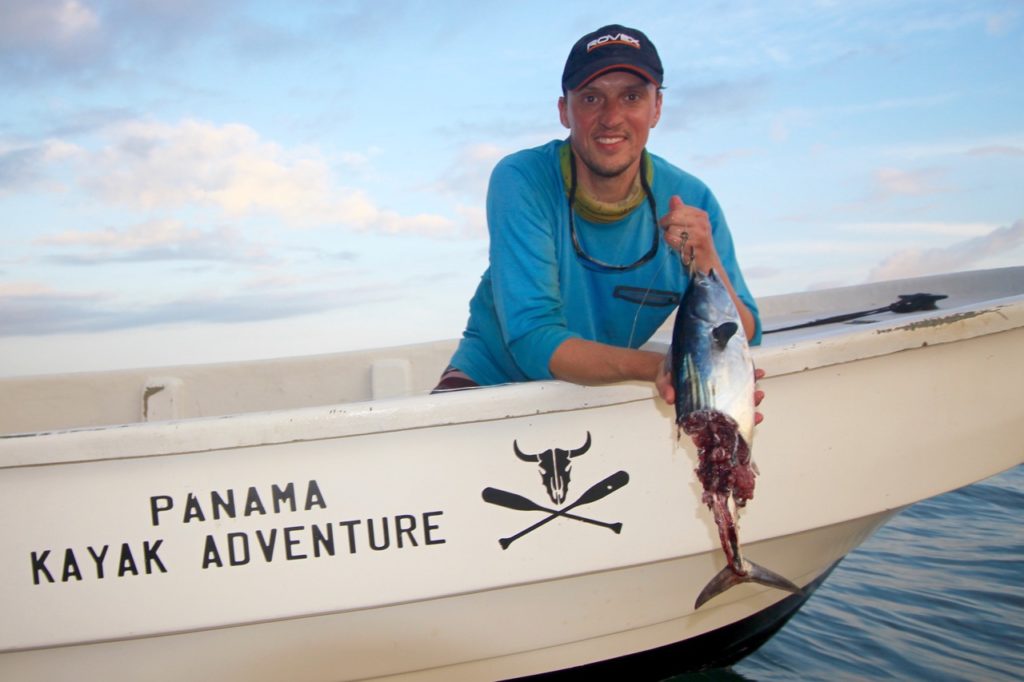 Lodge partner Sam Wadman holds a bait-sized bonito, shredded by a cubera snapper
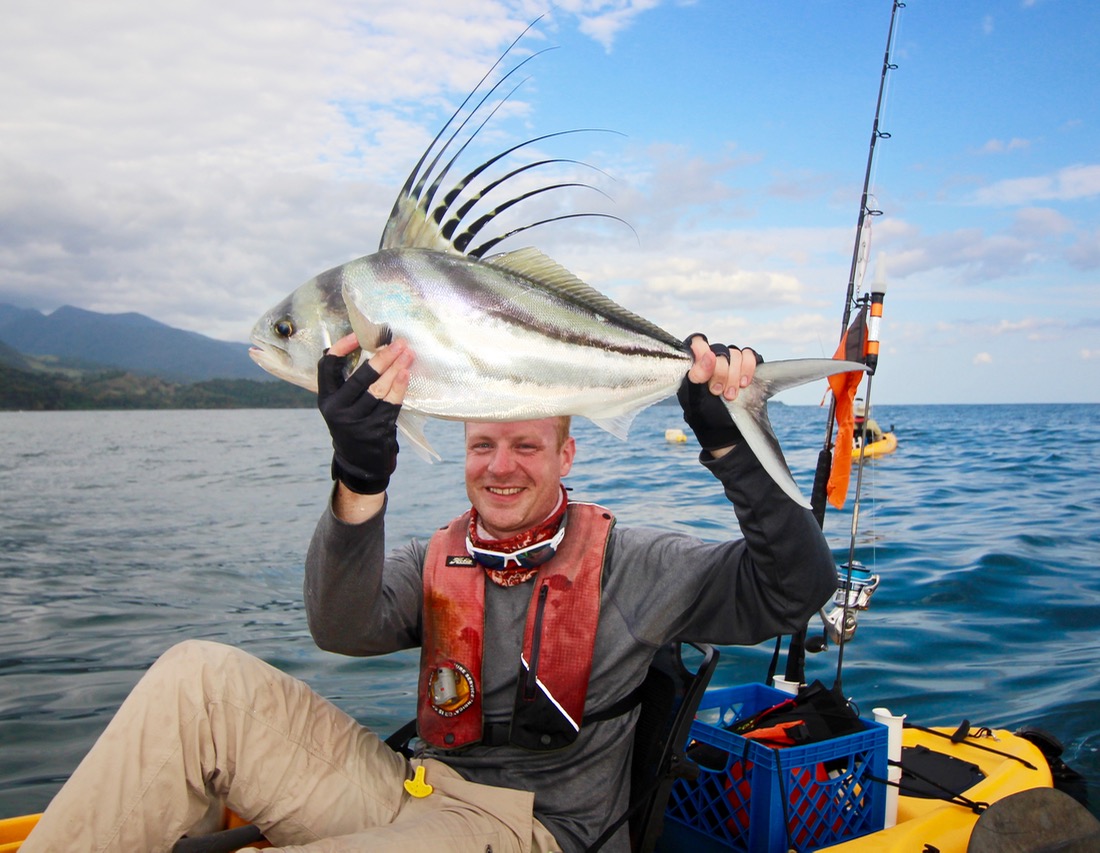
The near miss is energizing, so when Sam waves me over to the panga around mid-morning, I’m ready for the big leagues: live bait. Casting a light spoon from the panga, Sam had landed a football-shaped 14-inch bonito, which he’s bridled onto a 12/0 circle hook—the top rig for big roosterfish. He hands it to me hanging from a broomstick of a rod and instructs me to let out 75 metres of line, then troll toward the headland, fast and steady. I feel the bonito tugging a little, almost pulling the lightly set drag. As I approach the shore, something takes the bait. I turn up the drag, the line goes tight, the stout rod bows and…nothing. I keep trolling, but something feels off, so I crank up and make a gruesome discovery. All the flesh behind the bonito’s dorsal fin is gone, leaving just a bloody spine and tail.
Advertisement
“Shark?” I ask, as I return the heavy outfit to the panga crew.
“Nope. Classic cubera strike,” says Sam, who explains that roosterfish slurp their prey in whole, but cuberas chomp at the middle, which is why they’re usually caught on lures. And even the toughest artificials rarely survive more than a few hits before being retired to decorate the lodge’s walls.
By mid-afternoon, only one of our group has caught fish. Bob Deane from Denver, Colorado, spent the day jigging in deeper water, landing a mess of pretty African pompanos, which will soon make excellent ceviche. Mentally and physically exhausted, all I can think about is a shower, a handful of ibuprofen and lying face down on my bed for a while.
Advertisement
The next day, Pascal deems us competent enough to venture closer to the rocks, and cast toward shore. This alone says a lot about modern fishing kayaks. My fishing buddy, Kitchener, Ontario’s Rob Dankowsky, and I are experienced yak anglers. Bob and his friend Jaime Nelson, also from Denver, are good fishermen, but they’ve never kayaked before. It doesn’t matter.
It’s hard for the uninitiated to believe, but pedal-powered kayaks are a practical, effective and even elegant way to fish this coast. For one thing, transporting gas out here is very difficult and expensive, so it’s more economical to run just a couple of pangas to ferry anglers and their kayaks out to the fishing grounds. Plus, many of the prime gamefish live around shallow, rocky structures where no sensible skipper would take a big boat. But a kayak can handily navigate those spots.
Advertisement
That said, the rugged coastline is intimidating, and it takes a while to get the hang of edging in close enough to drop a lure among the rocks. Still, we all land a few small fish, except for Rob—he lands the fish of a lifetime. A serious weightlifter and huge slab of a guy, Rob is a muskie expert and big-fish enthusiast who has long dreamt of catching a monster cubera. I’m a half-click away when it happens, but I later get the story from an excited Rob and an awed Jaime, who’d been close by.
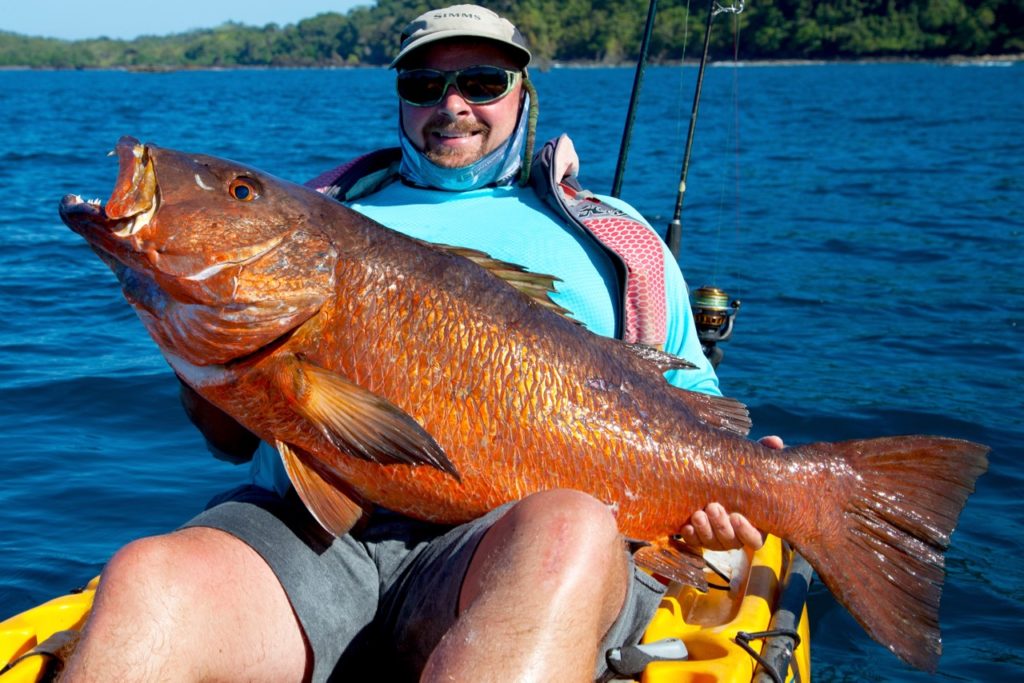 Rob Dankowsky with a trophy cubera snapper
Rob had dropped his five-inch-long popper into a quiet spot between boulders, prompting a surprisingly gentle take. But from the orange flash, he knew instantly it was a cubera. In tight cover, this spelled trouble, so he pulled—hard. Almost before the fish knew it was hooked, Rob had the 40-pound cubera by his kayak. Then his hours in the gym and experience handling big muskies paid off. “I was looking at that giant fish on his line, and wondering how the heck he was going to land it,” Jaime says. “Then he reached one arm down and just heaved the whole thing onto his lap. Amazing.”
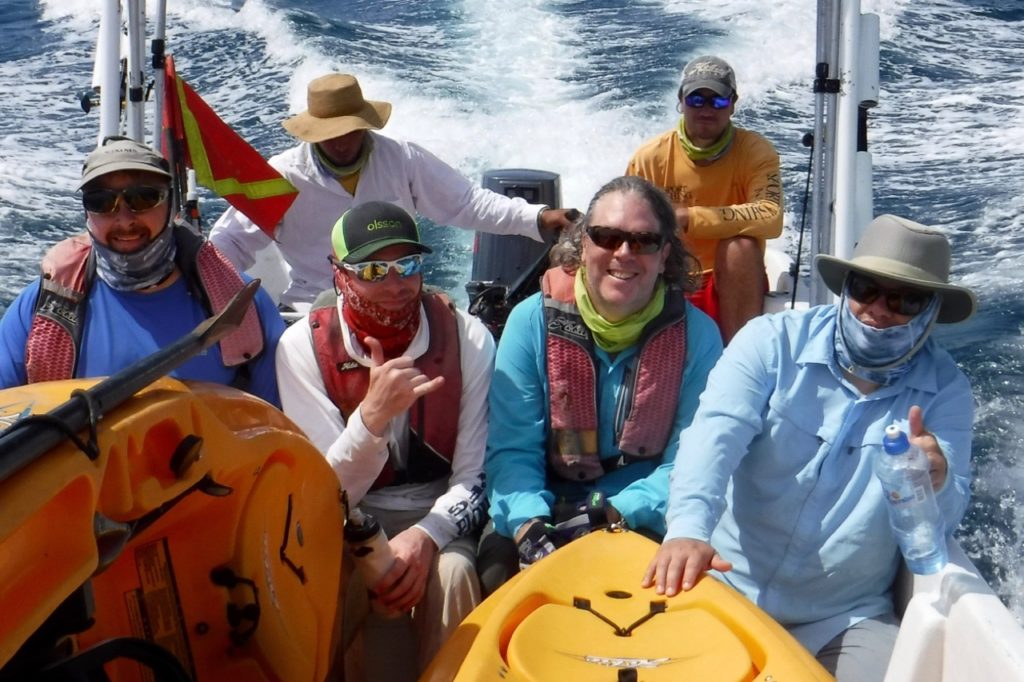 Contented anglers speeding back to the lodge, (front left to right) Rob Dankowsky, Bob Deane, the author, Jaime Nelson
After lunch, we ferry the kayaks into deeper water, where we cast poppers over a sunken plateau. But it’s not gentle freshwater popping. Instead, we make long, sharp pulls with our rods so the lures throw sheets of spray. This commotion suggests baitfish activity, which brings in the predators. I struggle with the technique, but the other guys hammer 14- to 20-inch yellowfin tuna—beautiful ovoids of pure muscle that would soon become the most succulent sushi imaginable.
Speeding back to the lodge at day’s end, Sam looks at our group of four contented anglers. “You guys look a lot better today,” he shouts over the roar of the outboard. “Yesterday afternoon, you just looked broken.”