

THE UGLIES
These flies may not be easy on the eyes, but they sure do a beautiful job of catching fish
Advertisement
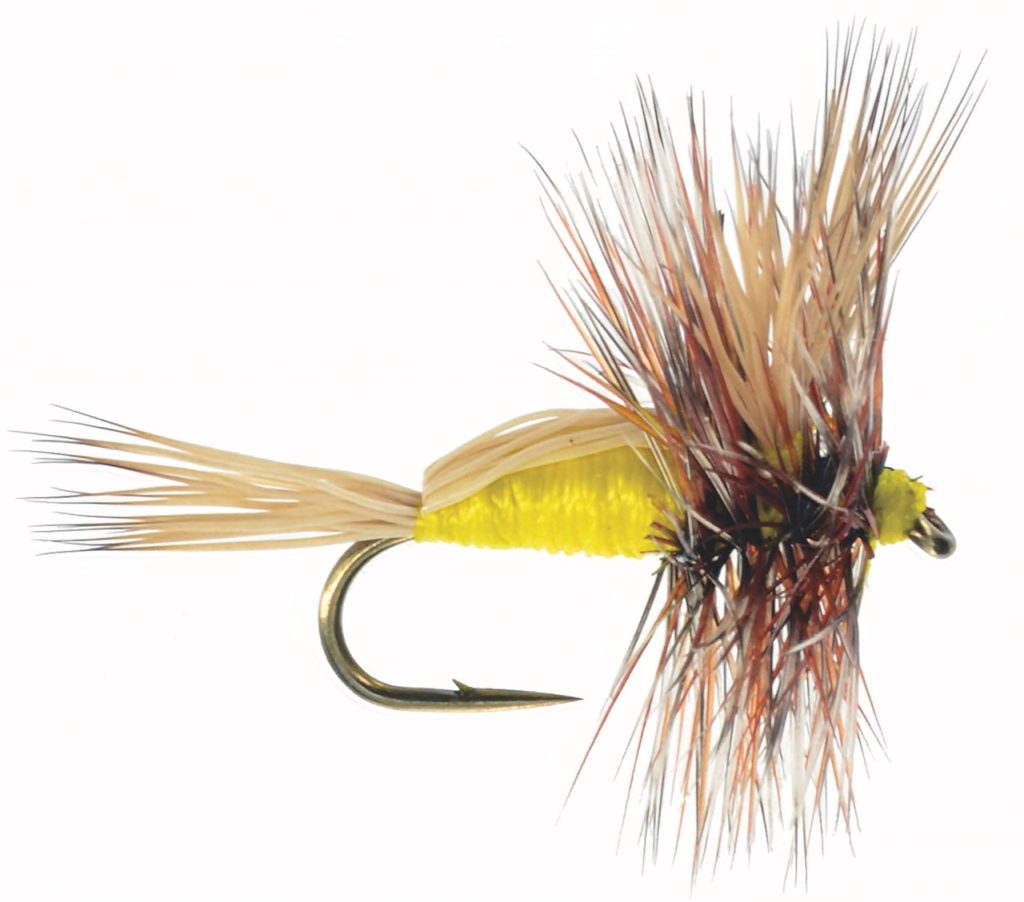
#8 HUMPY
Classic dry flies such as the Quill Gordon and Hendrickson have delicately crafted wings, carefully wrapped hackles and slim, cigar-shaped bodies. Compared to these gossamer creations, the bloated and bristling Humpy is a damn mess, constructed of crude materials deployed in odd ways. There’s a method to this mayhem, however.
Advertisement
The Humpy was developed to fish the tumbling mountain streams of western North America. In this relatively infertile water, trout are usually hungry, and they often strike indiscriminately. But subsurface flies are tricky to use in swift, agitated water, and traditional dry flies instantly drown. Cue the Humpy, which cleverly uses a little tent of hollow elk hair along its body as a flotation device. As well, the tips of the hair are folded up in the exaggerated profile of an upright mayfly wing.
With its tough, buoyant material and dense hackle making it float like a cork, the Humpy rules on trout and Arctic grayling in raucous high-country and northern rivers. It’s also quite effective in broad, slow spring creeks, and babbling brook trout water. No one really knows why this is so, but sometimes it’s best not to ask questions about these things.
- HOOK: Dry fly, sizes 10 to 18
- UNDERBODY: Tying thread, usually yellow, green or orange
- TAIL: Elk hair, stacked
- BACK/WING: Elk body hair, stacked
- HACKLE: 10 to 12 turns of brown, grizzly, dun or mixed colours
Advertisement
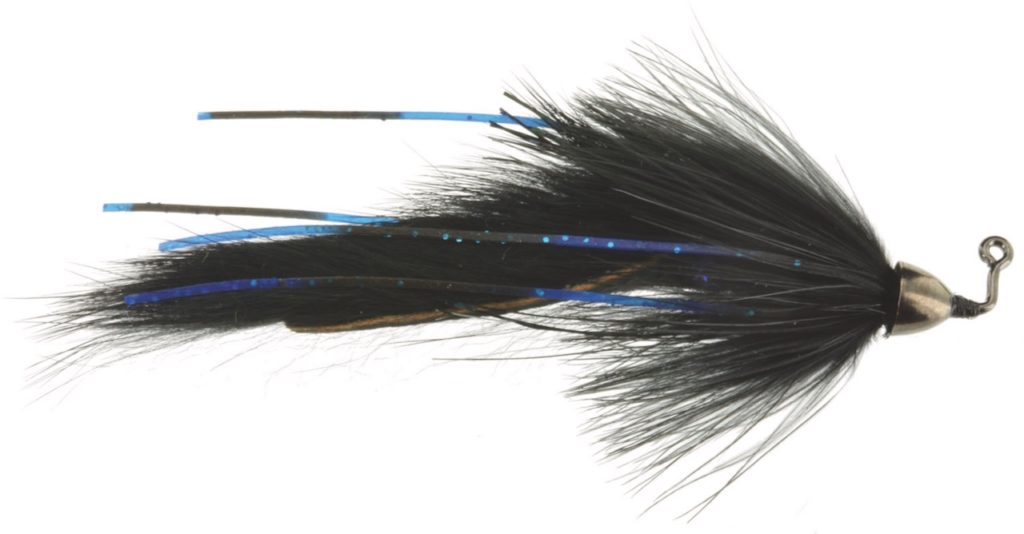
#9 MEAT WHISTLE
A great fly name is original and memorable, and it lets you know what the fly is all about (with bonus points if it’s also a little quirky). Before learning about this unconventional fly, I’d never heard the words “meat” and “whistle” together, but when I finally saw the Meat Whistle, it was exactly as I pictured it: a dense, succulent, vaguely obscene rib-eye of a fly.
Designed for bass, this pattern is basically a jig-and-pig for the fly rod, although any fish that likes a mouthful, including big trout, will eat it. The jig hook helps the fly ride with the point up, making it snag resistant, so originator John Barr suggests letting the Meat Whistle sink right to bottom, and stay there a moment, since the fly’s liberal use of rabbit fur and soft feathers make it look alive, even at rest. Then retrieve it with a slow lift-drop to suggest the darting movement of a bottom-dwelling sculpin or crayfish. Predators tend to pin these critters against the bottom, then slurp them in, so hits often come on the pause—as with a jig-and-pig or soft-plastic worm—and they can be surprisingly subtle.
Advertisement
- HOOK: Long-shank jig, sizes 2 to 1/0
- HEAD: Tungsten cone TAIL/BODY: Rabbit zonker strip
- UNDERBODY: Sparkle Braid or similar
- FLASH: Flashabou
- LEGS: Sili Legs or similar
- COLLAR: Webby saddle feather, schlappen or marabou
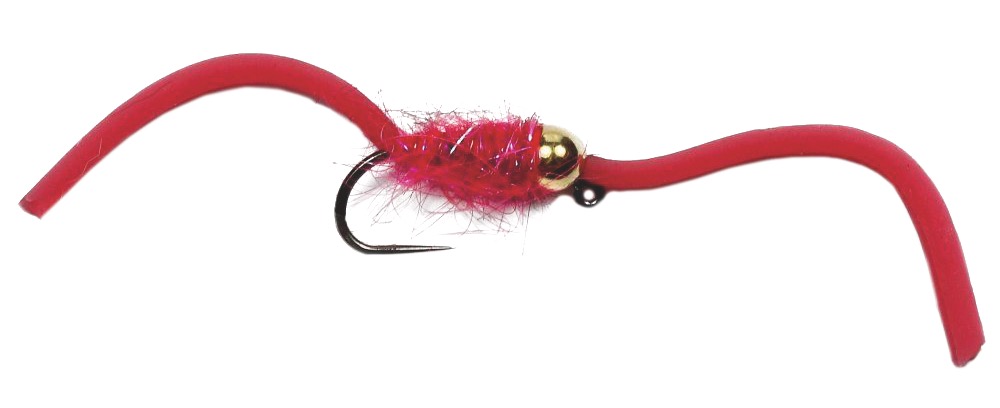
#10 SQUIRMY WORMY
Believe it or not, more than a few purists and snobs still object to worm flies. Well, those nerds are going to have a conniption over the Squirmy Wormy. But they’re perfectly welcome to stomp their feet and pop blood vessels while the rest of us catch a bunch of fish on this ludicrous, yet amazing, fly.
We’ve long understood that small worms are an important trout food. The first well-known worm imitation was the San Juan Worm, which is just a piece of chenille tied to a hook. It’s a pretty decent fly, and the chenille looks fairly wormlike, but it doesn’t really move properly. Then open-minded fly tiers discovered soft plastics, and the Squirmy Wormy was born. It shimmies and jiggles unlike anything else, making it without question the world’s most lethal worm fly.
However, the Squirmy is also tricky to tie, because applying even light pressure with your tying thread slices the rubbery material. The version pictured here, with a fur body, solves that problem. To make it, dub a little fur on the tying thread, then use that thicker, blunter section of thread to safely lash down the worm. Try it in any wormy color, including red, pink, brown and lime.
- HOOK: Short-shank wet, sizes 8 to 12
- BEAD (optional): Copper, black or red tungsten
- OVERBODY: Fine dubbing
- RIB (optional): Fine wire
- TAIL/BODY: Spirit River Squirmy Wormies, Sili Worm or similar