

Fishing Panama's Wild Coast… from a kayak
If you have a taste for true angling adventure, this is the place for you
Advertisement
#3 This is fishing for REAL anglers
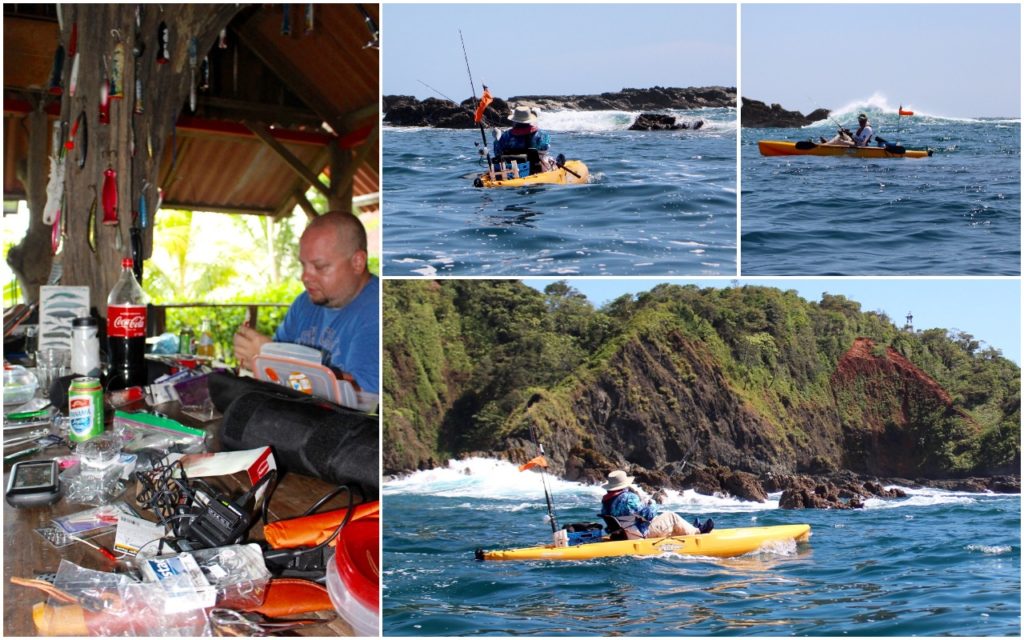
For me, the least appealing kind of saltwater fishing is when you sit on a boat piloted by a captain, trolling rods in holders. Especially since the boat crew is usually baiting—and often even setting—the hooks for you. If you’re the kind of angler who likes to tie on your own lure, and then cast to spots of your choosing and actually hold your own rod, this fishing is for you. I’d rather catch one fish myself, than 10 when a mate just hands me a rod, with a fish ready to be cranked in.
Advertisement
In fact, after arriving at the lodge we spent the afternoon getting our gear ready, under the tutelage of lodge partner Sam Wadman, a UK expat, and self-described “fishing nutter.” Which brings up an important point: To be successful on this trip, you definitely need to know how to fish. Though interestingly, you don’t have to be a kayak expert. When I was there, I saw guests who’d never been in a kayak become totally comfortable in 30 minutes. There’s a bit of a learning curve with this kind of fishing, but it’s about getting a feel for casting six-inch poppers into the rocks, and working flat-fall butterfly jigs—not using the boats.
#4 The facilities are beautiful, comfortable and charming
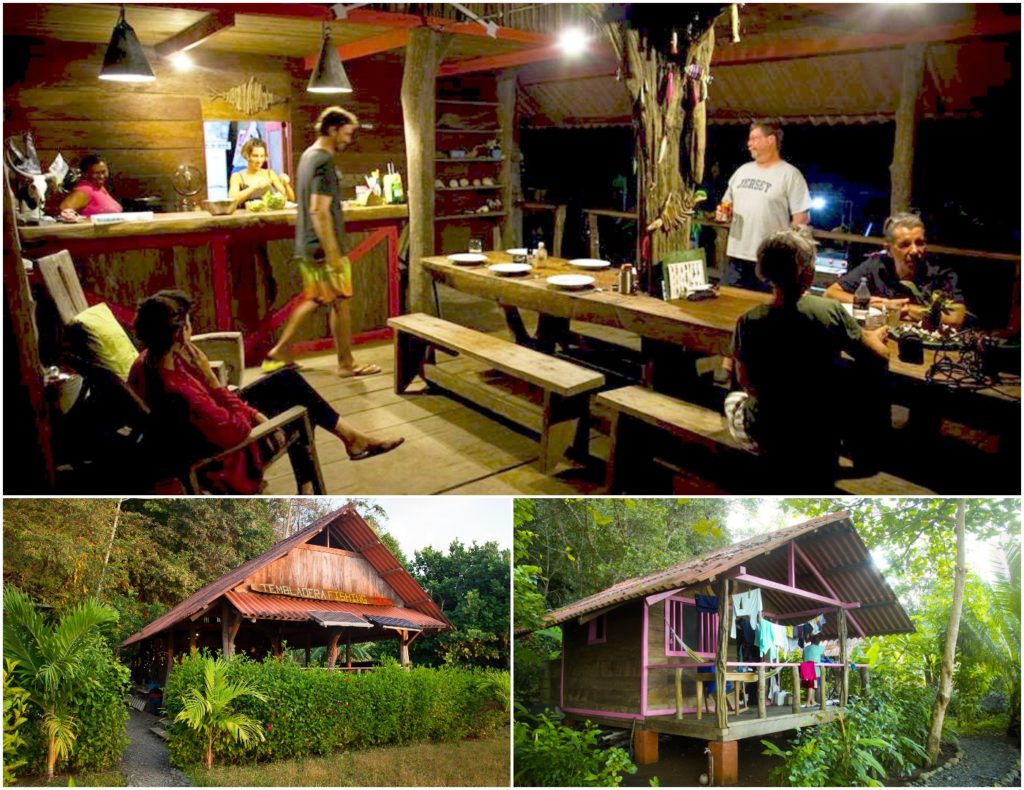
Panama Kayak Adventure’s lodge is nestled among the tropical trees, where the jungle meets the beach (above). Owner Pascal Artieda designed and built the entire facility, using driftwood and fallen trees from the rainforest, which he dragged down from the mountains with a team of horses, and then milled by hand with a chainsaw. Seriously. There’s a an open-air dining-lounge area, where we spent evenings chowing down on fresh-caught fish and other delights prepared by the Austrian cook, Barbara Vogel (who may be a genius or possibly using magic, considering the food she conjures up out there in the jungle).
Advertisement
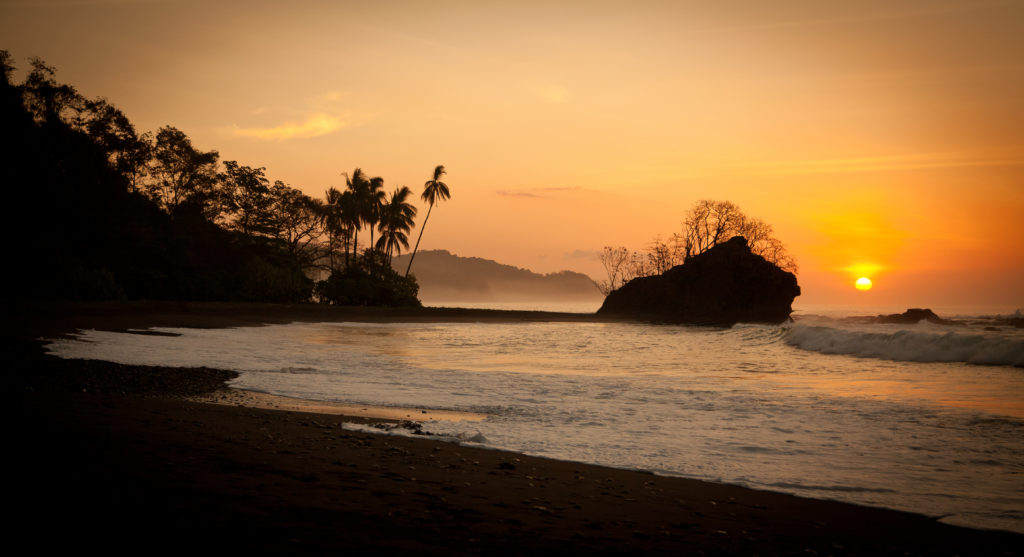
Remarkably, the lodge is 100 per cent sustainable, with amenities cleverly designed to leave a minimal footprint. For example, the camp’s electricity comes from solar panels, and fresh water is piped down from the mountains in a high-pressure, gravity-fed system, giving each cabin a private shower and basin.
Advertisement
And the sunsets (above) aren’t too bad, either.
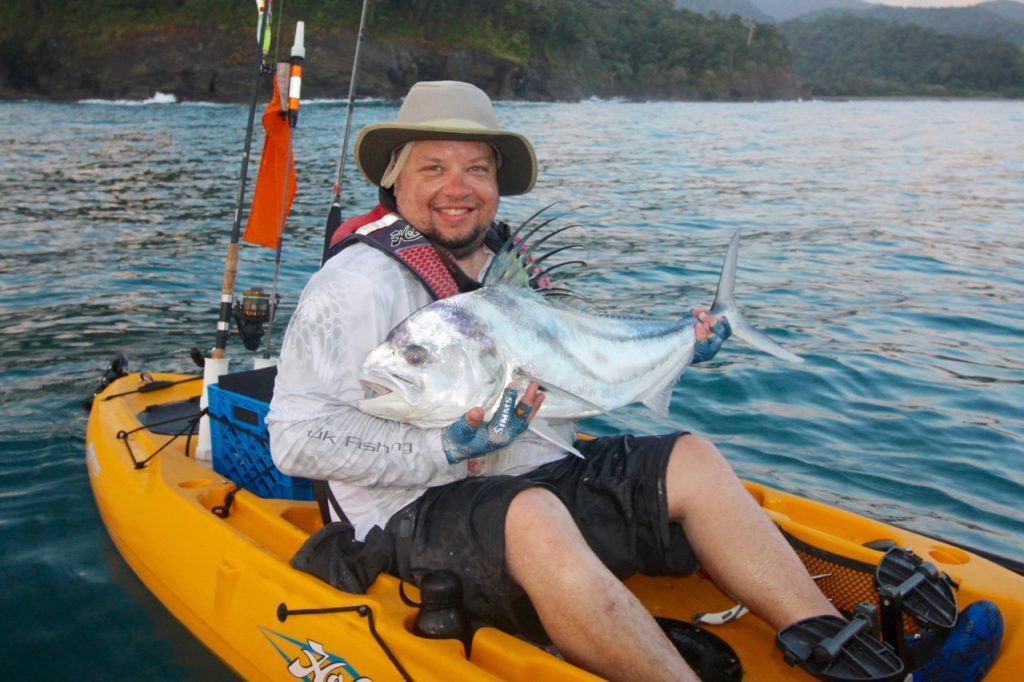
#5 You can catch an honest-to-God roosterfish
Existing only in the eastern Pacific, and in a relatively narrow band of latitude from Baja California down to Peru, the roosterfish has an extraordinary appearance, including broad diagonal stripes and a comb-like dorsal fin, along with a degree of fighting power that, frankly, doesn’t even make sense. As a result, this fish is universally lusted after by saltwater anglers. And though roosters are globally rare, they’re abundant on the Wild Coast, where they’ll hit live bait, jigs and poppers.
Above is Jamie Nelson, also from Denver, with the biggest rooster landed on our trip—a 20-pounder. But roosters can get a lot bigger, including a fish I hooked on live bait that might have been two, three- or perhaps even four-times bigger than Jamie’s. (For that story, you’ll have to check out the 2019 Winter issue of Outdoor Canada magazine).
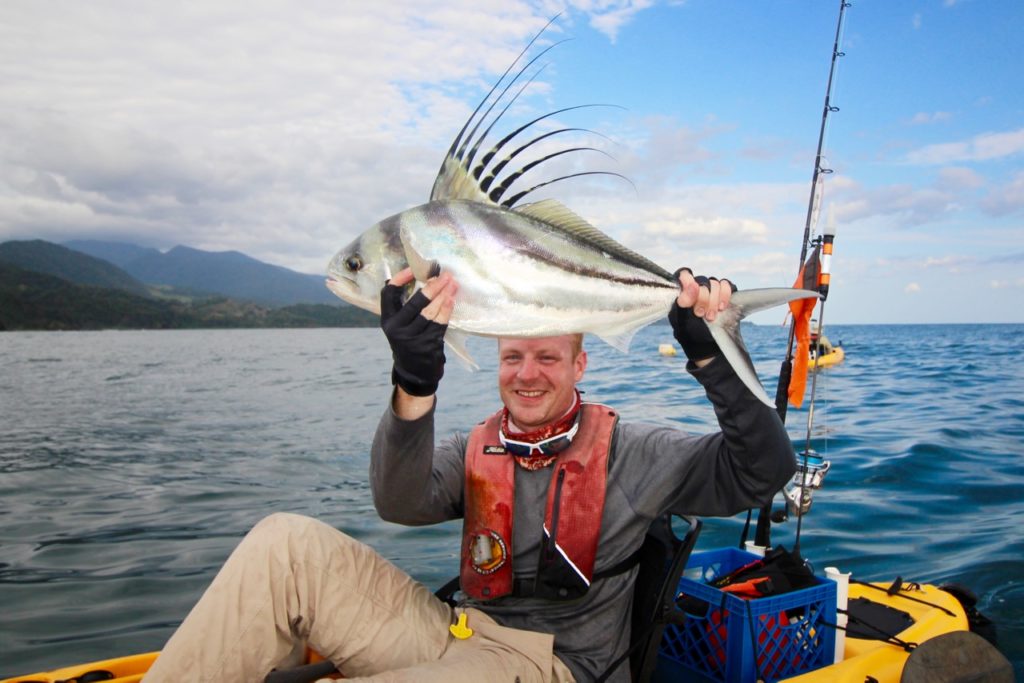
Also, smaller roosters (above) often school up and can be caught in numbers, providing some unforgettable sport. For example, our group had about 10 of scrappers. Believe it or not, a five-pound rooster fights like a 30-pound lake trout—maybe harder, actually. As I said, it doesn’t seem to make sense, but that’s saltwater fishing.