


Fishing Panama's Wild Coast… from a kayak
If you have a taste for true angling adventure, this is the place for you
Advertisement
 #6 You can catch absolutely fearsome cubera snappers
 #6 You can catch absolutely fearsome cubera snappers
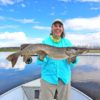
Above is my friend Rob Dankowsky, from Waterloo, Ontario, with a 40-pound Pacific cubera snapper, a highly prized, and fairly common species on the Wild Coast. Rob is a very skilled angler—a muskie man and big-fish specialist. And from literally the day I met him, about six years ago, Rob’s been talking about his dream of landing one of these fish. So it was an amazing moment. By the way, to give you some idea of scale, the boat is 34 inches wide (and Rob is a weightlifter, and generally huge dude.)
Cuberas (also sometimes called dog snappers) are the largest snapper species in the Pacific, and they are ferocious, with a massive head, terrifying teeth, and the approximate pulling power of a Belgian draught horse. Rob caught his by casting a five-inch long popper into a little swirling eddy among shoreline rocks—one of the most productive tactics.
Advertisement

Poppers are one of the best lures for all fish species along this coast, but especially for cubera. Though with their huge, jagged teeth (above left), cubera are not exactly kind to the baits (above right).

Advertisement
By the way, live bait fares even worse with cuberas. They tend to attack their prey from the back, and chomp with those great jaws, missing the single circle hook, but still getting a nice snack. Above is Sam showing off what cubera do to a live bait—my bait in fact. (And yes, when looking for the big fish, especially roosters, we trolled baits of that size.)

Advertisement
#7 It’s worth saying again: The fish are huge and powerful
We were thrilled with our trip, but apparently the fishing was a little slower than usual during our week—not that we would have known. But to give you an idea of the potential, above is a selection of trophy fish landed over the last couple of years. Sam also posts weekly catch reports, which are pretty darn impressive.
As you can see, these are not light-tackle fish. And how do you land a 40-pound fish from a little plastic boat? It’s more manageable than you might think, because the kayak itself acts as the drag. It’s about as close as you get to a modern version of the Nantucket sleighride. And yes, it is as exciting as it sounds.

#8 It will take over your thoughts, and (like me) you’ll have to go back
I’ve always thought that adventure is however you define it. A day on your local lake or even taking public transit to a pond full of sunfish can be an adventure. And I love the bass, pike and trout fishing that I do across Canada every year. But catching beautiful marine fish (above), as the Pacific rollers crashed into the black volcanic rocks at the jungle’s edge, was exotic, awe-inspiring and electrifying. Which is why I’m going back as soon as I can.
 Lodge owner Pascal Artieda shows off a rock snapper
The Panama Kayak Adventure fishing season runs from December to July. The lodge arranges all your travel from Panama City, so you don’t have to navigate local transportation systems. And for Canadians unfamiliar with travel in Central America, rest assured that 21st century Panama is safe, stable and welcoming to Norteamericanos.
The experience is also surprisingly affordable—roughly half the price of a fly-in to northern Canada or a typical tropical lodge running a fleet of motorboats. That’s part of the reason I’m so keen to return. But mostly, it’s the fish, including an epic One That Got Away—a colossal roosterfish that has become my white whale, and haunts me still.
Learn more about Panama Kayak Adventure at www.panamakayakadventure.com or on Facebook at www.facebook.com/panamakayakadventure.