

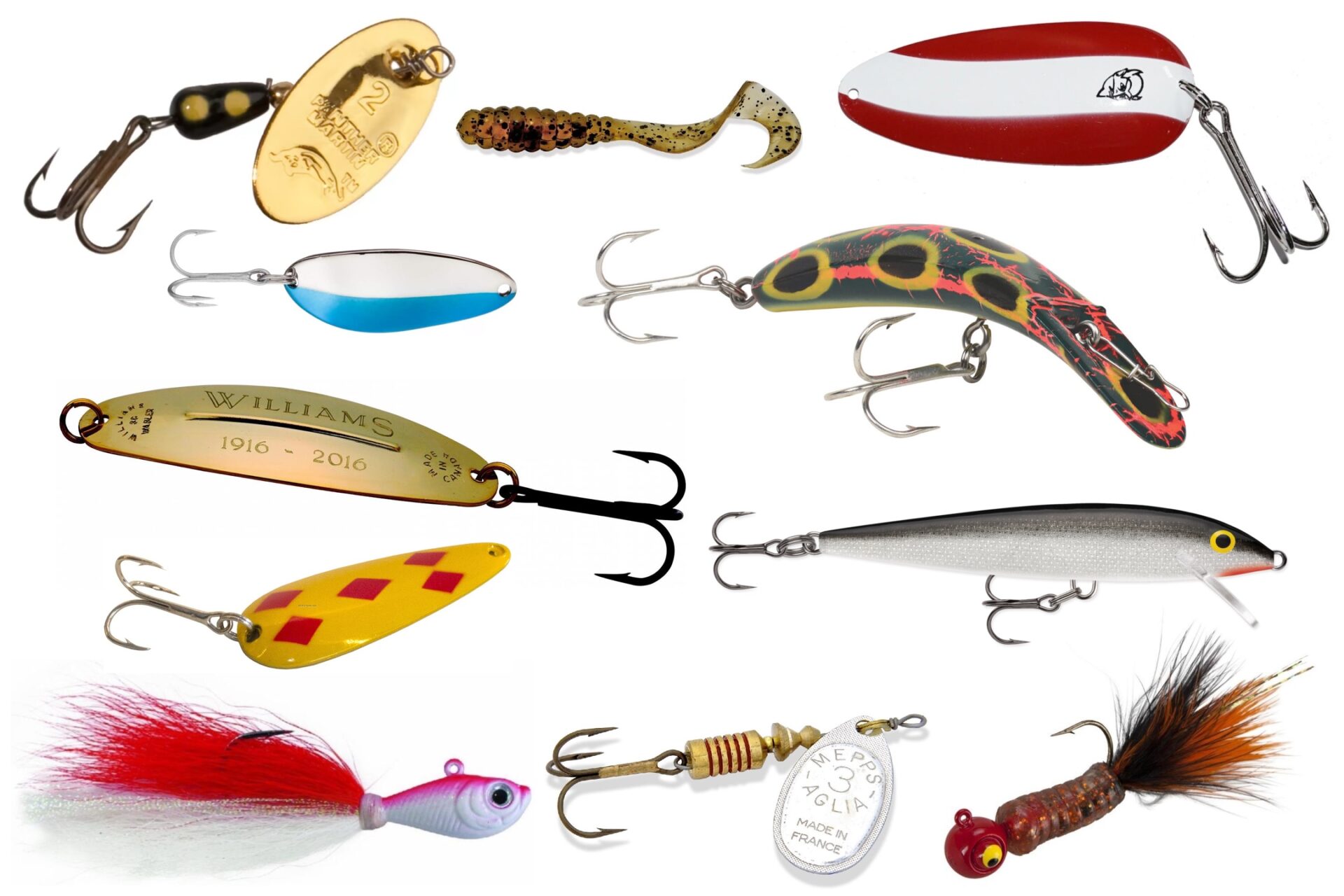

THE TROUT TAKERS
Tackle trout across the land with these spoons, spinners, jigs and plugs
Advertisement
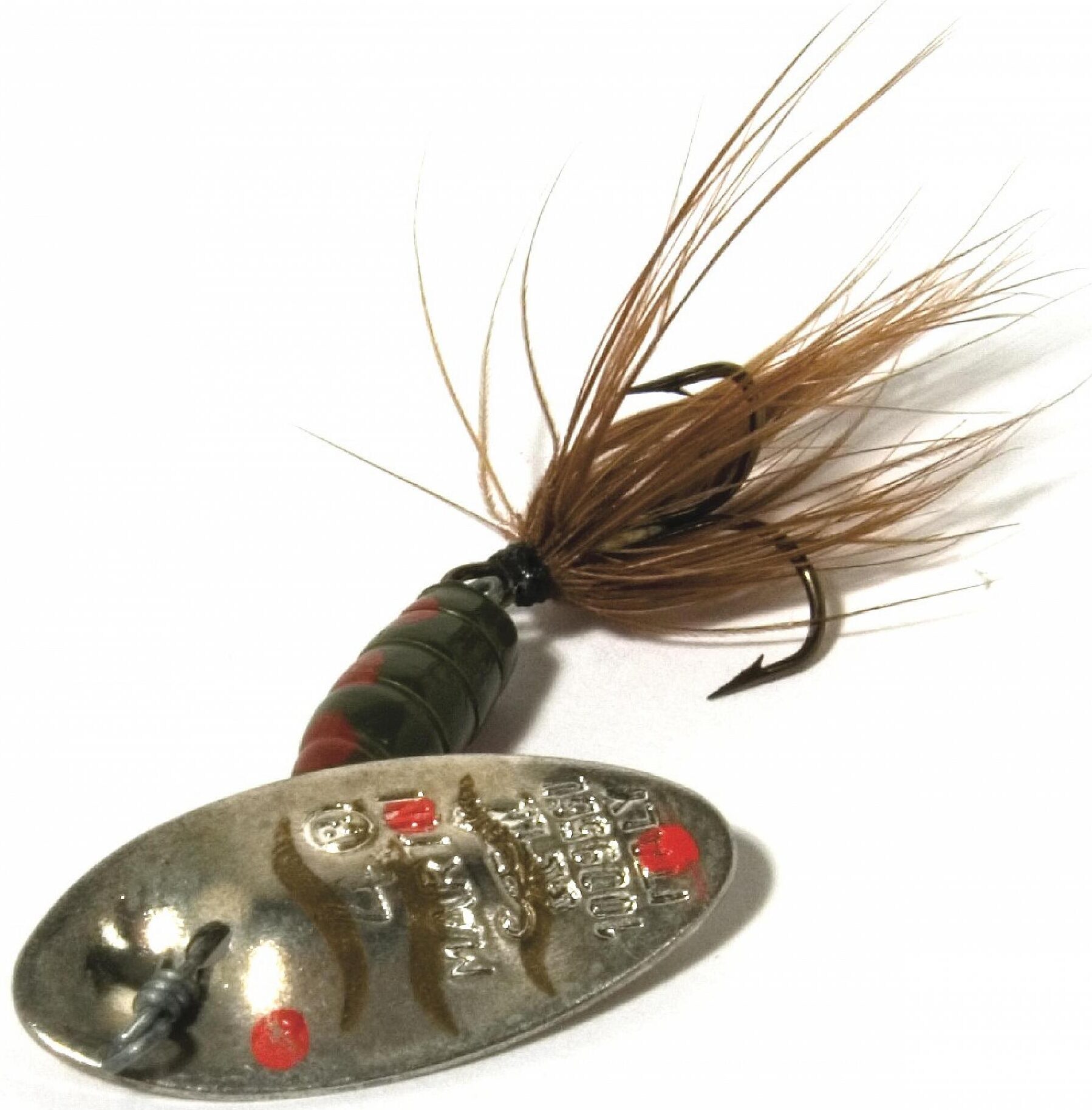
Panther Martin Spinner
It might be hard to imagine that a lure as small and unobtrusive as the Panther Martin can be such a reliable producer of trout—including big trout—but history doesn’t lie. The in-line spinner’s unique through-the-blade shaft ensures a consistent spin at nearly any speed, and its relatively large blade gives it plenty of fish-attracting “thump.” Many anglers think of the Panther Martin as a stream lure, but it’s hefty for its size, meaning it can be cast effectively on lakes and even trolled. Available in dressed and plain models, the go-to versions for trout anglers sport the black body with yellow spots and gold blade, and the yellow-and-red body with a silver blade.
Advertisement
Catch: Brown, bull, cutthroat, golden and rainbow trout
Where: Streams, small rivers and lakes, and ponds
When: Throughout the open-water season, effective in stained or clear waters
Advertisement
How: Cast across moving water, allowing the spinner to swing with the current, then retrieve at a consistent speed. Cast and retrieve or troll slowly on ponds and lakes
Advertisement
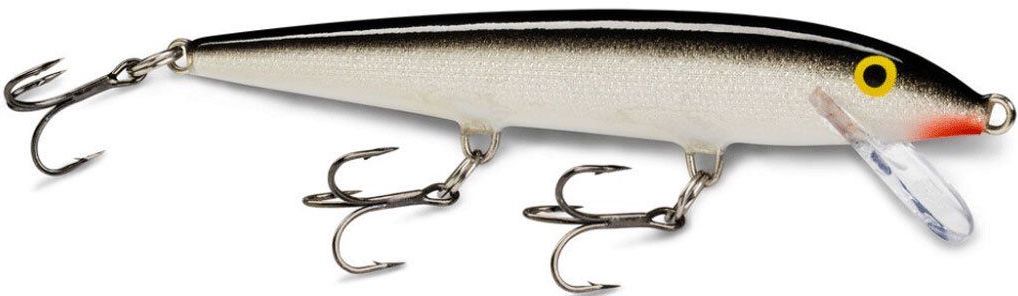
Original Floating Rapala
Fish eat fish, and Lauri Rapala’s original balsa wood bait looks more like a fish than virtually any other lure on the market does, explaining in large measure why it’s been so popular for so long. Of course, the realistic wounded minnow action—along with the multiple ways to present the lure—have added considerably to it being the number one choice among countless trout anglers. It casts easily and trolls like a dream, and it can be fished on top, shallow or—with splitshot or on a three-way swivel—as deep as you need. Just select the size that best meets your target fish and pick from the many colour options. Hint: The rainbow trout, gold/black and silver/black patterns are all proven trout slayers.
Catch: Brook, brown, bull, lake and rainbow trout
Where: All sizes of lakes; large rivers, especially in tailwaters below dams
When: Most effective in summer through to fall
How: Cast and retrieve at a constant speed, with occasional twitches and pauses; troll as a shallow-running crankbait, or run it deep with splitshot, a three-way swivel, bottom-bouncer or downrigger
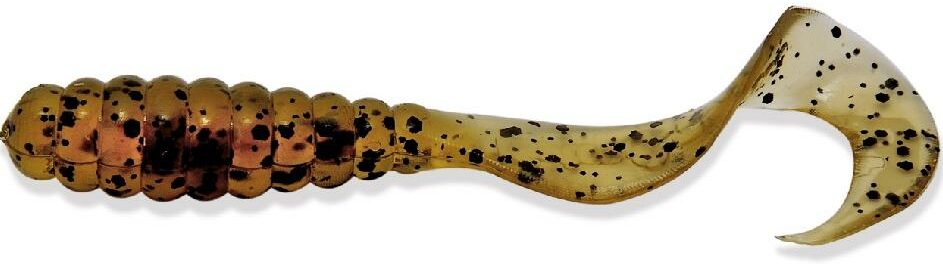
Mister Twister Curly Tail
Nothing replicates invertebrates quite like a soft-bodied bait, and the Curly Tail is the king in this realm. Some anglers say it looks like a worm, others a leech. Some even think it resembles a wounded baitfish. It matters little, however, because trout of all types readily gobble it up when given the chance. In fact, if you had to select just one bait for all trout applications, this just might be it. Simply tailor the size and colour to the waters and fish you’re targeting, thread it onto a jig head that’s appropriate for the depth, and away you go, whether casting or trolling.Catch: Brook, brown, bull, lake and rainbow trout
Where: Lakes, streams and rivers of all sizes
When: Throughout the open-water seasons. As a rule, increase its size as the season progresses. It’s also effective in murky waters.
How: It can be vertically jigged, cast and bumped along the bottom, trolled alone or with a spinner blade, used as bait on spinner rigs, or even cast and swum back.
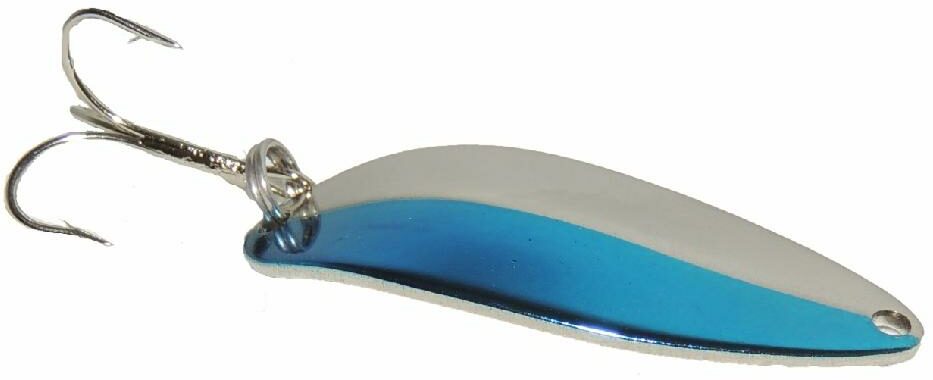
Acme Tackle Little Cleo
The Little Cleo is the mac and cheese of trout lures, the angling comfort food you keep on hand and turn to whenever more exotic fare just isn’t producing the desired results. Every experienced trout angler has a selection of Little Cleos in his or her tacklebox, and rightly so—they’ve been reliably catching trout for more than 30 years. Wider than most spoons, and with an unusual humped back, they produce a slow, wobbling action unlike any other. And with 36 colour options and sizes ranging from 1/16 to 1¼ ounces, there’s a Little Cleo for every application.
Catch: Brook, brown, lake and rainbow trout
When: Throughout the open-water season
Where: Best suited to ponds and lakes of all sizes
How: Cast or troll, then retrieve slowly; add weight as necessary to get it close to the bottom