


THE TROUT TAKERS
Tackle trout across the land with these spoons, spinners, jigs and plugs
Advertisement

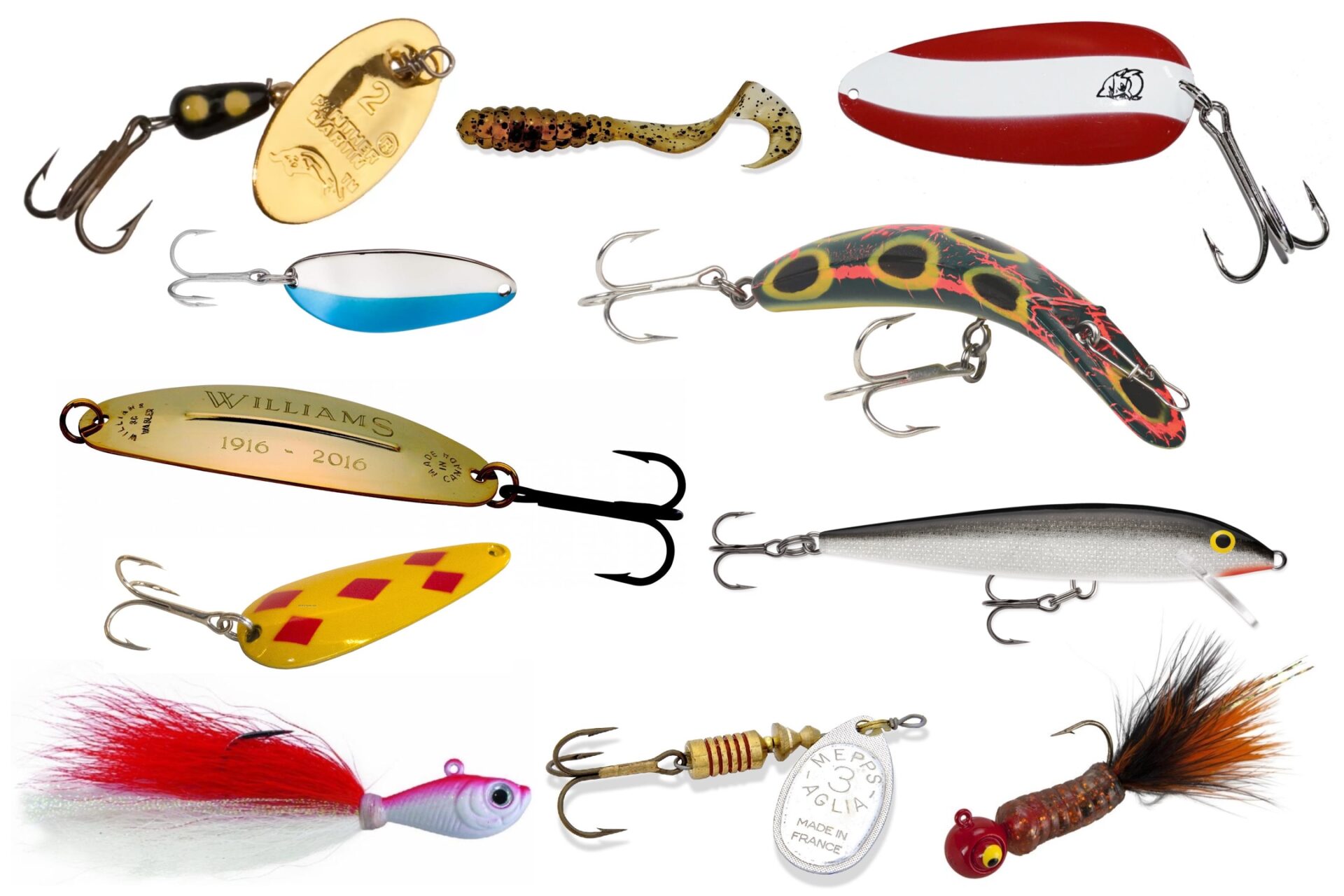
Williams Wabler
Way back in 1920, Nova Scotia’s Williams brothers, who accumulated a modest fortune in the Yukon gold rush, first patented the fishing spoon design that would forever be known as the Williams Wabler. The original was the Wabler W50, measuring in at 2⅝ inches long and weighing a half-ounce. And so it remains today after a century of catching fish, making it the company’s most popular model. Originally conceived and proven as a lake trout lure, the Wabler has since demonstrated its effectiveness on brookies, browns and rainbows. Today, the venerable spoon comes in seven sizes and over two-dozen colours, with genuine gold and silver remaining the most popular choices.
Advertisement
Catch: Brook, brown, lake and rainbow trout
Where: Lakes of all sizes
When: Throughout the open-water season
Advertisement
How: Most effective when trolled slowly, even at canoe speed, it can be weighted to take it deeper. It’s also effective when used as a flasher, with a trailing foot-long snell and single hook baited with half a nightcrawler.

Advertisement
Len Thompson Yellow & Red
Ask around in any camp in northern Canada about the hottest lure for lake trout, and one answer you’ll always hear is the Len Thompson Yellow & Red. Often called the Five of Diamonds, these brass spoons produce a legendary wide wobble, making them ideal for casting and trolling at a broad range of speeds. Savvy stream anglers, meanwhile, rely on tiny Yellow & Reds for brookies and rainbows. Alberta’s Len Thompson has been producing these spoons since 1929, making them a true, made-in-Canada classic.
Catch: Brook, lake and rainbow trout
Where: Streams and rivers; lakes with populations of large fish
When: Throughout the open-water season
How: For lakers, troll at slow to moderate speeds, occasionally allowing the spoon to free-fall on an open spool; also cast over shoals or along rocky shorelines. In streams and rivers, cast across the current and retrieve slowly.

Bucktail Jig
Outdoor Canada’s fishing editor, Gord Pyzer, once referred to the bucktail jig as “the best lake trout lure nobody uses.” And while the bucktail has undoubtedly proven itself on lakers, it’s also magical on brookies and bull trout. While the deer hair, polar bear hair or marabou that defines this jig as a bucktail can be dyed every imaginable colour, basic white is the standard among trout anglers. A bucktail jig’s tail gently fans out when at rest, offering a slight trout-enticing motion, then streamlines when jigged, mimicking an escaping baitfish. Just match your jig weight to the depth you’re fishing—I won’t soon forget landing lakers by the dozen in Alberta’s Andrew Lake, jigging one-ounce bucktails in 70 feet.
Catch: Brook, bull and lake trout
Where: Lakes and large rivers
When: Most effective in late summer and fall, when the trout are deeper
How: Usually vertically jigged over shoals or other structure, it’s also effective when cast and jigged back aggressively, especially in rivers