

CHASING THE NORTH-OF-60 TRIPLE CROWN
Magnificent Kasba is home to astonishing numbers of large lake trout, northern pike and Arctic grayling
Advertisement
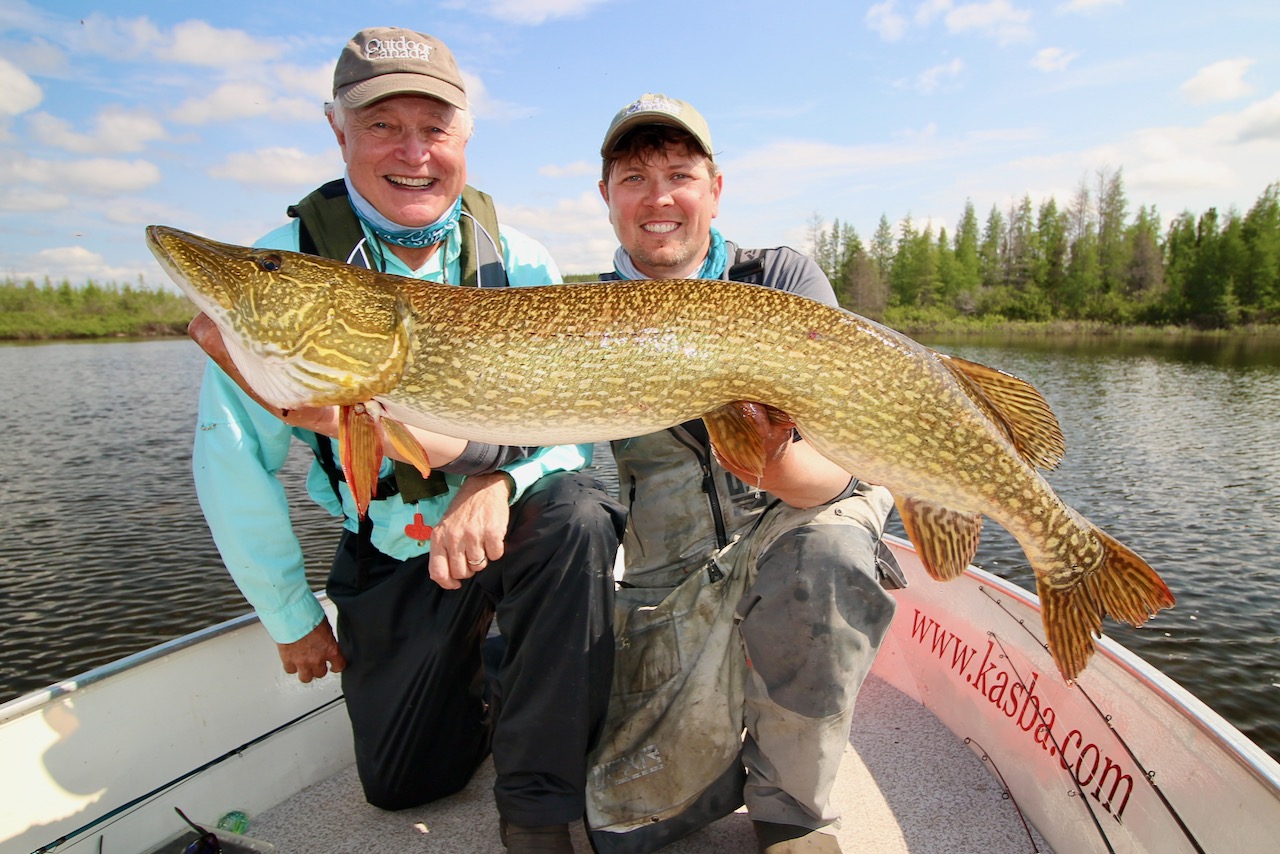 Lynn Henning (left) and guide Tyler Jones with Henning’s 45” pike
#3 The northern pike are plentiful, big and linger in shallow water
The Northwest Territories are at the far end of Esox lucius range. So I didn’t expect to encounter the kind of bruisers I’ve caught further south, at world-renowned pike hot spots in Manitoba and Saskatchewan. But Kasba surprised again. It’s exceptionally rich in forage, with a lot of pike-holding bays and channels, as well as those plunging depths. The cold water allows the pike to stay shallow, so even in summer you can cast to them with conventional or fly tackle, and sometimes even sight fish.
Lynn and I only really targeted pike for about two days—an hour or two here and there, plus a full day on “Pikeasaurus” Lake, which is connected to Kasba by a river (but more easily accessed via a 10-minute float plane hop). Still, we put up the kind of numbers you’d expect after a solid week of pike fishing: six fish over 40 inches, just as many in the high-30s and too many frisky two-footers to count.
Advertisement
And most of those pike were thick and well-fed—big all over, with the kind of beefy bodies you don’t usually see so far north. For example, I landed one 42-inch northern that wasn’t the longest pike I’ve caught but was, almost certainly, the heaviest.
One clear afternoon we sped down to the lake’s southeast corner to try a rarely fished estuary. Fishing for 75 unforgettable minutes in just that one spot we landed, one after another, pike measuring 36, 40, 36, 45 and 42½ inches. There’s a lot more to that story, but I’m saving the rest for my upcoming print feature in the magazine.
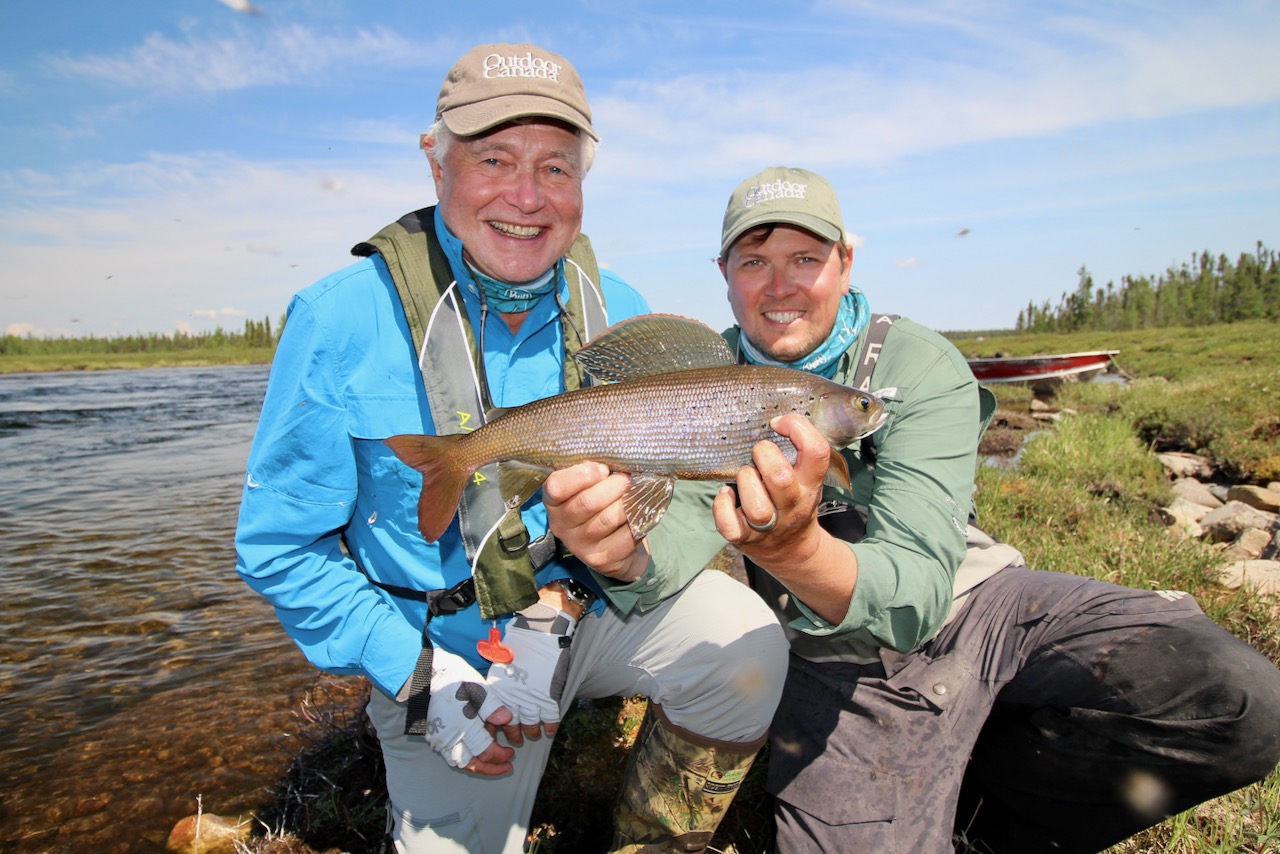 Lynn Henning and Tyler Jones with a big Arctic grayling
#4 The Arctic grayling are enormous, and astonishingly numerous
The pike and trout fishing at Kasba is very good, but the Arctic grayling fishery just may be the best in the world. There are a few grayling in the lake, but the real action is in the Kazan River, which flows northward out of the lake’s northeast corner, winding its way toward Hudson Bay.
Advertisement
Although you can reach the mouth of the river by boat, the prime fishing is downstream of a series of rapids, best accessed by a 15-minute flight from the lodge. The Kazan is designated as a Canadian Heritage River in recognition of its natural, cultural and recreational values. In particular, that refers to the Kazan’s unique boreal landscape, the role it plays in the migration route of the Qamanirjuaq caribou herd (the largest movement of land mammals in the world), its historical importance to Inuit and Dene culture and, or course, its world-class fishing.
Arctic grayling are the kind of fish that send outdoor writers running to the thesaurus in search of more ways to say “gorgeous.” Cigar-shaped with an oversize dorsal fin, they range in colour from silver to pink to mauve, all with a shimmering, mesmerizing iridescence. Grayling are also tough fighters, thanks to the most muscular body I’ve ever felt on a freshwater fish. That’s because they live their entire lives in swift current, to avoid being eaten by pike or lake trout, which also inhabit the Kazan. In fact, at one rapids, almost every time we hooked a grayling we’d see the form of a very large trout slide up behind it, hoping to turn the struggling fish into a meal.
Advertisement
Prior to fishing the Kazan, the biggest grayling I’d ever caught—or even seen—was about a pound. A two-pound grayling is considered a trophy fish, and brag-worthy anywhere in the world. In one day on the Kazan River, Lynn and I caught, at a conservative estimate, 50 grayling, and only five of them were under two pounds. Astonishing.
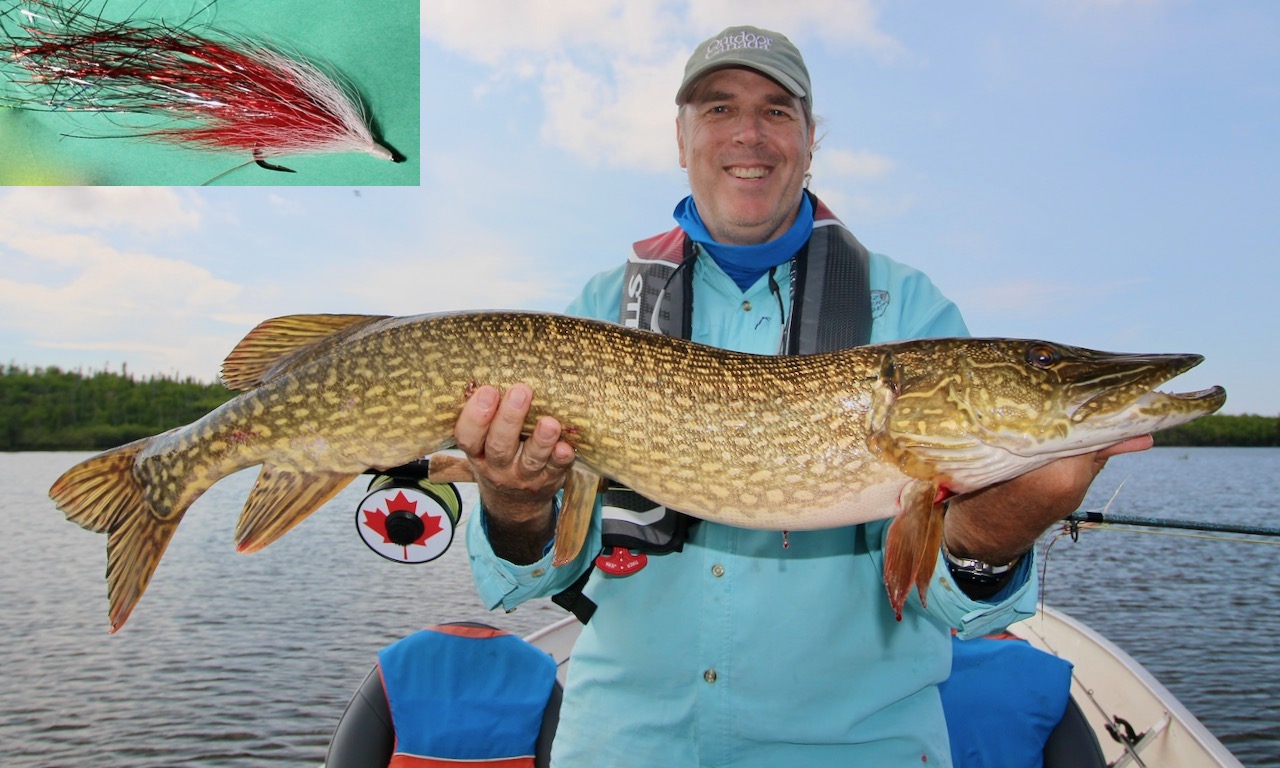 The author with a 42” pike, caught on a Supercharger fly (inset)
#5 You can (with a little luck) score that triple crown on the fly rod
At Kasba, I got two-thirds of the triple crown on flies, and was just a whisker and a bad bounce away from landing the final third—a trophy laker.
I’ve long held that fly-fishing isn’t just the most fun way to catch large pike in shallow water—it’s the most effective way, as well. And once again the fly rod accounted for most of my pike, and all of the big fish. My top flies were the Clouser Deep Minnow, Peanut Butter and a tinsel-tailed obscenity called a Supercharger (above), which I increasingly think may be the best pike fly ever created. I also mostly fished an intermediate sinking line, to get these big, slightly buoyant flies down a couple of feet.
Arctic grayling mostly eat bugs—and a lot of them, given their size and strength—making them an excellent fly-rod fish. And there’s nowhere better than the Kazan to battle a trophy grayling on a 5- or 6-weight fly rod. A floating line works most of the time, but be sure to take along a sink-tip, sinking leader or some heavily flies. There are times when the grayling stick to the bottom, and won’t move for a meal unless it’s right under their nose.
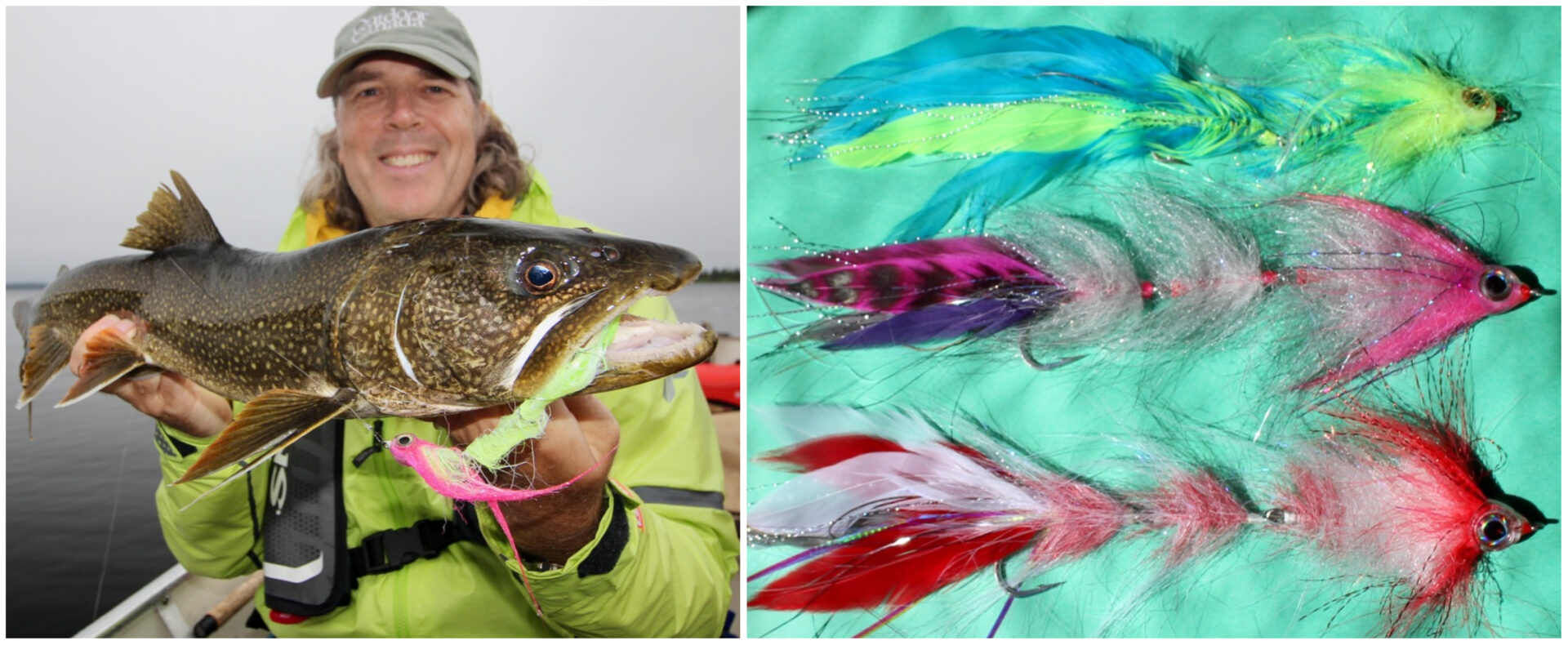
Trophy lakers are the hardest part of a triple crown to get on the fly, but it’s absolutely possible. There are certain conditions in which trout, including big ones, stack up around structure that’s shallow enough for fly casting. I didn’t luck into that. However, on Tyler’s suggestion I took my 9-weight rod and full sinking line to the Kazan where, below a rapid, I hooked a 3½ foot-long trout. I had it on for several minutes, but lost it when, in a David Attenborough-film moment, it was attacked by an even bigger trout, dislodging the fly. I’d tell the the full story now, but I’m still waiting for the notarized witness statements from Tyler and Lynn, swearing it was all true.
I also caught some nice lakers trolling 8- to 10-inch flies on a full-sinking line. My best pattern was a three-part articulated Seaducer of my own design (above). None of those fly-trolling fish topped 10 pounds, but with a couple more days on the water…