

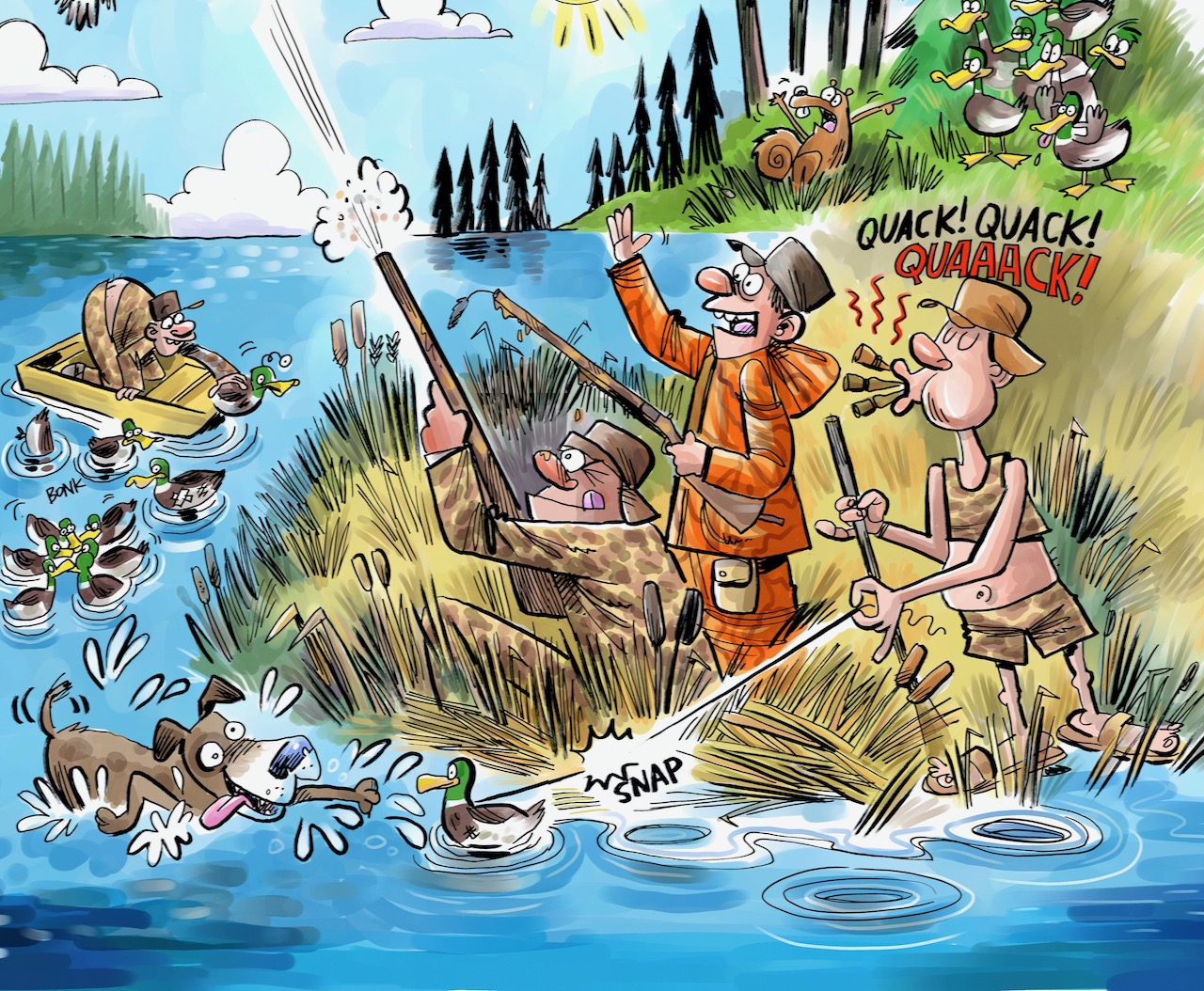

THE DIRTY DOZEN
12 common mistakes that can totally @#$%&! your duck hunt—and how to avoid them in the first place
Advertisement
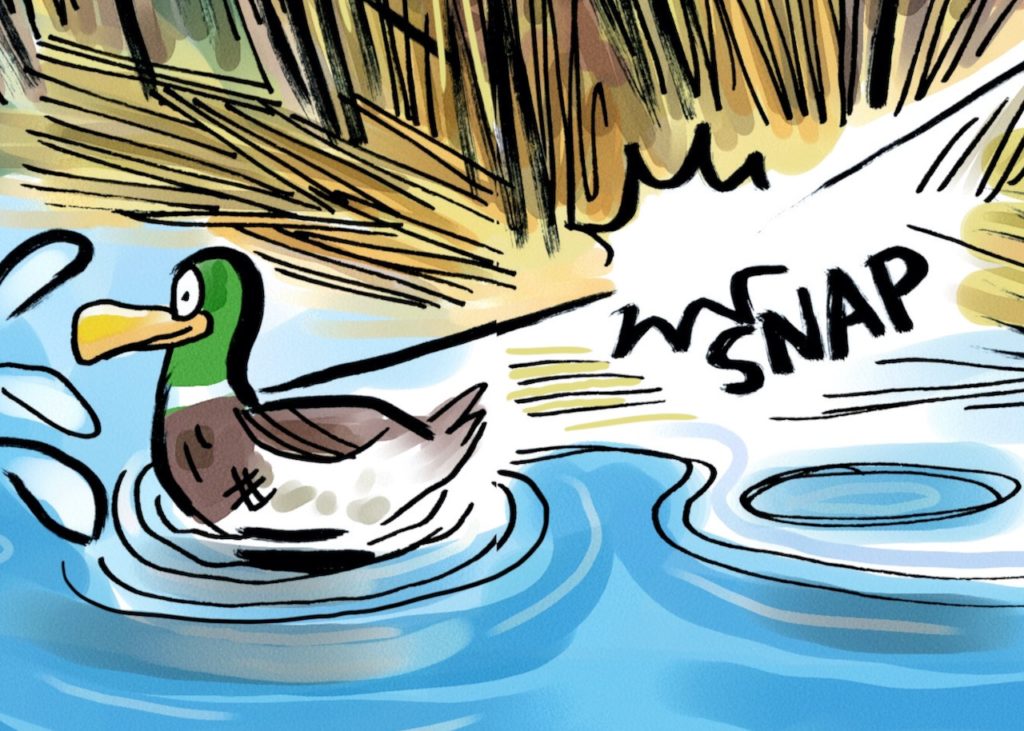
#5 DON’T ADD MOTION TO YOUR SPREAD
When ducks feed together, they try to get ahead of one another to find the best morsels first. In field scenarios, they hop over each other or waddle ahead to get to the food. When ducks are on the water, they swim and bob, leaving small ripples behind as they change positions.
Advertisement
If a decoy spread doesn’t have similar movements, approaching ducks will know something isn’t quite right. To add motion to a field spread, set up some of your decoys on field stakes so they turn with the wind. A couple of spinning-wing decoys in the landing zone will also add motion, and give the impression of landing ducks.
When hunting on water, meanwhile, tether a decoy with a string you can pull to make it bob in the water. As an added bonus, the resulting ripples will make the neighbouring decoys also move.
#6 WEAR IMPROPER CAMO
Camouflage is designed to help hunters blend into their surroundings. So, if you’re hunting in a light-coloured field but wearing dark camo, you’re going to stick out like a beacon and spook the ducks. On the flip side, if you wear a camo pattern that matches your hunting environment, you’ll blend in and the ducks won’t notice you.
Advertisement
Thankfully, there are countless camouflage patterns available to match any waterfowling situation you may encounter, from green fields and marshes, to tan-coloured wheat and barley fields, to dark-brown pea and lentil crops. When choosing camouflaged clothing, avoid shiny zippers and buttons, which can alert birds to your presence. And don’t forget to wear camo gloves and facemasks. Most hunting accessories, such as blind bags and coffee mugs, are also available in camouflage finishes to make them blend in.
#7 DON’T STAY STILL
When ducks approach your decoy spread, they’re looking for food or drink, or a place to rest. At the same time, they’re on the lookout for signs of danger. These keen-eyed critters can spot potential trouble from afar, and when they see unnatural motions, they flare. Prior to your hunt, therefore, delegate one member of your party to be the spotter. Having just one lookout to tell everyone else when ducks are approaching will restrict unnecessary movement, greatly reducing the odds of your set-up getting busted.
Between flights of birds, try to stay hidden in your blind as much as possible. That way, you won’t get caught flat-footed by a distant flock. And when retrieving downed birds, do it as quickly as possible and get back into your blind.
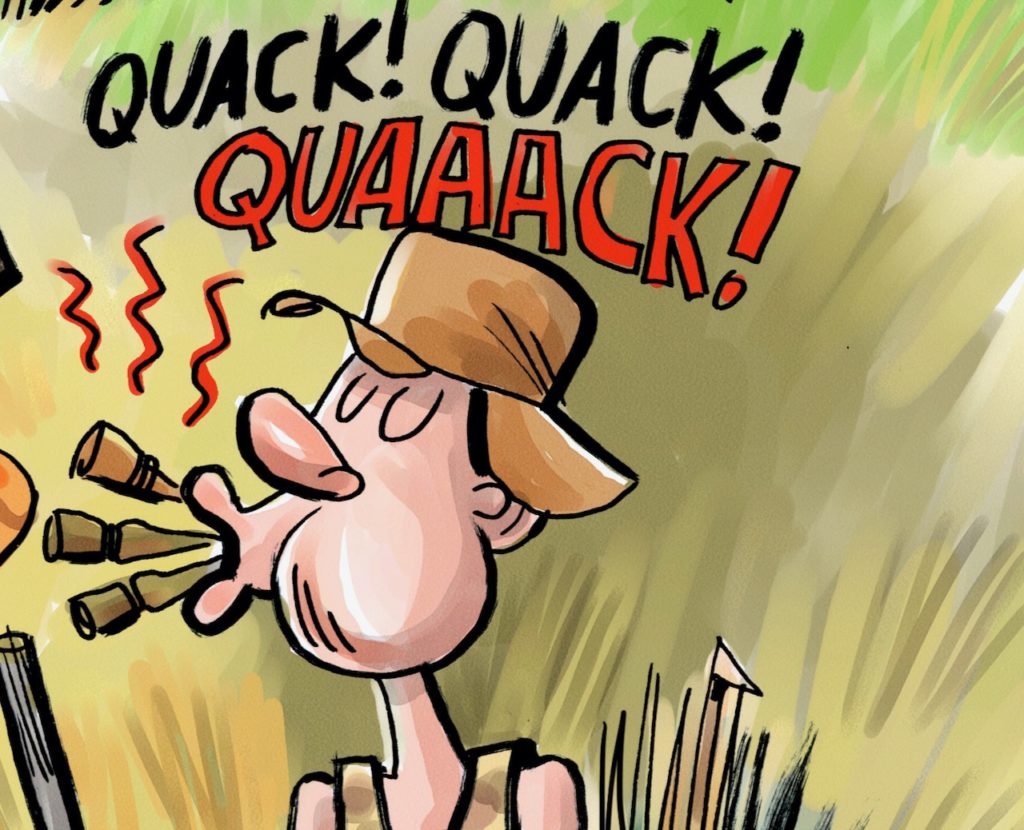
#8 CALL TOO MUCH
Ducks are very vocal and respond well to calls. When I was hunting with some of the best callers in the game, it became obvious to me that a proficient caller who knows what sounds to make—and when to make them—can work birds right into the landing zone. On the other hand, a hunter who makes calls that are unnatural, too loud or poorly timed will spook ducks.
Hail calls are good for catching the attention of distant ducks. Once the birds are locked in, though, it’s time to quit calling and let them approach. If the ducks start to slide off, give them a few clucks and feeding chuckles to entice them closer. As the ducks circle your spread to check things out, don’t call if they’re head on, as they will pinpoint you. Instead, only call if the birds are upwind on the corners of the spread.